Airline Carry-On Rules for 2027: Batteries, Baggage and Security

Airline carry-on rules for 2027 are not one rulebook but three, and they are moving in different directions. Battery rules tightened globally and are already in force. Europe's cabin-bag reform is approved but not yet applied. Liquid limits are now fragmenting airport by airport. What applies to you depends on your carrier, your departure airport and your date of travel.
That is the whole problem in a sentence, and it is new. For about fifteen years a one-bag traveller could learn one set of numbers — 100 ml, 100 Wh, 56 x 36 x 23 cm — and fly anywhere. In 2026 that consensus broke in three places at once, and nothing has replaced it.
This guide is the reference we wanted ourselves: what the rules actually are as of 27 October 2026, which ones carry a future effective date, and where individual carriers go further than the regulator requires. Every number below is attributed to the body that published it. Where a rule is a proposal rather than law, we say so in the sentence.
What changed, in one screen
| Rule area | Status as of 27 October 2026 | What is scheduled or proposed |
|---|---|---|
| Power banks | ICAO's new specifications became effective 27 March 2026: two per passenger, no recharging in flight | Further restrictions are proposed but not yet in regulation, per IATA |
| Spare batteries | Unchanged: carry-on only, terminals protected, 100 Wh threshold for approval | No change published |
| EU cabin baggage | Current carrier policies still apply; the reform is approved but not in force | Expected to apply from late 2027 at the earliest |
| Carrier size limits | Set by each airline, not by regulation | EU reform is reported to guarantee a free personal item; coverage of the agreed text disagrees on whether a 7 kg cabin bag is guaranteed too |
| Liquids | 100 ml is still the regulatory default in the EU, UK and US | Lifted airport by airport where screening equipment has been approved, including at several major UK and Irish airports |
| Electronics at screening | Lane-dependent in the US; depends on scanner type | Wider CT rollout continues, no national rule change announced |
Two of those six rows are genuinely new since early 2026. The other four are the ones people get wrong because they assume a change happened when it did not.
If you are building a kit around these constraints rather than just surviving one flight, our complete one-bag travel system covers the packing side of the same problem.
What Changed for Power Banks
This is the real change of the last eighteen months, and it is global.
ICAO published new specifications for lithium battery-powered power banks that, in its own words, "will address emerging risks and become effective on 27 March 2026." Two provisions matter to you. First, ICAO states these devices "will now be limited to two per passenger." Second, "passengers will be prohibited from recharging them during flights." ICAO notes that crew "will however be able to continue to carry and use these power banks" for operational needs — that exception is for the cabin crew, not for you.
IATA's guidance document for passengers travelling with lithium batteries, revised for the 2026 regulations and dated 31 March 2026, spells out what operators are implementing. It is built on the 2025-2026 edition of ICAO's Technical Instructions and the 67th edition of the IATA Dangerous Goods Regulations. IATA is explicit that part of this list runs ahead of the rulebook: it describes "further proposed restrictions regarding power banks carried by passengers on aircraft" and notes that "while it will take some time for these proposals to be accepted into regulation, airlines are moving early to adopt these measures in the interests of aviation safety." The four passenger-facing points it lists are:
- "Passengers are limited to a maximum of two lithium-ion power banks not exceeding 100 Wh."
- "Power banks must not be recharged from an in-aircraft power supply."
- "Power banks should not be stored in the overhead lockers."
- "Power banks should not be used to provide power to other devices during taxi, take-off or landing."
IATA then adds the sentence that explains every inconsistency you will meet at a gate: "Airlines may impose more stringent conditions on the carriage and use of power banks by passengers."
They have. Lufthansa Group went further than ICAO from 15 January 2026: as reported by AirlineRatings in January 2026, power banks may not be used or charged at any point during the flight across Lufthansa, SWISS, Eurowings, Austrian, Brussels Airlines, Discover, Edelweiss and Air Dolomiti, and must be kept in the seat pocket, under the seat or on your person rather than in an overhead bin. A Lufthansa spokesperson cited updated EASA recommendations as the trigger. Emirates moved earlier still: Time Out reported in November 2025 that from 1 October 2025 Emirates limits passengers to one power bank under 100 Wh with no in-flight use or charging. Singapore Airlines and Scoot have prohibited in-flight use since 1 April 2025: as reported by The MileLion in March 2025, passengers on both carriers are "prohibited from charging devices via power banks, or charging the power banks themselves inflight" — a policy the airlines announced on safety grounds, not under a regulator's directive.
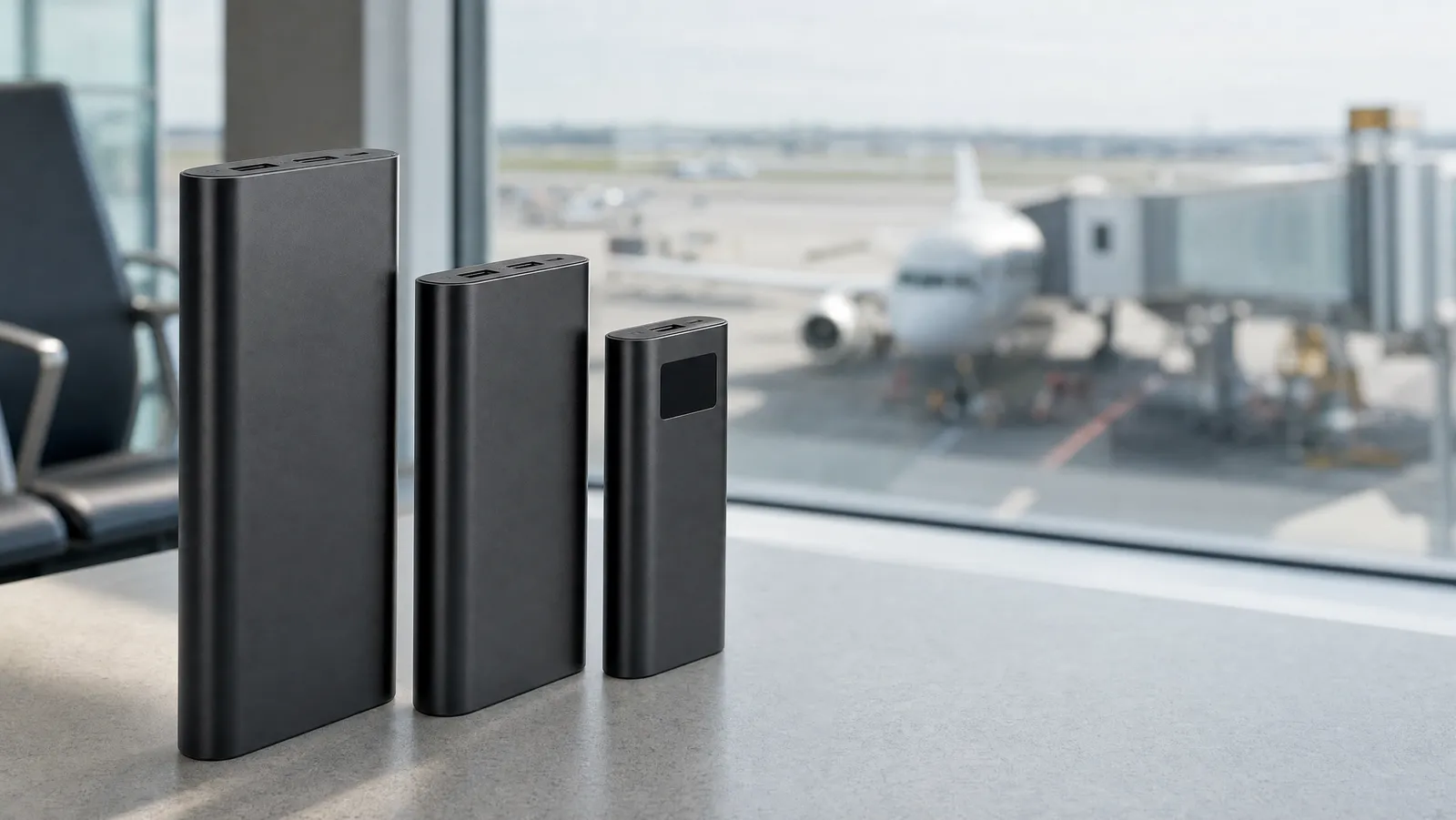
So the honest summary of the power bank rules airlines now enforce is this: ICAO sets a floor of two banks and no in-flight recharging, and a growing list of carriers builds a stricter ceiling on top of it. Pack for the strictest carrier on your itinerary, not the regulator.
Choosing a Power Bank That Flies
The number that decides everything is watt-hours, not milliamp-hours, and most packs advertise the wrong one.
IATA's guidance gives the conversion: "Watt-hour rating, expressed in Wh, shows the power of the lithium cell or battery, which is calculated by multiplying the rated capacity in ampere-hours by the nominal voltage (Wh = Ah x V)." Run that at the 3.6 V nominal voltage typical of lithium-ion cells and a 27,650 mAh pack works out at 99.54 Wh — just under the line. The same arithmetic means anything advertised above roughly 27,700 mAh is over 100 Wh unless its cells run at a different nominal voltage.
IATA's Table 1 is blunt about what happens above that line. Power banks rated above 100 Wh but at or below 160 Wh are listed as forbidden — not "approval required", forbidden. Above 160 Wh, batteries "must be prepared and carried as cargo in accordance with the IATA Dangerous Goods Regulations." Note that this is stricter than some carriers' own published pages: AirlineRatings reported that Lufthansa's policy allows 100-160 Wh power banks with prior approval. Where a carrier page and IATA's table disagree, the safe plan is to stay under 100 Wh.
IATA also warns about the enforcement mechanism most people never think about: "All lithium-ion batteries are required to have the Watt-hour rating marked on the outside of the battery case," and "if passenger handling staff are unable to verify the Watt-hour rating by checking either the battery, or the user documentation, the operator may not permit the carriage." An unlabelled bank can be refused on that basis alone.
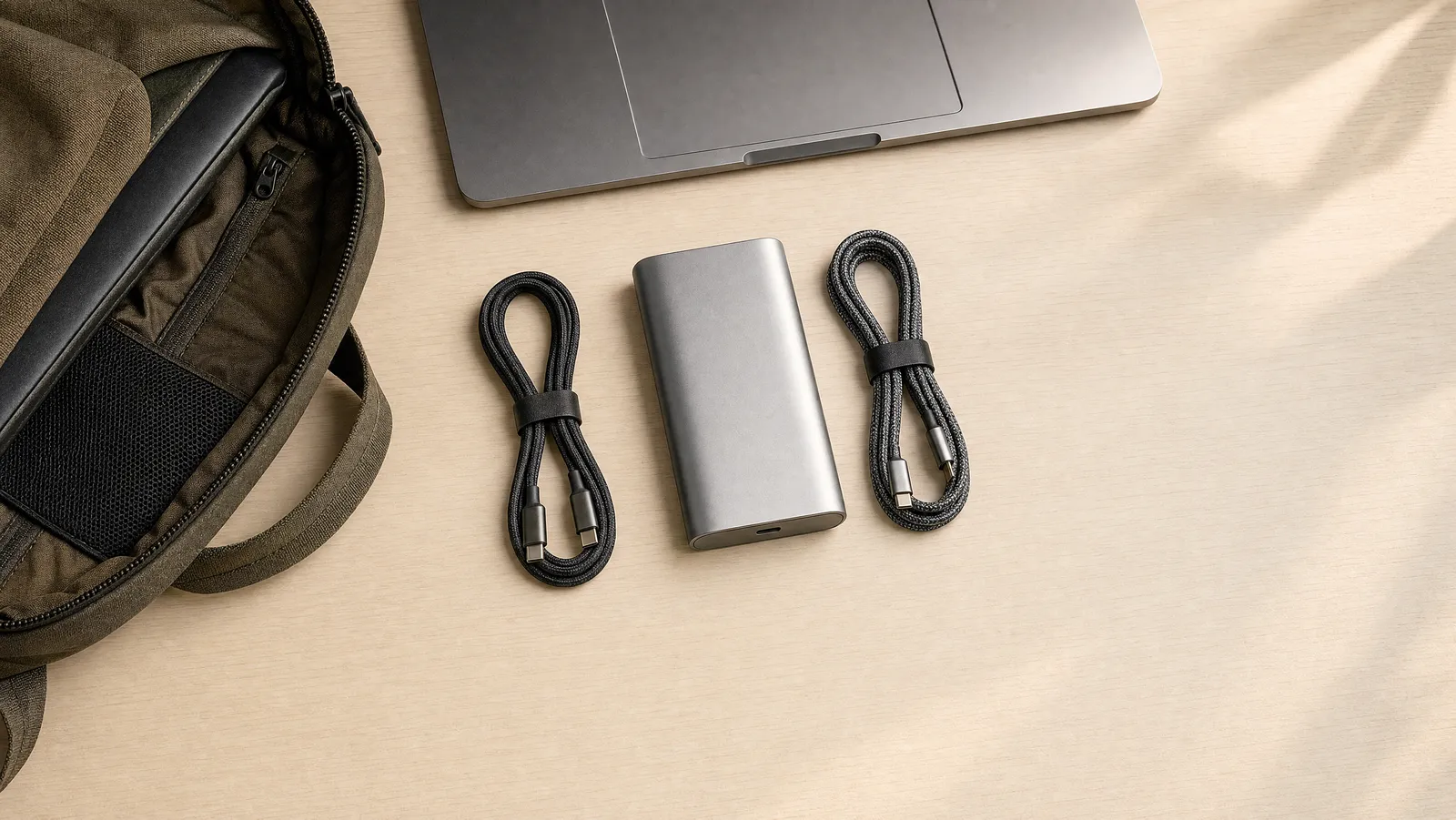
The practical shortlist of airline-approved power banks is therefore narrow: a printed Wh figure on the case, comfortably under 100 Wh, and no more than two of them. Our guide to choosing a power bank for a phone and a laptop walks through what that buys you in real charges. If your work needs an AC outlet rather than USB-C, be aware that most of the portable power stations we rate for remote work sit well above the cabin threshold and belong in a van, not a bag.
Europe's New Hand Luggage Rules
This is the change most often reported as already live. It is not.
The European Parliament approved the revised air passenger rights rules on 7 July 2026 by 646 votes to 12 with three abstentions, according to Euronews. On baggage, Euronews reports that under the approved text passengers would keep a free personal item of "40cm by 30cm by 15cm", and that the fare inclusive of carry-on luggage would have to be displayed at the start of the booking process, including on booking intermediaries and search portals, while airlines would remain free to offer cheaper tickets to passengers who choose to travel without hand luggage.
The timing is the part to internalise. Euronews' October 2026 explainer states the changes are "expected to come into force from late 2027 at the earliest", with October 2027 "currently thought to be the earliest possible start date", and that the rules "still need to complete the remaining EU legislative process before they can take effect." Nothing about your Ryanair or Wizz booking changes before then.
What the reform actually guarantees is also narrower than the headlines suggested. The firm figure in the Parliament's text, as reported, is the free personal item that fits under the seat in front. Euronews' explainer additionally describes "one larger cabin bag weighing up to 7kg, with combined dimensions of up to 100cm", but other coverage of the same text describes only the personal item as guaranteed. We would not plan a kit around the 7 kg figure until the published regulation text confirms it.
One geographic wrinkle worth knowing: Euronews reports easyJet's position that the rules will apply to UK passengers only on return flights from EU countries, which would leave outbound flights from the UK outside the guarantee on all UK-based carriers.
Our read of the EU hand luggage rules is that their biggest effect on a nomad is price transparency rather than capacity: once they apply, you will see the carry-on-inclusive fare up front instead of discovering it at step four of a booking flow.
Size Limits, Airline by Airline
No regulator sets a cabin-bag dimension. Every number you have ever been measured against is a commercial policy, and that will remain true through 2027 even after the EU reform applies.
The figures below come from SmarterTravel's carry-on rules roundup dated 14 January 2026. They are a publication's compilation, not the carriers' own pages, and we could not retrieve the airlines' official baggage pages to verify them directly.
| Carrier group | Published carry-on limit | Notes |
|---|---|---|
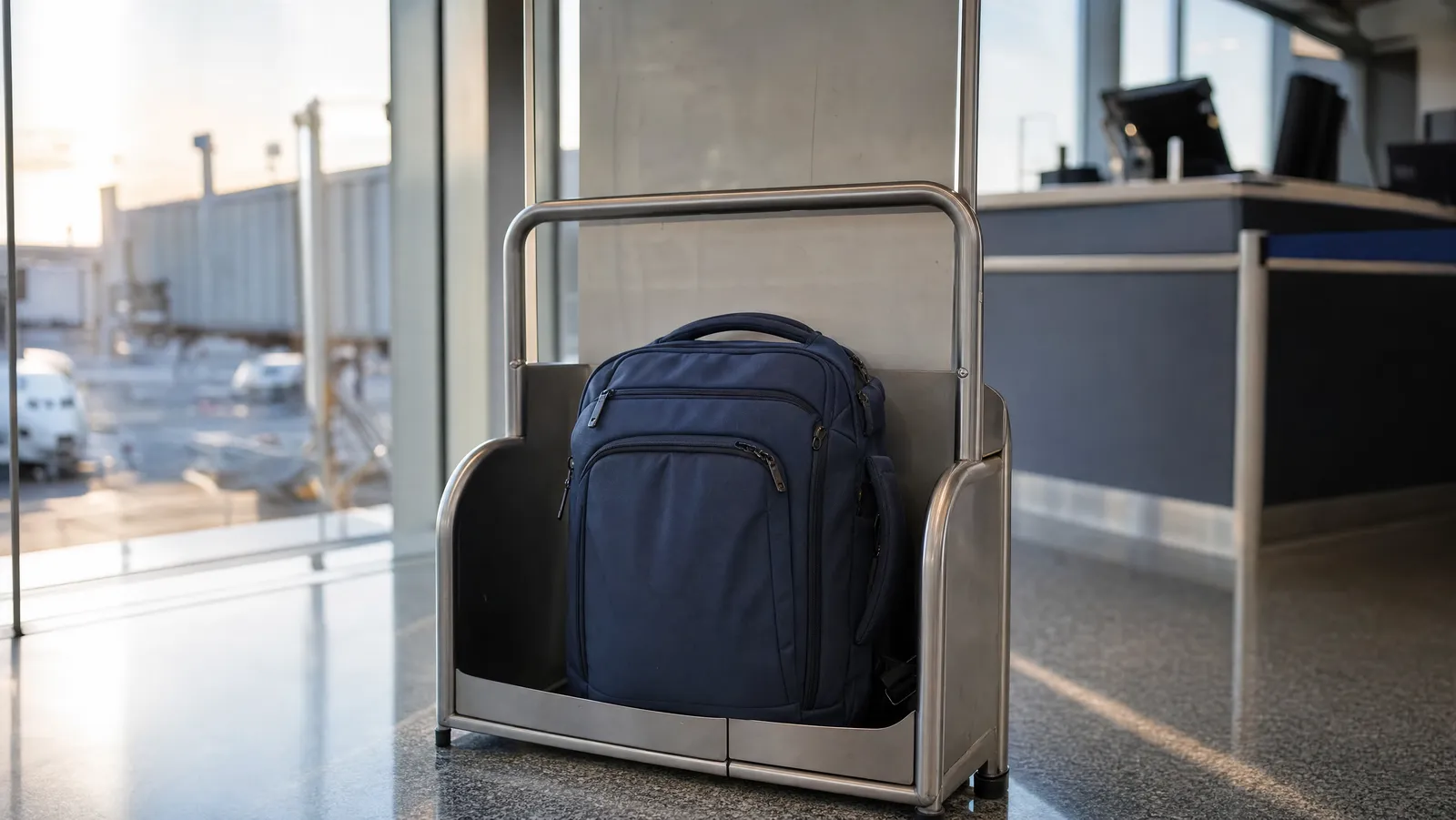
| American, Delta, United, JetBlue, Alaska | 22 x 14 x 9 in (about 56 x 36 x 23 cm) | Including wheels and handles |
| Southwest | 24 x 16 x 10 in (about 61 x 41 x 25 cm) | Largest of the US majors |
| Frontier, Spirit | About 18 x 14 x 8 in for bags flying free as a personal item | Carry-on itself is a paid add-on |
| Most carriers, personal item | About 17 x 10 x 9 in (about 43 x 25 x 23 cm) | SmarterTravel's general figure |
SmarterTravel also notes that domestic US cabin weight limits exist but are rarely enforced, while international routes run roughly 15-22 lb (about 6.8-10 kg) and that Asian and European carriers enforce them strictly. That asymmetry, not the dimensions, is what catches one-baggers: a 40-litre pack that passed unweighed from Denver will be put on a scale in Frankfurt.
Table dated 27 October 2026. Carrier policies change without notice — check the airline's own baggage page for your specific route and fare before you fly, particularly on basic-economy fares where cabin allowances are often removed entirely.
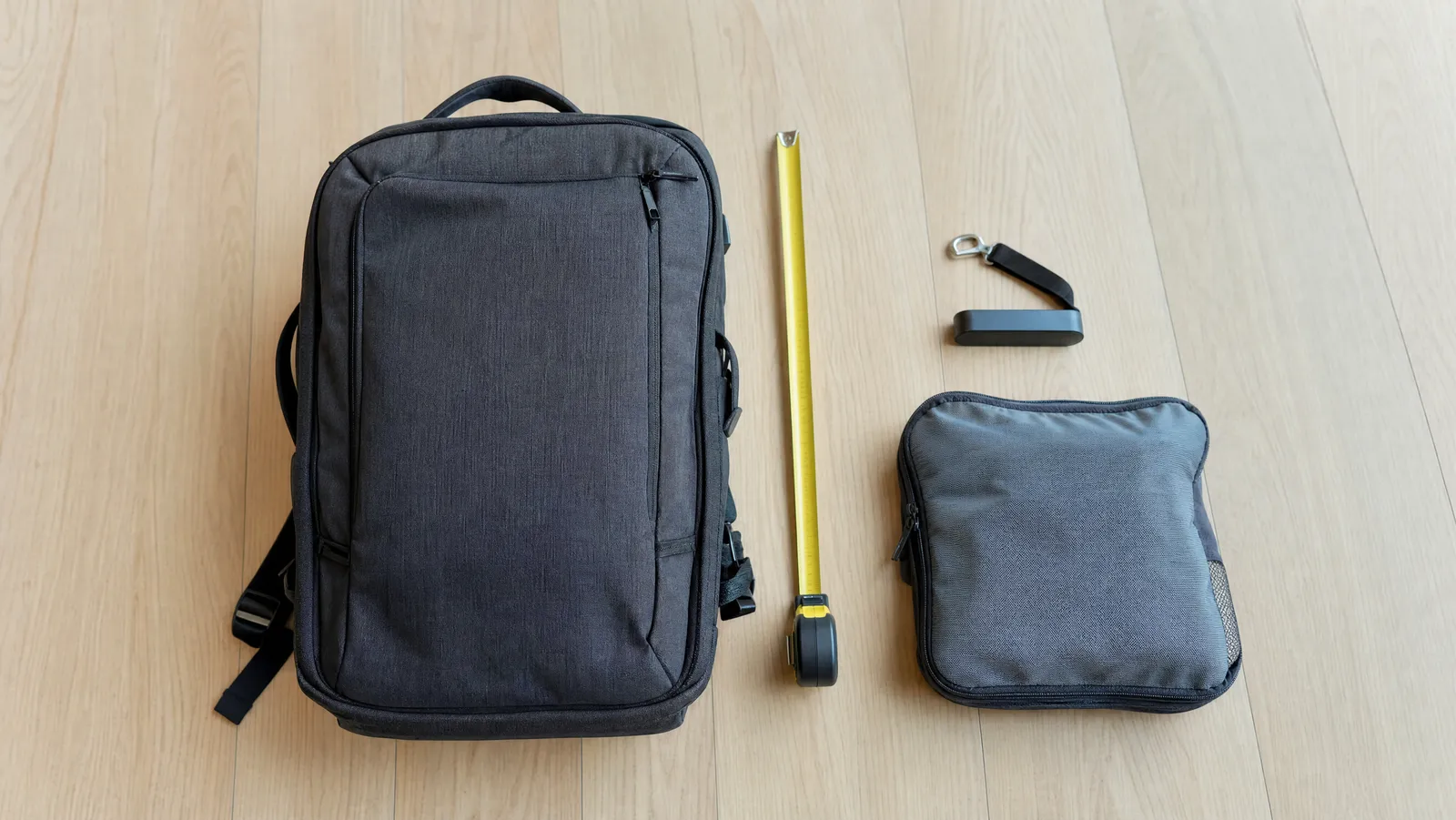
That is why carry-on size limits by airline still decide what bag you buy, not any regulation. We size our picks in the carry-on backpack roundup against the 22 x 14 x 9 standard because it is the tightest widely published figure among the US majors, and because European limits are usually about weight rather than volume. Packing cubes help here in a way most people miss: they let you decompress a bag into an under-seat shape when a gate agent is holding a sizer.
Spare Batteries, Cameras and Drones
The rules for flying with spare batteries are stricter than the ones for the devices they power, and 2026 did not loosen them.
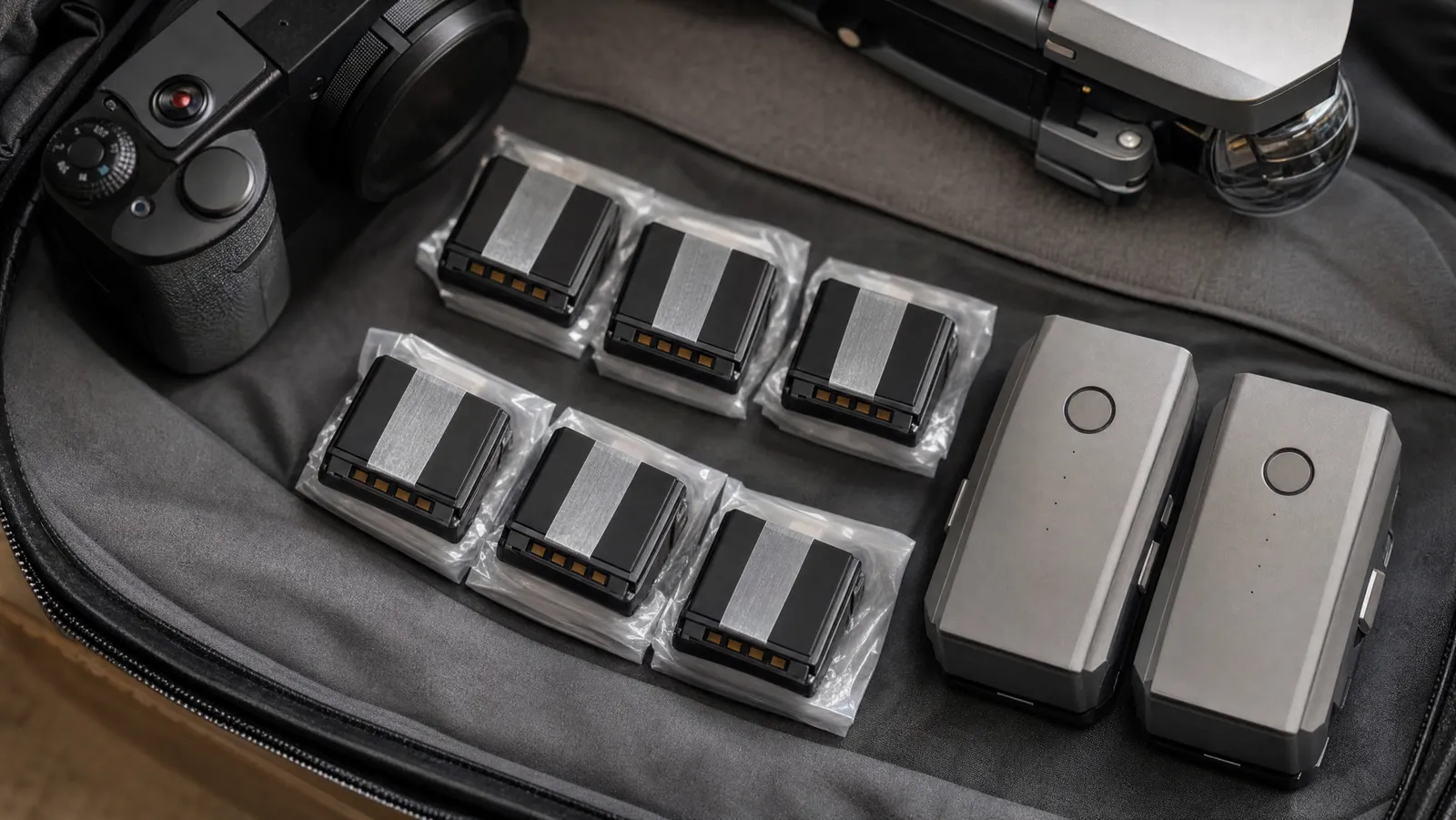
IATA's Table 1 sets out the thresholds. For lithium-ion batteries at or below 100 Wh, and lithium metal batteries at or below 2 g of lithium content, spare batteries are permitted in carry-on baggage, prohibited in checked baggage, and need no operator approval, with a cap of "a maximum of 20 spare batteries of any type" per person unless the operator approves more. Above 100 Wh and up to 160 Wh, spare batteries need operator approval and are "limited to a maximum of 2 spare batteries per device."
Drone and cinema-camera batteries are exactly where this bites. IATA's passenger advice says it directly: "For larger batteries (over 100 watt-hours, such as those used in larger cameras, drones, or power tools), check with your airline as approval may be required." Approval is not a formality — IATA notes operators may require extra separation between batteries or that they be at a low state of charge, defined as under 25 per cent indicated, and recommends contacting the airline well in advance.
Three further points from the same document that regularly surprise people:
- Devices, not just batteries, belong in the cabin. IATA's advice is to "always carry phones, laptops, cameras, vapes (if allowed) and other battery-powered items in your hand baggage, not in checked baggage."
- Gate-checking is a trap. "If your hand baggage is taken at the gate to go in the aircraft baggage hold, remove all lithium batteries and devices first."
- A person-level device cap exists. IATA's table limits each passenger to 15 portable electronic devices unless the operator approves more — relevant if you travel with a camera body, two drones, a laptop, a tablet and a pile of accessories.
If your bag contains a few thousand dollars of batteries and the glass they power, it is worth reading how tech gear cover works inside a travel insurance policy before a gate agent decides your drone pack is going in the hold.
Liquids: The Rules Now Depend on the Airport
For the first time, two travellers on the same route can face different liquid limits in each direction.
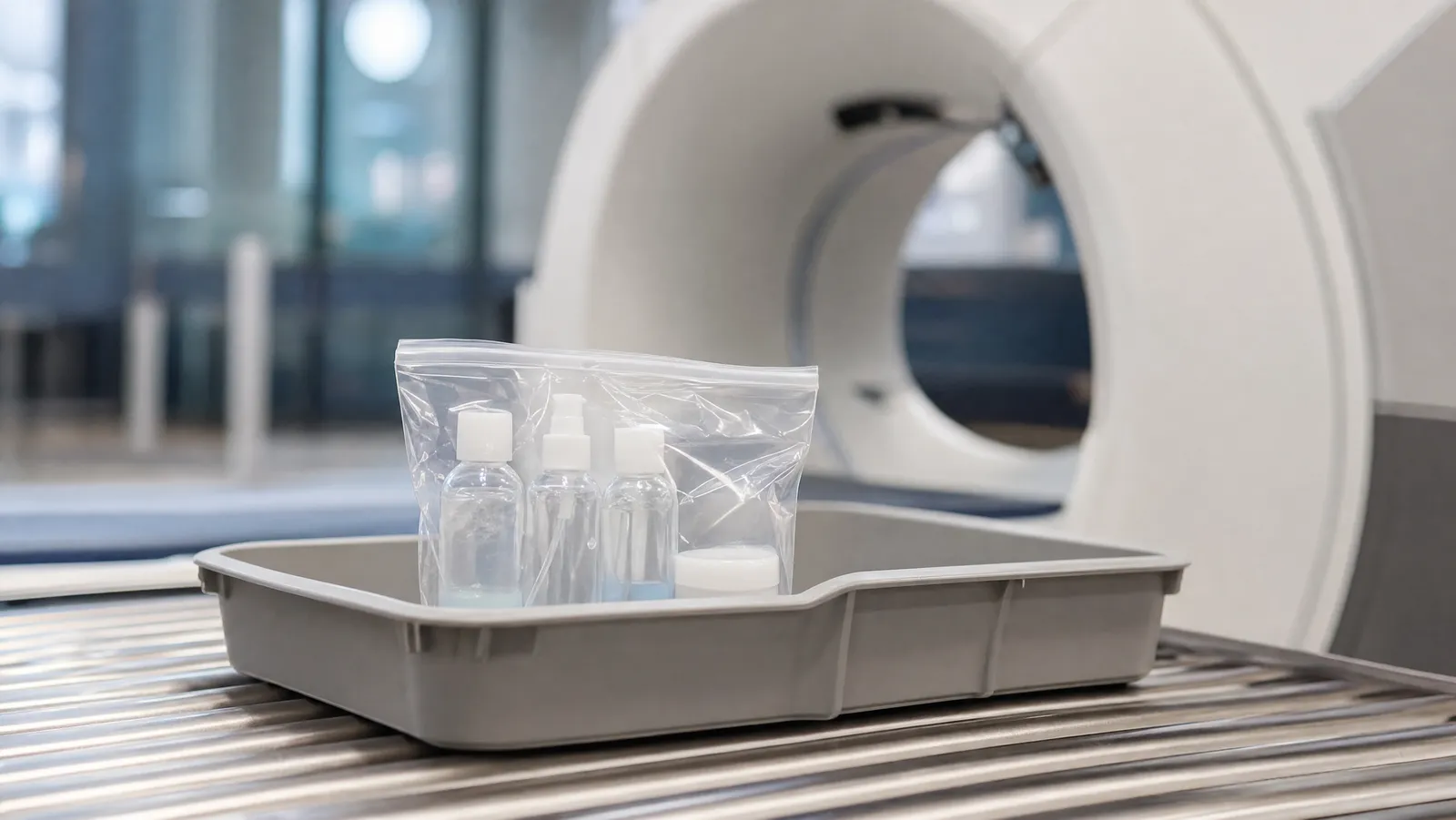
The default has not changed. The TSA's liquids rule page still states that carry-on liquids "are limited to travel-sized containers that are 3.4 ounces (100 milliliters) or less per item", carried in a quart-sized bag, with exemptions for medications and infant and child nourishments. Duty-free liquids over 3.4 oz may fly inbound to the US only in a retailer-sealed, tamper-evident bag with a receipt showing purchase "made within 48 hours."
In Europe, the 100 ml default also still applies — but it is being lifted at individual airports that have upgraded to approved scanners. Shannon Airport is a documented case: a September 2026 press release reports that from 7 September 2026 individual containers of up to two litres can pass through security in hand luggage there, following an upgrade of its 3D C3 screening equipment, and that liquids and electronics such as laptops can stay inside cabin bags. The same release notes the European Commission had described its earlier restriction on these scanners as precautionary, tied to a technical issue with explosive detection systems for cabin baggage rather than a new threat.
The catch is the one Shannon itself flags: other airports may not allow the same two-litre limit, especially on return journeys and connecting flights. A one-litre shampoo that clears Shannon can be confiscated on the way back.
We keep a running note on which airports still enforce the 100 ml limit, because the list moves monthly and the aggregator sites contradict each other — several name airports whose own websites still publish the 100 ml rule. Treat any blog list as a lead to check, not an answer.
Practical stance for 2027: pack to 100 ml and treat anything larger as a bonus you might get away with at one end of the trip. That is roughly what our toiletry bag essentials kit is built around, because a decanted kit is never the reason you get pulled aside.
Laptops and Tech at the Checkpoint
Whether you end up taking laptops out at security in 2027 depends on the lane you are waved into, not the country you are in.
The TSA has been explicit about what its computed tomography units change. A TSA press release dated 13 July 2026 about a CT installation states that "passengers using these machines are permitted to leave their laptops and other electronic devices in their carry-on bags", and that "passengers screened in security lanes with CT units do not need to remove their travel-sized 3-1-1 liquids."
Read that carefully, because two things follow. First, the permission is attached to the machine, not to the airport: a terminal can run CT lanes beside older X-ray lanes, so the same checkpoint can give you different instructions on different days. Second, the CT exemption is about removal, not about the limit. A CT lane does not authorise a 200 ml bottle. The 3.4 oz per container rule still governs what is in the bag.
We found no announcement of a national rule change eliminating laptop or liquid removal in the US as of October 2026; the TSA has said advanced CT creates the possibility of reducing the need for it, which is a statement of direction, not a rule.
In Europe the position is similar in shape: the airports that have upgraded, like Shannon, let electronics stay packed, and the rest do not.
What this means operationally is that your bag should be packable either way in under ten seconds. A single sleeve you can lift out whole beats a laptop buried under cables, and a dedicated pouch for the loose items means one tray instead of four — our picks for tech pouches and cable organisers are chosen partly on how fast they come out and go back in.
Carrying Batteries Safely
The requirement regulators actually impose is unglamorous: stop the terminals touching anything.
IATA states that spare batteries "must be individually protected to prevent short circuits by placement in the original retail packaging or by otherwise insulating terminals, e.g. by taping over exposed terminals or placing each battery in a separate plastic bag or protective pouch and carried in carry-on baggage only." That is the whole legal obligation for a loose cell. Tape and a sandwich bag satisfy it.
IATA's passenger advice adds habits rather than rules: keep spare batteries and power banks at less than 25 per cent charge where you can, avoid last-minute recharging and let a device cool before packing it, keep space between spare batteries, and tell crew or airport staff immediately if a device is hot, smoking or damaged. Its specific warning is worth quoting because it describes a common act: do not recharge a power bank just before boarding and then store it in the overhead locker.
Which brings us to lithium battery safety bags — the fireproof pouches sold for exactly this problem. We could not find a regulator or carrier requirement that you use one; neither ICAO's effective specifications nor IATA's 2026 passenger guidance mentions them. They are a reasonable belt-and-braces choice for a bag full of drone packs, and some carriers' crews will be visibly happier to see one, but buying one does not raise any limit and does not substitute for taped terminals.
Two more rules from IATA's table that live in this category:
- E-cigarettes and vapes must be in carry-on baggage only, protected against unintentional activation, and recharging them on board is not permitted.
- Smart luggage with a non-removable battery above 2.7 Wh is listed as forbidden; where the battery is removable and the bag is checked, the battery must be removed and carried in the cabin.
Both are easier to comply with if the battery kit has one fixed home in the pack, which is the logic behind our approach to organising a nomad backpack.
Proof of Onward Travel
The document check at the gate is the one carry-on-adjacent rule that gets nomads denied boarding, and it has nothing to do with your bag.
Airlines verify two things before they let you on a flight into a country where you have no residence: that you can enter, and that you will leave. The second is proof of onward travel, and the airline asks because it, not you, absorbs the cost of carrying an inadmissible passenger back.
The requirement is usually written as conditional, which is what makes it dangerous. The UK Foreign Office's entry requirements for Thailand, for example, list "evidence of onward or return travel" among the things you may be asked to show, alongside "proof that you have enough money for your stay (at least 10,000 Thai baht per person or 20,000 Thai baht per family)", and warn that British nationals have been refused entry for not providing it. The same page states that from 15 September 2026 visa-exempt entry allows a stay of up to 30 days for tourism only — a reminder that these conditions get revised with little notice.
Our working rules, from watching this go wrong:
- Have a dated onward ticket you can show on a phone before you reach the desk, not in an email you need to search for.
- Match it to the permitted stay for your nationality on that entry route, and check the government source for the country you are entering rather than a summary.
- Expect the check at check-in, where the agent has a Timatic screen and no discretion, rather than at immigration.
For Europe specifically, the arithmetic that decides whether your onward date is even legal is the 90-days-in-180 count — our explainer on the Schengen 90/180 rule is the one piece of maths worth being able to do in your head at a counter.
Weighing and Tracking Your Bags
Two numbers decide whether a cabin bag flies: the dimensions a sizer can measure, and a weight that European and Asian carriers actually check. You can control both before you leave for the airport.
This is where luggage scales and trackers earn their weight, for different reasons. A hook scale resolves a dispute you would otherwise lose at a desk, because the carrier's scale is the one that counts and you want to know the number first. A tracker resolves a different problem: the gate-check you did not plan for, where your carry-on goes into the hold and you would like to know it arrived.
The regulatory position on trackers is unusually clean. IATA's 2026 passenger guidance states plainly that "bag tags and GPS tracking devices are not restricted." A Bluetooth tracker in a cabin bag or a checked bag is not a dangerous-goods question in ICAO or IATA terms, though as always a carrier may publish something stricter.
Three habits that follow from the rules above rather than from gear:
- Weigh the bag you will actually present, including the laptop and the two power banks, since cabin weight limits count everything in the bag.
- If you are gate-checked, open the bag on the spot and pull the batteries and devices out — IATA's instruction is to remove all lithium batteries and devices before hand baggage goes into the hold.
- Keep the battery kit in one grab-able pouch so that step takes seconds in a jet bridge rather than minutes.
Nothing here is a rule you can be fined for breaking. It is the difference between a 30-second interaction and a repacking session in front of a boarding queue.
Frequently asked questions
Can I take two power banks on a plane in 2027?
Two is the ICAO limit, effective 27 March 2026, and it is a maximum rather than a guarantee. Individual carriers publish fewer: Time Out reported that Emirates limits passengers to one power bank under 100 Wh. Check your carrier.
Is the 100 ml liquid rule gone?
No. The TSA's published rule is still 3.4 oz (100 ml) per container, and 100 ml remains the EU default. Individual airports with approved scanners have lifted it locally — Shannon Airport moved to a two-litre container limit from 7 September 2026 — but your return airport may not have.
Will the EU give me a free cabin bag in 2027?
Not before late 2027 at the earliest, and probably not in the form reported. The Parliament approved the text on 7 July 2026; Euronews reports the guaranteed item is a free personal item of 40cm by 30cm by 15cm, and that the rules are expected to apply from late 2027 at the earliest after the remaining legislative steps.
Can I put a power bank in checked baggage?
No. IATA's Table 1 lists power banks at or below 100 Wh as permitted in carry-on baggage and not permitted in checked baggage, and power banks above 100 Wh as forbidden outright.
Do I still have to take my laptop out at security?
It depends on the lane. The TSA states that passengers screened in lanes with CT units "are permitted to leave their laptops and other electronic devices in their carry-on bags"; older X-ray lanes generally still require removal, and a single checkpoint can have both.
The pre-flight check
Five things to confirm the night before, in the order they will be tested:
- Power banks: no more than two, each with a printed Wh rating under 100 Wh, charged below 25 per cent if you can manage it, packed where you can reach them without the overhead bin.
- Spare batteries: in the cabin bag only, terminals taped or bagged individually, and anything over 100 Wh cleared with the airline in advance.
- The bag itself: measured against your carrier's current published figures, and weighed as packed if you are flying a European or Asian carrier.
- Liquids: decanted to 100 ml unless both your departure and return airports publish otherwise.
- Documents: an onward ticket on your phone, matched to the permitted stay for your nationality.
Rules this volatile reward one habit above all others: check the primary source — your carrier's baggage page, your departure airport's security page, the entry requirements published by the government you are flying into — in the week before you fly, not the month. Every figure in this guide carries the date it was published for exactly that reason.
Explore the full series
- Power Bank Rules on Planes: What Changed in 2026 and What Changes in 2027 — The ICAO limits, the carriers that went further, and what to do at the gate.
- Best Airline-Approved Power Banks for 2027 — Packs that stay inside the 100 Wh line, with the watt-hour maths done for you.
- Europe's New Hand Luggage Rules: What the EU Cabin Bag Reform Means — What is actually agreed, what is still proposal, and how to size a bag for it.
- Carry-On Size Limits by Airline: The 2027 Reference Table — Dimensions and weights for the carriers nomads actually fly, in one table.
- Flying With Spare Batteries: Cameras, Drones and Laptop Cells — Quantity caps, terminal protection and the paperwork for larger cells.
- Airport Liquid Rules in 2027: Why They Now Depend on Where You Fly From — CT scanners split the standard; here is the airport-by-airport state of play.
About the Author