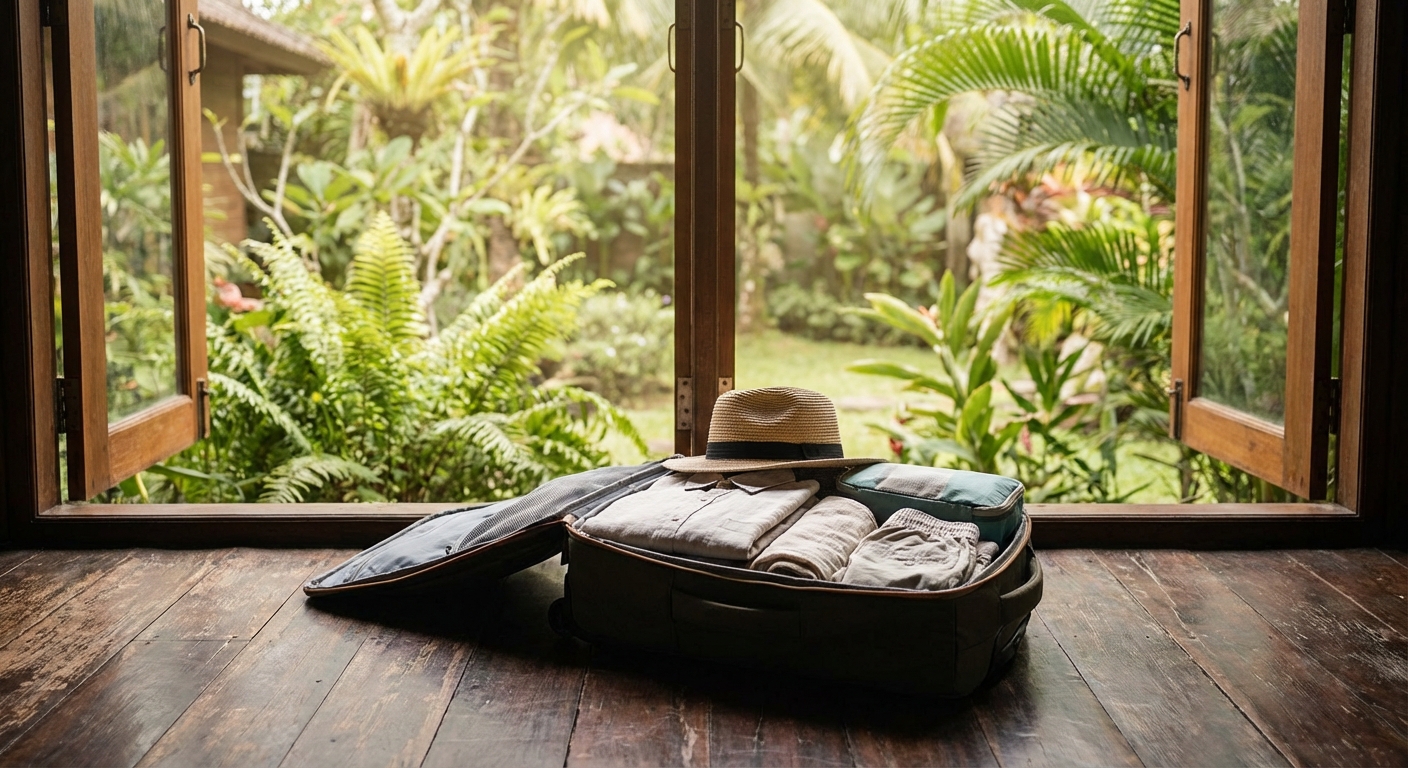
Southeast Asia remains the world's most popular digital nomad region for good reason: affordable living, fast internet, incredible food, and warm weather year-round. But that tropical climate creates unique packing challenges.
Heat, humidity, sudden rainstorms, temple dress codes, and sweat-inducing scooter rides all shape what you should bring. This guide covers exactly what to pack for Southeast Asia—focusing on Thailand, Vietnam, Bali, and the Philippines—whether you're staying one month or one year.
Quick Navigation:
- Climate and Conditions
- The SEA-Optimized Packing List
- Tech Considerations
- Health and Comfort Essentials
- What to Leave Behind
- Country-Specific Notes
- FAQ
Climate and Conditions
Understanding Southeast Asia's climate shapes your entire packing strategy.
Year-Round Heat
| Season | Temperature | Humidity | Rainfall |
|---|---|---|---|
| Hot season (Mar-May) | 85-100°F | 60-75% | Occasional |
| Monsoon (Jun-Oct) | 80-90°F | 80-95% | Daily storms |
| Cool season (Nov-Feb) | 75-85°F | 50-70% | Rare |
Key insight: Even "cool season" is warmer than most temperate summers. Pack for heat first, everything else second.
The Humidity Factor
Humidity changes everything:
- Clothes dry slowly (even "quick-dry" takes longer)
- Sweat is constant (you're never fully dry)
- Electronics suffer (condensation risk)
- Mold grows fast (on leather, fabric, in bags)
Your packing must account for these realities.
Monsoon Reality
The "rainy season" doesn't mean all-day rain. It means:
- Brief but intense daily storms (30 min to 2 hours)
- Sunny morning → afternoon downpour → sunny evening
- Flash flooding in urban areas
- Muddy conditions on islands and rural areas
Waterproofing matters, but you don't need expedition gear.
The SEA-Optimized Packing List
This list builds on our capsule wardrobe guide with Southeast Asia-specific optimizations.
Clothing
The goal: lightweight, quick-dry, breathable fabrics that can handle sweat, rain, and temple visits.
| Item | Quantity | Weight | Notes |
|---|---|---|---|
| Lightweight merino t-shirts | 2-3 | 0.6 lbs | 130-150 weight, not heavy |
| Linen or linen-blend shirt | 1 | 0.3 lbs | Breathability, dressier option |
| UPF sun hoodie | 1 | 0.25 lbs | Critical for sun protection |
| Lightweight pants (linen/tech) | 2 | 0.8 lbs | Temple coverage, evening wear |
| Quick-dry shorts | 2 | 0.5 lbs | Daily wear, double as swim |
| Swim trunks (if shorts don't double) | 1 | 0.25 lbs | Optional |
| Quick-dry underwear | 4 | 0.4 lbs | ExOfficio or similar |
| Lightweight merino socks | 2 | 0.15 lbs | For shoes when needed |
| Light rain jacket | 1 | 0.5 lbs | Packable, breathable |
| Clothing Total | ~3.75 lbs |
Key clothing notes:
- Skip heavy merino: Lightweight (130-150 weight) only—heavyweight is too warm
- Linen is your friend: Breathes better than anything in humidity
- Shorts do double duty: Choose swimsuit-appropriate quick-dry shorts
- Cover-ups for temples: Long pants + shirt with sleeves for temple visits
Footwear
| Item | Weight | Notes |
|---|---|---|
| Breathable walking shoes | 1.0 lbs | Worn, not packed; mesh preferred |
| Quality sandals | 0.5 lbs | Daily wear, showers, beaches |
Footwear notes:
- Sandals are your primary footwear in SEA
- Closed-toe shoes only for hiking, certain activities
- Invest in sandals with actual arch support (Chacos, Tevas, Birkenstocks)
- Avoid heavy leather—it molds and takes forever to dry
Accessories
| Item | Quantity | Weight | Notes |
|---|---|---|---|
| Packable sun hat | 1 | 0.2 lbs | Wide brim preferred |
| Sunglasses | 1 | 0.1 lbs | UV protection |
| Sarong/pareo | 1 | 0.3 lbs | Multi-use: beach, temple, towel |
| Dry bag (8-10L) | 1 | 0.1 lbs | Electronics protection |
| Microfiber towel | 1 | 0.3 lbs | Quick-dry for sweat/beach |
| Accessories Total | ~1.0 lbs |
The sarong advantage: A single sarong serves as:
- Temple cover-up (shoulders/knees)
- Beach towel
- Picnic blanket
- Privacy curtain in hostels
- Light blanket on over-airconditioned buses
- Bag liner
Tech Considerations
Your tech setup needs modification for Southeast Asian conditions.
Humidity Protection
Humidity damages electronics over time:
Essential protection:
- Store electronics in dry bag when not in use
- Use silica gel packets in tech pouch
- Run devices regularly (heat dispels moisture)
- Consider a small dehumidifying bag for extended stays
Warning signs:
- Condensation inside camera lenses
- Keyboard keys feeling sticky
- Screen fogging up
- Charging issues
Power Specifics
Southeast Asia uses varied plug types:
| Country | Plug Type | Voltage |
|---|---|---|
| Thailand | A, B, C | 220V |
| Vietnam | A, C | 220V |
| Indonesia/Bali | C, F | 230V |
| Philippines | A, B, C | 220V |
| Cambodia | A, C | 230V |
| Malaysia | G | 240V |
Solution: A universal adapter handles everything. See our power bank guide for charging recommendations.
Internet Reality
Coworking and café wifi is generally excellent in major nomad hubs:
- Chiang Mai: 50-200 Mbps common
- Bali (Canggu/Ubud): 30-100 Mbps
- Ho Chi Minh City: 50-150 Mbps
- Bangkok: 50-200 Mbps
Backup plan: Local SIM cards with data are cheap ($10-20/month for 30-50GB). Always have a backup.
For complete tech packing, see our ultimate packing list.
Health and Comfort Essentials
Southeast Asia requires specific health preparations.
Sun Protection
The tropical sun is intense—even cloudy days deliver significant UV:
Must-haves:
- Reef-safe sunscreen (SPF 50+)
- UPF clothing (sun hoodie)
- Wide-brim hat
- Sunglasses (polarized)
Pro tip: The sun hoodie replaces sunscreen for most of your body. Apply sunscreen only to face and hands. This saves money, time, and environmental impact.
Hydration
You'll sweat constantly. Dehydration happens fast:
Solutions:
- Grayl GeoPress or similar: Purify tap water everywhere
- Electrolyte packets: Replace what you sweat out
- Aim for 3-4L daily: More than you think you need
The Grayl pays for itself within weeks—bottled water adds up.
Medicine and First Aid
Essential kit:
- Imodium (food issues are common)
- Oral rehydration salts (for the inevitable stomach bug)
- Antihistamines (mosquito reaction, allergies)
- Pain reliever (headaches from heat/dehydration)
- Band-aids and antiseptic (scrapes from scooters, coral)
- Prescription meds (3+ month supply if long-term)
Available locally: Most common medicines are cheaper in SEA pharmacies. Don't over-pack.
Mosquito Defense
Dengue and malaria exist in Southeast Asia:
Pack:
- DEET or Picaridin repellent
- Permethrin for treating clothes (optional)
- Antihistamines for bites
Consider locally: Mosquito coils, plug-in repellents, nets (most accommodations provide)
Toiletries (Minimal)
Pack less than you think—everything is available:
| Item | Notes |
|---|---|
| Toothbrush + small toothpaste | Refill locally |
| Deodorant (travel size) | Specific brands may not exist |
| Razor | Replacements available |
| Prescription items | Pack full supply |
| Contact solution | Pack enough, brands vary |
Skip: Full-size anything, hair products, excessive skincare. Buy locally.
What to Leave Behind
SEA-specific items to skip:
Don't bring:
- Heavy merino (too warm)
- Jeans (heavy, slow-dry, hot)
- Multiple pairs of shoes (you'll wear sandals)
- Bulky rain gear (packable is enough)
- Winter items (obvious, but people do this)
- Excessive toiletries (available everywhere)
- Formal wear (almost never needed)
- Too many clothes (laundry is cheap: $1-2/kg)
The laundry advantage: At $1-2 per kilogram, laundry is so cheap you can pack half what you normally would. Most towns have same-day or next-day service.
Country-Specific Notes
Thailand
Unique considerations:
- Temple dress code strictly enforced (cover shoulders and knees)
- Scooter culture = helmet hair, sun exposure
- Night markets = walking on uneven surfaces
- 7-Elevens everywhere = easy supply restocking
Pack extra: Sarong (temples), sun protection (scooter days)
Vietnam
Unique considerations:
- Northern Vietnam has "winter" (50-65°F, pack a layer)
- Scooter traffic is intense (sturdy sandals matter)
- Rain gear essential October-December in central region
Pack extra: Light fleece for north in winter, rain jacket
Bali (Indonesia)
Unique considerations:
- Temple ceremonies require specific dress (sarong + sash)
- Mix of beach and jungle (both clothing needs)
- Wet season (Nov-Mar) brings daily rain
- Water temples = getting wet is part of the experience
Pack extra: Quick-dry everything, sarong essential
Philippines
Unique considerations:
- Island hopping means boat transfers (waterproofing critical)
- Most variable internet quality
- Typhoon season (Jun-Nov) can disrupt travel
- Many islands = sand in everything
Pack extra: Dry bags, waterproof phone pouch
The Minimalist SEA Pack
For one-bag travelers targeting maximum mobility:
Ultralight Southeast Asia Kit
| Category | Weight |
|---|---|
| Clothing (minimal) | 3.0 lbs |
| Footwear (packed sandals) | 0.5 lbs |
| Accessories | 0.75 lbs |
| Tech | 5.0 lbs |
| Toiletries + First Aid | 1.0 lbs |
| Organization (cubes, pouches) | 1.0 lbs |
| Total | ~11 lbs |
This leaves massive margin for:
- Souvenirs
- Items bought locally
- Comfort padding
For the complete one-bag philosophy, see our one-bag travel guide.
FAQ
How many clothes do I really need for SEA?
Less than you think. Laundry is cheap ($1-2/kg), available everywhere, and usually same-day or overnight. 3 tops, 2 shorts, 1 pants covers most people. Buy locally if you want more.
Should I bring a laptop stand for working in cafés?
Yes, if ergonomics matter to you. Southeast Asia cafés rarely have ideal desk setups. A packable laptop stand improves long work sessions significantly. See our laptop stand guide.
What about temple-appropriate clothing?
You need:
- One pair of long pants (or long skirt)
- One shirt with sleeves (t-shirt is fine, just not tank top)
- A sarong works for temples if you don't want dedicated pants
Many temples provide cover-ups, but having your own is more convenient and hygienic.
Is tap water safe anywhere in SEA?
Singapore's tap water is safe. Everywhere else, assume tap water is not drinkable. Options:
- Grayl or similar purifier
- Bottled water (ubiquitous, cheap)
- Many accommodations provide filtered water
How do I handle the heat while working?
- Seek air-conditioned spaces (cafés, coworking)
- Work during cooler morning/evening hours
- Hydrate aggressively
- Wear moisture-wicking clothes
- Take midday breaks during peak heat
What's the #1 mistake first-time SEA travelers make?
Overpacking. Seriously. Everything is available locally, laundry is everywhere, and you'll spend most days in the same comfortable outfit. Start minimal, buy if needed.
Do I need malaria medication?
Depends on your specific destinations. Major cities and tourist areas: low risk. Remote jungle/rural areas: higher risk. Consult a travel medicine specialist with your specific itinerary.
How much should I budget for gear once there?
Budget $50-100 for incidentals:
- Replacement toiletries: $10-20
- Cheap sarong/clothes: $20-30
- Phone/adapter needs: $10-20
- Unexpected items: $20-30
Local prices are generally much lower than home country prices.
The Verdict
Southeast Asia rewards light packing more than almost anywhere else. The climate is consistent, laundry is cheap, and everything you need is available locally.
The essentials:
- Lightweight, quick-dry everything
- Sun protection (clothing, hat, sunscreen)
- Water purification solution
- Dry bag for electronics
- Less than you think you need
Pack for the heat first. Add specific items for your destinations. Trust that you can buy anything you forgot.
Southeast Asia has hosted digital nomads for over a decade. The infrastructure supports your lifestyle—you just need to show up with the right (minimal) gear.
Related guides: