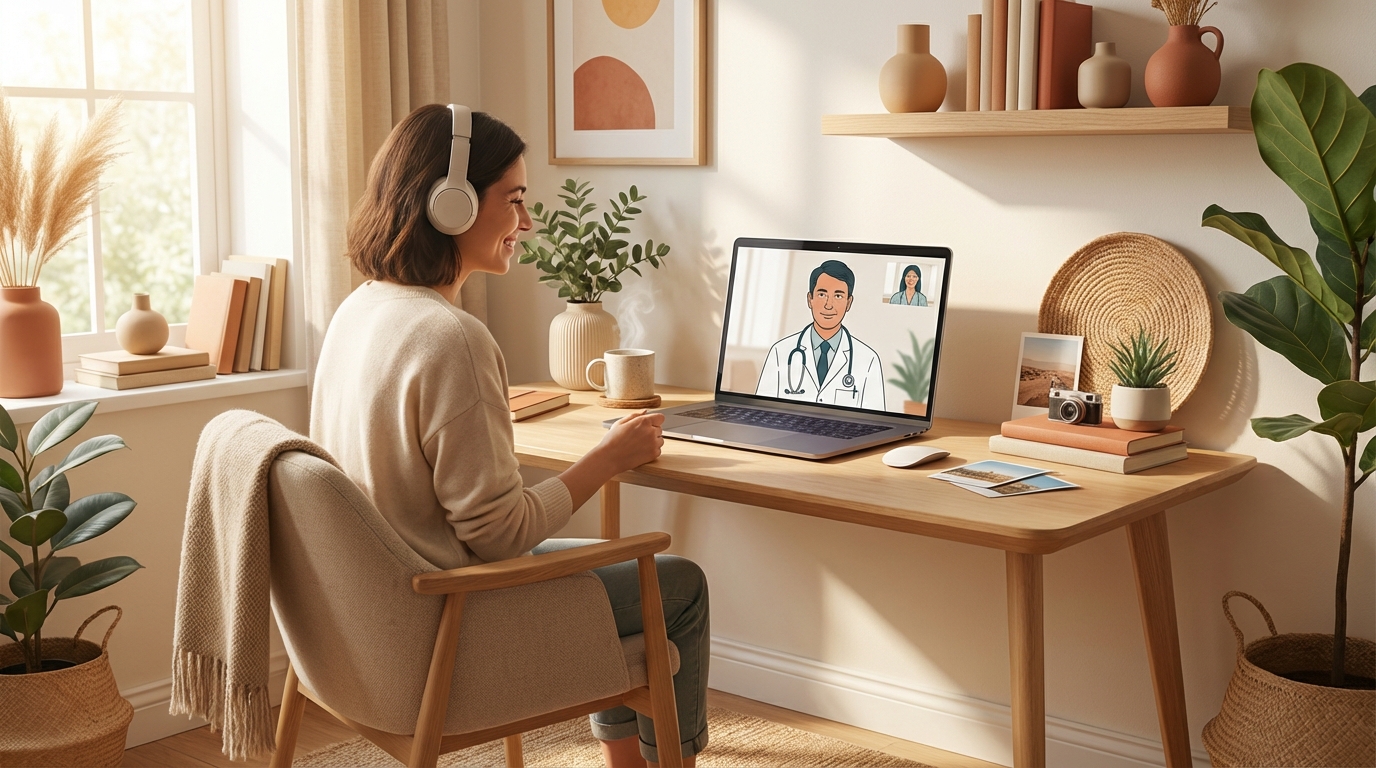
It's 2 AM in Bali, and you have a UTI. The nearest clinic doesn't open until 9 AM. You're uncomfortable, unable to sleep, and facing hours of waiting. Or—you could open an app on your phone and consult with a licensed physician within 15 minutes, get a prescription sent to a local pharmacy, and start antibiotics before sunrise.
Telemedicine has fundamentally changed healthcare access for digital nomads. What once required finding an unknown local doctor now can often be handled from your accommodation, in your language, with a physician you choose.
This guide covers how to build telemedicine into your healthcare strategy—which platforms work best for nomads, when to use virtual care versus in-person visits, and how to maximize this tool.
For in-person healthcare abroad, see our finding doctors guide. For the complete picture, see our main healthcare guide.
Why Telemedicine Matters for Nomads
Telemedicine for Digital Nomads
The Telemedicine Advantage
| Traditional Abroad | Telemedicine |
|---|---|
| Find unknown doctor | Choose from vetted physicians |
| Navigate language barrier | Your language, always |
| Variable quality | Consistent platform standards |
| Travel when sick | Consult from bed |
| Cash often required | Credit card billing |
| No medical history available | Can access records you share |
| Different medical norms | Familiar approach |
What Telemedicine Can Address
Telemedicine is excellent for:
Acute minor conditions:
- Upper respiratory infections (colds, sinus)
- Urinary tract infections
- Eye infections (conjunctivitis)
- Ear infections
- Minor skin conditions and rashes
- Mild allergic reactions
- Traveler's diarrhea guidance
- Minor injuries (assessment)
Ongoing care:
- Mental health (therapy, medication management)
- Chronic condition monitoring
- Prescription renewals (non-controlled)
- Follow-up appointments
- Second opinions
- Test result review
Advice and triage:
- "Should I see a doctor?" questions
- Travel health concerns
- Symptom assessment
- Medication questions
- General health guidance
What Telemedicine Cannot Address
Know the limits:
Always requires in-person care:
- Emergencies (chest pain, severe injury, stroke symptoms)
- Physical examinations needed for diagnosis
- Procedures (sutures, IV, injections)
- Lab work and imaging
- Severe infections
- Significant pain requiring evaluation
Usually requires in-person:
- Conditions requiring physical palpation
- Complex diagnostic situations
- Controlled substance prescriptions (usually)
- Workers' comp or legal documentation
- Specialized testing
Gray areas (telehealth can triage):
- Moderate symptoms—needs assessment of severity
- Ambiguous presentations
- Conditions that might need imaging
Major Telemedicine Platforms
Several platforms serve digital nomads specifically or work well for international use.
Dedicated Nomad/Traveler Platforms
SafetyWing Remote Health (by SafetyWing)
- Who it's for: SafetyWing insurance customers
- Coverage: Telemedicine included with Remote Health plan
- Providers: Network of international physicians
- Languages: English, expanding
- Cost: Included with insurance (Remote Health from $73/month)
- Best for: Nomads already using SafetyWing who want integrated care
Insured Nomads Telehealth
- Who it's for: Insured Nomads policy holders
- Coverage: Unlimited telehealth included
- Providers: International medical network
- Languages: English primary
- Cost: Included with insurance
- Best for: Premium insurance customers
World Nomads Travel Health Advice
- Who it's for: World Nomads customers
- Coverage: Medical advice line (not full telehealth)
- Availability: 24/7
- Cost: Included with policy
- Best for: Triage and guidance before seeking care
General Telehealth Platforms
Teladoc
- Who it's for: US-based individuals primarily
- Coverage: US-licensed physicians
- Availability: 24/7
- Languages: English, Spanish
- Cost: $75+ per visit without insurance
- Prescriptions: Can prescribe to US pharmacies
- International use: Limited—best for US citizens with US pharmacy access
- Best for: Americans who maintain US prescriptions
Doctor on Demand
- Who it's for: US residents/citizens
- Coverage: US-licensed physicians
- Availability: 24/7
- Languages: English, Spanish
- Cost: $75+ per visit
- Prescriptions: US pharmacies only
- Best for: Similar to Teladoc, good for maintaining US healthcare connection
MDLive
- Who it's for: US-based
- Coverage: US physicians, some mental health
- Cost: $82+ per visit
- Best for: Mental health services, dermatology
SteadyMD
- Who it's for: Anyone wanting primary care relationship
- Coverage: Dedicated personal physician
- Availability: Message anytime, scheduled calls
- Cost: $99/month subscription (unlimited access)
- Prescriptions: Can prescribe and coordinate care
- International use: Good—physician knows your travel patterns
- Best for: Nomads wanting continuity, chronic condition management
Mental Health Specific
BetterHelp
- Type: Therapy (not psychiatry)
- Cost: $70-100/week
- Format: Messaging, video, phone, live chat
- International use: Works globally
- Best for: Ongoing therapy relationship
Talkspace
- Type: Therapy and psychiatry
- Cost: $65-100/week therapy, more for psychiatry
- Prescriptions: Psychiatry can prescribe (US only)
- Best for: Combined therapy and medication needs
Cerebral/Done
- Type: Psychiatry focus
- Cost: $85-100/month
- Prescriptions: Mental health medications
- Best for: ADHD, anxiety, depression medication management
For mental health support, also see our mental health resources guide.
Platform Comparison
| Platform | Best For | Cost | International Use | Prescriptions |
|---|---|---|---|---|
| SteadyMD | Primary care relationship | $99/mo | Excellent | Yes, coordinates care |
| Teladoc | US citizens, acute care | $75-89/visit | Limited | US pharmacies |
| SafetyWing Remote | SW customers | Included | Excellent | Through network |
| Insured Nomads | IN customers | Included | Excellent | Through network |
| BetterHelp | Therapy | $70-100/wk | Excellent | No |
Choosing the Right Platform
For frequent acute care (UTIs, colds, etc.):
- Insurance-included telehealth (SafetyWing, Insured Nomads)
- Pay-per-visit if occasional user
For ongoing primary care:
- SteadyMD (dedicated physician relationship)
- Makes sense if you have chronic conditions or want continuity
For mental health:
- BetterHelp/Talkspace for therapy
- Cerebral/Done for medication management
- Insurance telehealth may include some mental health
For US prescription maintenance:
- Teladoc/Doctor on Demand to continue US prescriptions
- Requires US pharmacy access (mail forwarding or visits home)
How to Use Telemedicine Effectively
Maximize value from your telehealth visits.
Before Your Appointment
Prepare:
- Write down symptoms with timeline
- Note any medications you're taking
- List questions you want answered
- Have medical history accessible
- Check your internet connection
- Find quiet, private space
- Good lighting for video
- Phone charged or plugged in
Technical setup:
- Download app in advance
- Complete registration and payment
- Verify camera and microphone work
- Test connection speed
During Your Appointment
Communication tips:
- Start with your main concern clearly
- Provide symptom timeline
- Mention relevant medical history
- Ask about red flags to watch for
- Clarify prescription plan
- Ask when to follow up
- Ask what would require in-person care
If showing symptoms:
- Good lighting on affected area
- Have phone ready for photos
- Multiple angles if needed
- Ruler for scale if showing skin issues
After Your Appointment
Follow-through:
- Get prescription filled if needed
- Set reminder for follow-up if recommended
- Document diagnosis and recommendations
- Save visit summary
- Note any warning signs to watch for
Prescriptions via Telemedicine
Getting medications through telehealth is powerful but has limitations.
What Can Be Prescribed
Usually yes (varies by physician/platform):
- Antibiotics for diagnosed infections
- UTI medications
- Mild pain relievers (non-controlled)
- Topical medications
- Asthma inhalers
- Birth control
- Blood pressure medications (ongoing)
- Anti-nausea medications
- Allergy medications (prescription strength)
- Mental health medications (antidepressants, anti-anxiety non-controlled)
Usually no or restricted:
- Controlled substances (opioids, benzodiazepines, stimulants)
- Medications requiring lab monitoring
- New psychiatric medications requiring evaluation
- Sleep medications (controlled)
- Certain muscle relaxers
The International Prescription Challenge
Here's where it gets complicated for nomads:
US-licensed telehealth → US prescriptions Teladoc, Doctor on Demand, etc. can only send prescriptions to US pharmacies. Options:
- Have prescriptions sent to family member who forwards internationally
- Use mail-forwarding service
- Fill during US visits
- Use for establishing prescription you then get locally
International prescriptions Some platforms (insurance-integrated ones) can coordinate with local pharmacies or provide prescriptions valid locally. This varies significantly.
Practical approach:
- Telehealth for diagnosis and treatment recommendation
- Take that recommendation to local pharmacy/doctor
- Many countries allow pharmacists to provide medications with telehealth documentation
For complete prescription management, see our medications abroad guide.
Telemedicine + Local Care Integration
The most effective approach combines telehealth and local care strategically.
Triage Model
Use telemedicine to determine if in-person care is needed:
Symptoms appear
    ↓
Telemedicine consultation (15 min)
    ↓
[Minor - Telehealth resolves] → Prescription/advice
    ↓
[Moderate - Need local care] → Guidance on what to seek
    ↓
[Urgent - Immediate care] → Direction to ER/hospital
Second Opinion Model
Use telehealth to verify local recommendations:
- Local doctor recommends procedure
- Telehealth consultation for second opinion
- Decide with more information
Continuity Model
Use telehealth for ongoing management:
- See local doctor for initial care
- Telehealth for follow-ups
- Local visits only when needed
Coordination Model
Use services like SteadyMD for care coordination:
- Your doctor knows your whole picture
- They coordinate with local providers
- Medical records in one place
- Consistent medication management
Setting Up Your Telemedicine System
Build this before you need it.
Step 1: Choose Primary Platform
Based on your profile:
| If You Are | Consider |
|---|---|
| SafetyWing insured | Use included telehealth |
| Insured Nomads customer | Use included telehealth |
| US citizen, occasional needs | Teladoc account |
| Want primary care relationship | SteadyMD subscription |
| Focused on mental health | BetterHelp/Talkspace |
Step 2: Set Up Account
Before you're sick:
- Download app
- Complete registration
- Add payment method
- Upload medical history if option exists
- Do a test of the interface
- Save login credentials securely
Step 3: Prepare Medical Summary
Create a document you can quickly share:
- Current medications (generic names, doses)
- Allergies
- Chronic conditions
- Recent surgeries/procedures
- Vaccination status
- Blood type
Step 4: Plan for Connectivity
Telehealth requires internet. Plan B needed:
- Mobile data backup (local SIM or eSIM)
- Know where to find reliable wifi
- Download app before traveling to low-connectivity areas
Step 5: Know the Limits
Identify in advance:
- Nearest hospital for emergencies
- Local clinic for in-person needs
- Pharmacy locations
Common Telemedicine Scenarios
Real situations nomads face:
Scenario 1: UTI in Southeast Asia
Old way: Find clinic, wait, explain in broken English, get unknown antibiotics Telehealth way: Video call, describe symptoms, get specific antibiotic recommendation, show pharmacist, start treatment in 30 minutes
Scenario 2: Weird Rash in Portugal
Approach: Photo documentation, telehealth dermatology or general consult, determine if needs in-person evaluation, get treatment plan
Scenario 3: Anxiety Spike While Traveling
Approach: Message therapist through BetterHelp, schedule video session within 24 hours, get support without finding local mental health care
Scenario 4: Blood Pressure Medication Running Low
SteadyMD approach: Message your physician, they verify your BP from home readings, send prescription to local pharmacy or provide documentation for local refill
Scenario 5: "Is This Serious?"
Approach: Telehealth triage call, doctor helps determine if symptoms require in-person care, you make informed decision about local clinic vs. waiting
Limitations and Workarounds
Connectivity Challenges
Problem: Video call requires stable internet Solutions:
- Choose phone call option if available
- Move to better connection (hotel lobby, cafe)
- Schedule non-urgent calls for known good connectivity times
- Have local SIM data backup
Prescription Fulfillment
Problem: US prescriptions don't work abroad Solutions:
- Use prescription as documentation for local pharmacy
- Insurance telehealth may have international pharmacy network
- Get 90-day supplies when in countries with better access
- Mail forwarding from US
Physical Exam Limitations
Problem: Some conditions need hands-on assessment Solutions:
- Telehealth can still provide guidance
- Get recommendation before local visit
- Know when to go in-person vs. wait
Controlled Substances
Problem: Cannot prescribe internationally Solutions:
- Stock up during home country visits
- Get documentation from home provider
- See local psychiatrist for ongoing prescriptions
- Some countries have more accessible alternatives
Taking Action
Build your telemedicine capability now.
This week:
- Choose a primary telehealth platform and sign up
- Upload or prepare your medical summary
- Save login credentials securely
- If mental health is a priority, set up BetterHelp/Talkspace account
Before next trip: 5. Download all necessary apps 6. Test that video/audio works 7. Know your backup connectivity plan 8. Identify local pharmacy near accommodation
Ongoing: 9. Use telehealth as first line for appropriate issues 10. Document all telehealth visits in your records 11. Consider SteadyMD if you want ongoing relationship 12. Review what worked/didn't after each use
Telemedicine doesn't replace all healthcare—but it solves many of the friction points nomads face. Set it up before you need it.
Related Resources
Healthcare:
Mental Health:
Insurance: