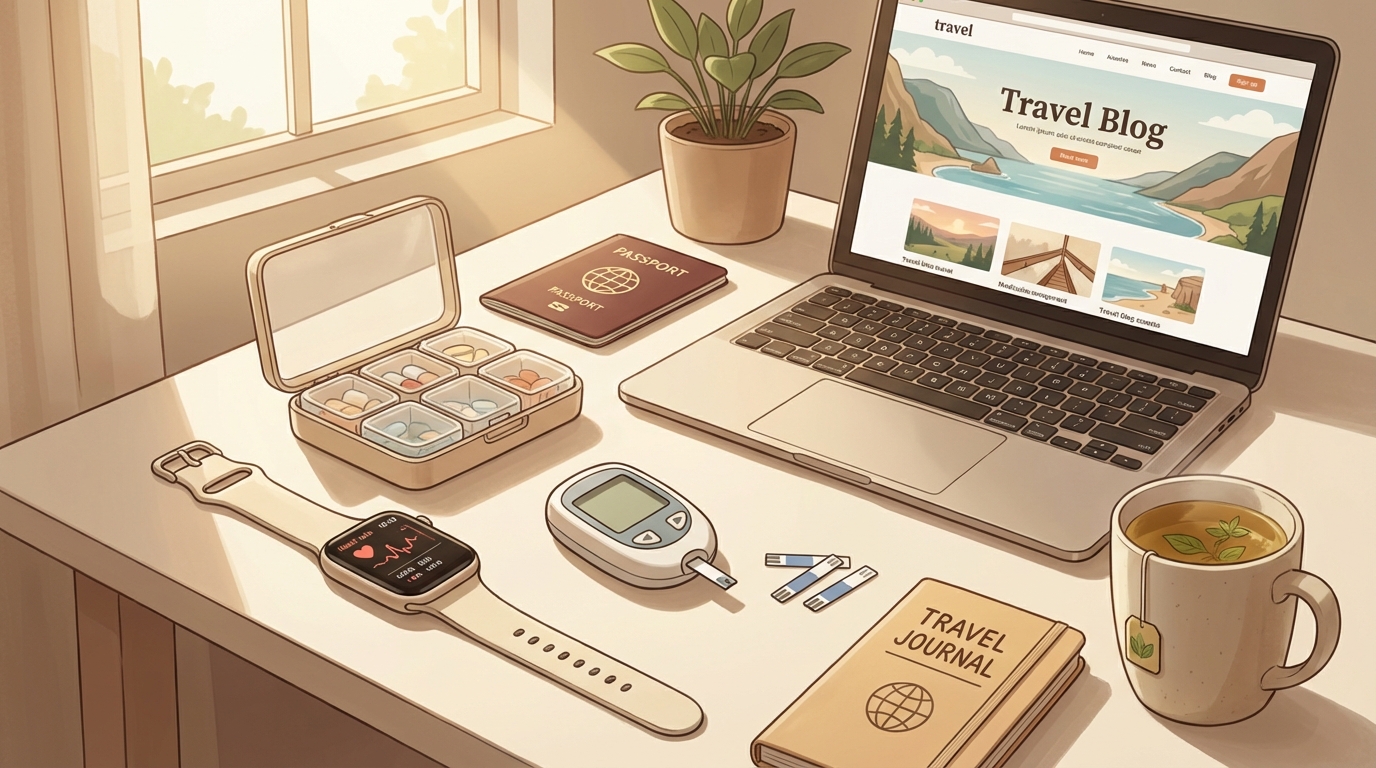
You manage Type 2 diabetes. You take blood pressure medication. You have an autoimmune condition requiring regular bloodwork. You've wondered whether the digital nomad lifestyle is even possible for you.
It is.
Approximately 40% of digital nomads manage at least one chronic health condition. The lifestyle is absolutely compatible with ongoing health needs—it just requires more planning than someone with no medical considerations.
This guide covers how to manage chronic conditions while location-independent, from medication logistics to finding specialists to insurance considerations to condition-specific strategies.
For general healthcare abroad, see our complete healthcare guide. For medication management, see our prescriptions guide.
Chronic Conditions and Nomad Life
Chronic Conditions Among Nomads
Conditions That Travel Well
With proper preparation, these conditions are highly compatible with nomad life:
Generally manageable:
- Type 2 diabetes (oral medications)
- Hypertension (blood pressure)
- Hypothyroidism
- Hyperthyroidism (stable)
- GERD/acid reflux
- Mild-moderate asthma
- Allergies (seasonal, food)
- Depression and anxiety (stable, on treatment)
- ADHD (though medication access challenging)
- Migraine
- Chronic pain (manageable, not opioid-dependent)
- Autoimmune conditions (stable)
- HIV (on stable ART)
Conditions Requiring More Planning
These are possible but need extra preparation:
More complex:
- Type 1 diabetes (insulin-dependent)
- Conditions requiring regular infusions
- Severe asthma
- Conditions requiring frequent specialist monitoring
- Mental health requiring controlled substances
- Conditions with unpredictable flares
- Those requiring refrigerated medications
- Those requiring regular imaging
Conditions That May Limit Destinations
Some conditions affect where you can go:
Considerations:
- Kidney disease: dialysis availability
- Severe allergies: anaphylaxis risk vs. medical access
- Complex cardiac: proximity to specialized care
- Conditions requiring specific specialists: availability
This doesn't mean you can't travel—but destination choice matters.
Pre-Departure Preparation
The work you do before leaving determines your success.
Medical Documentation
Create comprehensive documentation:
Essential packet:
-
Complete medical summary
- All diagnoses
- Date of diagnosis
- Current stability/status
- Relevant history
-
Medication list (see prescriptions guide)
- Generic names
- Dosages
- Prescribing reasons
- Alternative options if unavailable
-
Doctor's letter explaining:
- Diagnoses
- Medical necessity of medications
- Any controlled substance justification
- Contact information
- On official letterhead
-
Recent test results
- Blood work
- Imaging if relevant
- Specialist reports
- Baseline metrics
-
Treatment protocols
- What to do if condition flares
- Warning signs to watch for
- When to seek emergency care
- Emergency medication instructions
Medication Supply
For chronic conditions, medication planning is critical:
| Duration | Supply Strategy |
|---|---|
| 1-3 months | 3-month supply minimum |
| 3-6 months | 6-month supply + research refill options |
| 6+ months | 6 months + identified resupply locations |
Getting extended supplies:
- Ask doctor for extended prescription
- Explain travel situation
- Request 90-day supplies through mail order
- Consider paying out-of-pocket for extra
- Insurance may accommodate travel needs if asked
Specialist Relationships
Before leaving:
Establish:
- Telehealth relationship with specialist (if possible)
- Access to records and test history
- Way to reach them for advice
- Protocol for refills while abroad
Identify:
- Specialists in major destinations
- Healthcare hub cities for your condition
- Emergency protocols for your condition
Insurance Considerations
Chronic conditions create specific insurance challenges.
Pre-Existing Condition Coverage
The problem: Most travel insurance excludes pre-existing conditions—meaning if your chronic condition causes a medical event, it may not be covered.
Definition varies:
- Some policies: condition exists = excluded
- Some policies: condition stable for X months = may be covered
- Some policies: acute flare covered, chronic care not
Read your policy carefully for:
- How they define "pre-existing condition"
- What "stable" means (usually 60-180 days)
- What events would be covered vs. excluded
- Whether any chronic condition coverage is available
Insurance Options for Chronic Conditions
Standard travel insurance:
- Usually excludes pre-existing conditions
- May cover unrelated medical events
- Cheapest option
Upgraded travel insurance:
- Some offer pre-existing waivers (buy within X days of trip)
- May cover stable conditions
- World Nomads has some pre-existing coverage
- Insured Nomads offers comprehensive options
International health insurance:
- More likely to cover chronic conditions
- Higher cost
- Cigna Global, Allianz Care, IMG Global
- Better for long-term nomads with ongoing needs
Combination approach:
- International health for chronic condition coverage
- Travel insurance for trip-related issues
For detailed insurance information, see our pre-existing conditions coverage guide.
Condition-Specific Strategies
Diabetes (Type 1 & Type 2)
Type 2 (Oral Medications):
Medication access:
- Metformin widely available globally
- Most oral diabetes meds available in pharmacies
- Generic names: Metformin, Glipizide, Glyburide, Sitagliptin
Monitoring:
- Bring glucose meter and supplies (see our recommended glucose monitor)
- Test strips available in most pharmacies
- Consider CGM (continuous glucose monitor) for easier management
Diet considerations:
- Research local food options
- Carb counting may be harder in unfamiliar cuisines
- Bring snacks for blood sugar management
Type 1 (Insulin-Dependent):
Insulin logistics:
- Requires refrigeration (or FRIO cooling cases for travel without refrigeration)
- Insulin available worldwide but brands vary
- Carry backup insulin and delivery method
- Know basal/bolus equivalents
Supplies:
- Syringes/pens/pump supplies
- Bring more than needed
- Ketone strips for emergencies
- Glucagon kit
Travel tips:
- Carry insulin in carry-on (never check)
- Use Frio cooling wallets for warm climates
- TSA/security letter from doctor
- Identify pharmacies and endocrinologists at destinations
Destination considerations:
- Major cities have insulin available
- Rural areas may not—plan ahead
- Some countries have different insulin concentrations (U-40 vs U-100)
Hypertension (Blood Pressure)
Medication:
- Most BP medications widely available
- Common generics: Amlodipine, Lisinopril, Losartan, Metoprolol, Hydrochlorothiazide
- Usually easy to refill abroad
Monitoring:
- Bring portable blood pressure monitor
- Check regularly, especially when changing altitude or climate
- Track readings
Lifestyle factors:
- Sodium intake varies by cuisine
- Alcohol consumption awareness
- Heat can affect BP and medication effectiveness
- Altitude affects some people
Thyroid Conditions
Hypothyroidism:
- Levothyroxine (Synthroid) widely available
- Generic levothyroxine in most pharmacies
- Maintain consistent brand if possible (bioavailability varies)
- Get TSH checked every 6-12 months
Hyperthyroidism:
- Methimazole available in most countries
- May need periodic monitoring
- Identify endocrinologist access
Mental Health Conditions
Depression/Anxiety:
- SSRIs/SNRIs available in most countries
- Common: Sertraline, Fluoxetine, Escitalopram, Venlafaxine
- Usually not controlled (accessible)
- Telehealth works well for management
Challenges:
- Controlled substances (some anxiety meds, ADHD)
- May need adjustment with time zones
- Access to therapy abroad (telehealth recommended)
For detailed mental health guidance, see our mental health guide.
ADHD: Special challenges:
- Stimulant medications heavily controlled or illegal in many countries
- Cannot easily refill abroad
- Some countries ban completely (Japan, many Asian countries)
Strategies:
- Stock up during home visits (90-day supplies)
- Consider non-stimulant alternatives (Strattera/atomoxetine—more available)
- Telehealth psychiatry for US prescriptions
- Plan travel around medication access
- Some nomads return home quarterly for refills
Asthma
Medications:
- Rescue inhalers available in most pharmacies
- Maintenance inhalers may require prescription
- Bring enough supply to not need refills
Triggers:
- Air quality varies dramatically by location
- Check AQI before choosing destinations
- Carry rescue inhaler always
- Know emergency procedures
Considerations:
- Avoid highly polluted cities during bad seasons
- Altitude affects some asthmatics
- Have action plan for severe attacks
Autoimmune Conditions
General strategies:
- Maintain medication supply (immunosuppressants may be harder to find)
- Document condition thoroughly
- Know flare protocols
- Identify rheumatologists/specialists in destinations
Specific conditions:
Rheumatoid arthritis/psoriasis/IBD on biologics:
- Biologics often require refrigeration
- Injection supplies needed
- May need to identify infusion centers if on IV biologics
- Plan travel around medication schedule
Celiac disease:
- Research destination for gluten-free options
- Carry translation cards for dietary restrictions
- Some destinations easier than others
Migraines
Medications:
- Most migraine medications available (triptans, preventives)
- Bring full supply of rescue medications
- Preventive medications usually accessible
Triggers:
- Track triggers while traveling
- Hydration crucial
- Sleep schedule disruption is common trigger
- Altitude can trigger for some
Day-to-Day Management
Building Routines
Consistency matters for chronic conditions:
Medication routine:
- Same time daily (adjust for time zones)
- Pill organizers help
- Phone alarms as reminders
- Keep medication accessible (not packed away)
Time zone changes:
- Gradual adjustment for some medications
- Consult doctor before major time zone shifts
- Track when you take medications (actual time vs scheduled time)
Monitoring routine:
- Schedule regular self-checks (BP, glucose, etc.)
- Record results
- Know your baseline and when something's off
Finding Specialists Abroad
When you need specialist care:
Resources:
- International hospitals have specialists
- Embassy lists
- Expat community recommendations
- Your insurance provider network
- Telehealth consults as first line
What to bring to appointments:
- Complete medical history
- Recent test results
- Current medications with dosages
- Questions prepared
- Translation of key terms
See our finding doctors guide for detailed strategies.
Monitoring and Testing
Self-monitoring:
- Bring necessary devices (BP cuff, glucose meter, etc.)
- Bring adequate supplies
- Track results over time
Lab work:
- Available in most cities
- Costs often very low ($20-50 for basic panels)
- Can get results and share with home doctor
- Private labs in many countries accept walk-ins
When to seek care:
- Results outside your normal range
- New symptoms
- Medication not working as expected
- Signs of complications
Healthcare Hub Strategy
Nomads with chronic conditions benefit from healthcare hubs.
What's a Healthcare Hub
A city you return to periodically for comprehensive care:
- Familiar providers
- Good specialists
- Affordable quality care
- Ability to stock up on medications
Recommended Hubs for Chronic Conditions
Bangkok, Thailand:
- World-class specialists in everything
- Affordable even for uninsured
- English excellent
- Good for: diabetes, cardiac, most conditions
Kuala Lumpur, Malaysia:
- Excellent specialists
- Very affordable
- Strong English
- Good for: comprehensive care
Mexico City, Mexico:
- Good specialists
- Very affordable
- Accessible from US
- Good for: Americans needing regular care
Lisbon, Portugal:
- EU quality care
- Moderate cost
- English decent
- Good for: Europeans, access to EU healthcare system
Hub Visit Checklist
When visiting your healthcare hub:
- Comprehensive blood work
- Specialist appointment
- Medication resupply (max amount)
- Any needed imaging
- Dental and vision while there
- Stock up on supplies
Emergency Planning
Condition-Specific Emergencies
Know what constitutes an emergency for your condition:
Diabetes:
- Severe hypoglycemia (confusion, unconsciousness)
- DKA symptoms (nausea, confusion, fruity breath)
- Very high blood sugar not responding to insulin
Cardiac/Hypertension:
- Chest pain, pressure, tightness
- Severe hypertensive crisis (>180/120 with symptoms)
- Signs of stroke
Asthma:
- Severe attack not responding to rescue inhaler
- Difficulty speaking/walking due to breathing
- Blue lips or fingernails
Autoimmune:
- Severe flare symptoms
- Signs of infection (if immunosuppressed)
- Medication reactions
Emergency Protocols
Document and carry:
- What to do first
- What medication to take
- When to call emergency services
- What to tell emergency responders
- Who to contact (medical and personal)
Medical ID
Wear or carry medical ID showing:
- Condition(s)
- Critical medications
- Allergies
- Emergency contact
- "In case of emergency" information
Taking Action
Before Leaving
- Create comprehensive medical documentation
- Get maximum medication supply
- Identify insurance that covers your condition
- Establish telehealth relationships
- Research your first destinations' healthcare
Ongoing
- Maintain medication routines despite travel
- Monitor your condition regularly
- Keep documentation updated
- Plan around healthcare hub visits
- Don't defer care—address issues promptly
Build Your System
- Identify specialists in frequent destinations
- Join condition-specific nomad communities
- Track what works and what doesn't
- Adjust travel based on health needs
Living with chronic conditions as a nomad requires more planning, but thousands do it successfully. The key is treating healthcare as essential infrastructure—not something to figure out when problems arise.
Related Resources
Healthcare:
- Complete Healthcare Guide
- Prescriptions Abroad
- Finding Doctors Abroad
- Telemedicine Guide
- Medical Emergencies
Insurance:
Mental Health: