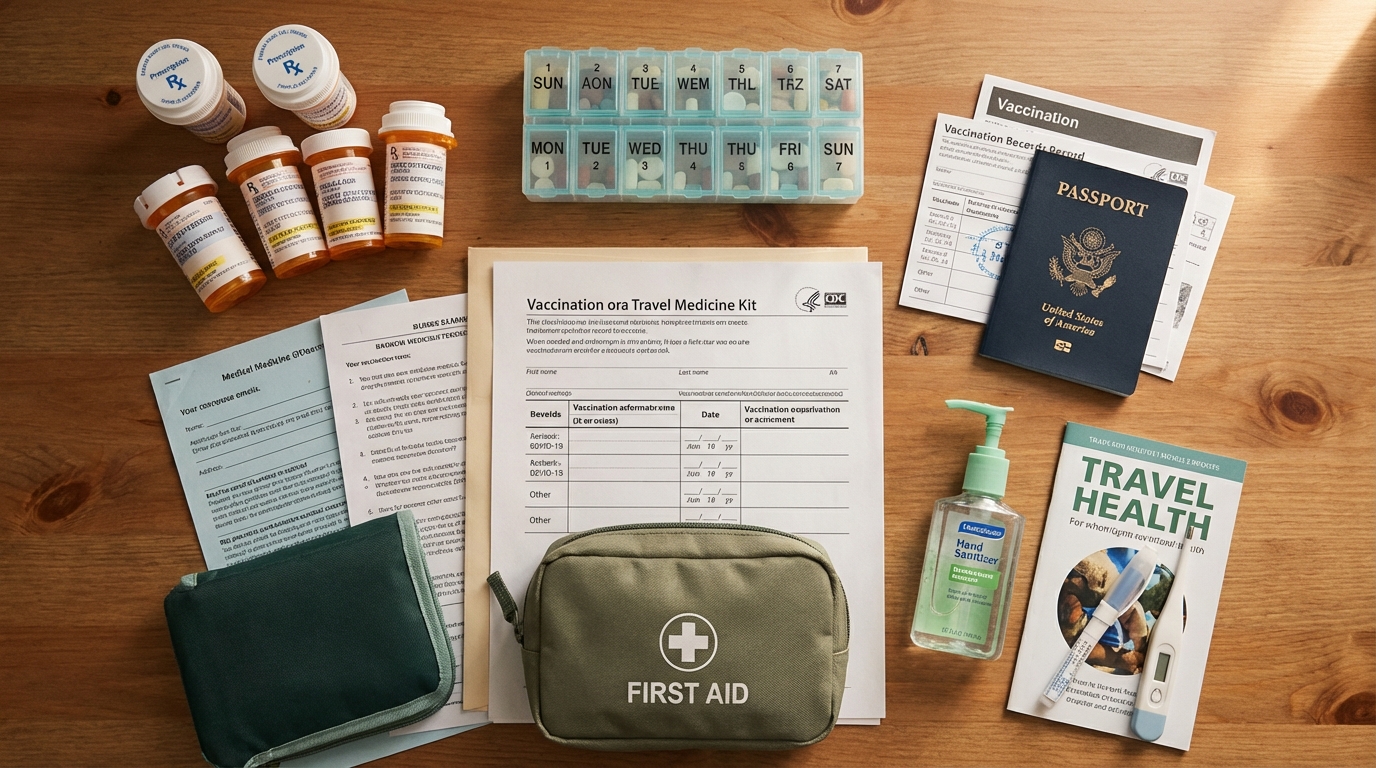
You're standing in a pharmacy in Vietnam holding an empty bottle of your blood pressure medication. The pharmacist looks at your US prescription, shrugs, and says something in Vietnamese. Your phone's translation app isn't helping. You have three days of medication left, and no idea how to get more.
Managing medications abroad is one of the most stressful aspects of nomad healthcare. Different countries have different rules about what requires a prescription, what's available, what names drugs go by, and whether your foreign prescription means anything at all.
This guide covers everything you need to manage medications while traveling—from preparation before departure to navigating foreign pharmacies to handling controlled substances across borders.
For general healthcare abroad, see our complete healthcare guide. For emergencies, see our medical emergencies guide.
The Medication Challenge for Nomads
Prescription Reality for Nomads
Why Medications Get Complicated
| Challenge | Impact |
|---|---|
| Brand name differences | Same drug, different names by country |
| Generic name variations | Even generics have regional names |
| Prescription recognition | Your prescription may mean nothing |
| Controlled classifications | Varies significantly by country |
| Dosage differences | Metric vs. non-metric, different standards |
| Formulation availability | Your exact drug may not exist |
Categories of Medications
Category 1: Non-controlled maintenance medications Blood pressure, cholesterol, thyroid, most antibiotics, etc.
- Generally manageable abroad
- Often available OTC in some countries
- Generic equivalents widely available
Category 2: Controlled substances ADHD medications, opioid painkillers, benzodiazepines, sleep medications
- Heavily regulated everywhere
- Requires significant preparation
- May be illegal in some countries
Category 3: Specialized medications Biologics, injectables, temperature-sensitive drugs
- Complex logistics
- May require refrigeration
- Often only available in major cities
Before You Leave: Medication Preparation
Preparation makes everything easier. Do this before extended travel.
Step 1: Create Your Medication Document
Create a comprehensive list including:
| Information | Why It Matters |
|---|---|
| Drug name (brand) | What you know it as |
| Drug name (generic/international) | What it's called elsewhere |
| Dosage | Exact amount and frequency |
| Prescribing doctor | Contact information |
| Purpose | Why you take it |
| Duration on medication | History context |
| Alternatives | If your exact drug unavailable |
Example entry:
Brand: Lipitor
Generic: Atorvastatin
Dosage: 20mg once daily
Doctor: Dr. Smith, 555-123-4567
Purpose: Cholesterol management
On medication since: 2022
Alternatives: Simvastatin, Rosuvastatin (different dosing)
Step 2: Get Doctor Documentation
Request from your physician:
Essential letter should include:
- Your name and passport number
- List of all medications with generic names and dosages
- Medical conditions requiring these medications
- Statement of medical necessity
- Doctor's contact information
- Doctor's license number
- Official letterhead and signature
For controlled substances, also include:
- Specific justification for the controlled medication
- History of use and stability
- Confirmation this is ongoing treatment, not new prescription
Step 3: Stock Up
Obtain the maximum supply possible:
| Duration | Recommendation |
|---|---|
| 1-3 months travel | 3-month supply |
| 3-6 months travel | 6-month supply |
| Longer travel | 6 months + refill plan |
Tips for getting extended supplies:
- Ask doctor for extended prescription
- Request 90-day mail order if insurance allows
- Explain travel situation to insurance (some accommodate)
- Pay out-of-pocket for extra supply if needed
Step 4: Research Destinations
Before arriving somewhere new:
Find out:
- Is your medication available locally?
- What's the local brand name?
- Is it prescription or OTC there?
- Price comparison (often much cheaper)
- Pharmacy locations and hours
- Language issues
Resources:
- Drugs.com international equivalents
- Embassy medication guides
- Expat forums for destination
- Direct contact with pharmacies (email)
Understanding Generic vs. Brand Names
This is where most confusion happens.
The Name Problem
Your Lipitor is:
- Atorvastatin (generic/international name)
- Lipitor (Pfizer brand, US)
- Sortis (brand name in Germany)
- Torvast (brand name in some countries)
- Plus dozens of generic manufacturer names
Using the generic name (Atorvastatin) works in most pharmacies worldwide.
Common Medications and Their Generic Names
| Common Brand | Generic Name | Drug Class |
|---|---|---|
| Lipitor | Atorvastatin | Cholesterol |
| Synthroid | Levothyroxine | Thyroid |
| Zoloft | Sertraline | Antidepressant |
| Prozac | Fluoxetine | Antidepressant |
| Lexapro | Escitalopram | Antidepressant |
| Xanax | Alprazolam | Anxiety (controlled) |
| Adderall | Amphetamine salts | ADHD (controlled) |
| Ambien | Zolpidem | Sleep (controlled) |
| Norvasc | Amlodipine | Blood pressure |
| Metformin | Metformin | Diabetes |
| Advair | Fluticasone/Salmeterol | Asthma |
| Nexium | Esomeprazole | Acid reflux |
| Prilosec | Omeprazole | Acid reflux |
| Claritin | Loratadine | Allergy |
| Zyrtec | Cetirizine | Allergy |
Finding International Equivalents
Online resources:
- Drugs.com: Search drug, find "International" section
- RxList: Comprehensive drug information
- WHO Essential Medicines List: Standard generic names
- Local pharmacy websites: Search generic name
Navigating Foreign Pharmacies
What to expect and how to communicate.
Pharmacy Types
Chain pharmacies (Boots, Guardian, Farmacity)
- More standardized
- Staff may have some English
- Computer systems may show international equivalents
- Credit cards usually accepted
Independent pharmacies
- Variable English
- May be more flexible
- Cash often preferred
- Personal relationships possible
Hospital pharmacies
- Best for complex medications
- Often have English speakers
- May require hospital visit/prescription
- Usually most comprehensive stock
Communication Strategies
Bring:
- Written medication list (generic names)
- Empty medication container (shows exact drug, dose, manufacturer)
- Phone with translation app
- Pictures of medication packaging
- Doctor's letter
Show, don't just tell:
- Physical pill or bottle first
- Written generic name second
- Describe purpose third
Useful phrases (have translated ready):
- "I need to refill this medication"
- "This is the generic name: [name]"
- "I have a prescription from my doctor"
- "What is the equivalent available here?"
- "What is the dosage available?"
What to Expect
| Country Type | Typical Experience |
|---|---|
| Developed Asia (Japan, Korea) | Strict, need local prescription |
| SE Asia (Thailand, Vietnam) | Flexible, many meds OTC |
| Western Europe | Moderate, varies by drug |
| Eastern Europe | Often flexible |
| Latin America | Generally flexible |
| Middle East | Varies, some strict |
Pricing
Medications are often dramatically cheaper abroad:
| Medication | US Cost | Thailand | Mexico | India |
|---|---|---|---|---|
| Lipitor (30 day) | $300+ | $15-30 | $20-40 | $5-15 |
| Zoloft (30 day) | $200+ | $10-20 | $15-30 | $3-10 |
| Metformin (30 day) | $50+ | $3-8 | $5-10 | $2-5 |
Prices approximate, vary by pharmacy and exact formulation
Controlled Substances: Special Considerations
Controlled medications require the most careful handling.
What's Typically Controlled
Almost universally controlled:
- Opioid pain medications (codeine, oxycodone, tramadol)
- Benzodiazepines (Xanax, Valium, Ativan)
- ADHD medications (Adderall, Ritalin, Vyvanse)
- Sleep medications (Ambien, Lunesta)
- Certain muscle relaxers
Note: Classification varies. Tramadol is OTC in some countries, highly controlled in others. Codeine is available over-the-counter in some places, prescription elsewhere.
Before Travel with Controlled Substances
Documentation required:
- Original prescription in your name
- Letter from prescribing physician (purpose, necessity, dosage)
- Medication in original labeled container
- Only quantity needed for trip (reasonable supply)
Research specific destination:
- Some countries ban certain substances entirely
- Japan, for example, bans most ADHD medications
- Middle Eastern countries have strict drug laws
- Singapore has severe penalties for drug violations
Check embassy resources:
- Contact destination embassy for current regulations
- Some require pre-approval or import permits
- Get any required documentation before travel
Countries with Strict Controlled Substance Laws
Very strict (research carefully):
- Japan (most stimulants banned)
- Singapore (severe penalties)
- UAE/Gulf states (many restrictions)
- Indonesia (strict enforcement)
- China (variable, strict for some)
Moderate (documentation critical):
- Australia (declare, may need permit)
- UK (controlled drugs certificate available)
- EU countries (Schengen certificate for EU residents)
Refilling Controlled Substances Abroad
Generally difficult or impossible:
- Most countries won't fill foreign controlled prescriptions
- Local doctors hesitant to prescribe without history
- Some medications simply don't exist locally
Strategies:
- Carry sufficient supply for entire trip
- Plan trips home for refills
- Work with psychiatrist who understands travel needs
- Some telehealth services may help (US-based, US pharmacy)
- Identify countries where you can establish care
ADHD Medication Specifically
ADHD medications deserve special mention because many nomads take them:
Challenges:
- Amphetamines illegal or unavailable in many countries
- Even where legal, refills nearly impossible
- Different formulations available
Strategies:
- Stock up (some get 90-day supplies)
- Consider non-stimulant alternatives (Strattera, available more widely)
- Work with US-based psychiatrist via telehealth
- Plan travel around medication access
- Some nomads return home quarterly for refills
Getting Prescriptions Abroad
When you need a new prescription or refill locally.
Walk-in Clinics and Private Doctors
For non-controlled medications:
Process:
- Find a private clinic or doctor
- Bring documentation of your medication and condition
- Explain you need prescription refill
- Doctor may want brief consultation
- Pay consultation fee (usually $30-80)
- Receive local prescription
- Fill at pharmacy
Tips:
- International clinics are easiest
- Bring your medication container
- Have medical history ready
- Be clear this is ongoing treatment, not new diagnosis
Hospital Outpatient Clinics
For more complex needs:
Better for:
- Specialized medications
- Controlled substances (sometimes)
- When private doctors won't prescribe
- Establishing ongoing care
Process:
- Go to hospital outpatient clinic
- May need to see specialist
- More thorough evaluation
- Local prescription issued
- Often more documentation produced
Telemedicine Prescriptions
For US citizens especially:
Options:
- Teladoc, Doctor on Demand (US pharmacy only)
- Get US prescription filled, shipped internationally
- Use telehealth for documentation to show local pharmacy
For telemedicine details, see our telemedicine guide.
Medication Storage and Transport
Traveling with Medications
Carry-on, always:
- Never check essential medications
- Keep in original containers when possible
- Bring more than you need
- Split supply between carry-on and person (if traveling with someone)
What to bring:
- Medications for full trip + buffer
- Doctor's letter
- Prescription copies
- Extra empty containers (for splitting)
- Pill organizers are fine for backup
Storage Requirements
Temperature sensitive:
- Insulin: Keep cool, don't freeze
- Some biologics: Refrigeration required
- Check your medication's requirements
- Travel coolers/insulated bags for temperature-sensitive drugs
General storage:
- Keep dry
- Away from extreme heat
- Original containers protect from light
- Note expiration dates
Customs and Border Crossings
Prepare for questions:
- Have documentation ready
- Original labeled containers
- Reasonable quantities
- Be honest about what you're carrying
If questioned:
- Stay calm
- Show prescription and doctor's letter
- Explain medical necessity
- Controlled substances may get extra scrutiny
Emergency Medication Situations
Running Out Unexpectedly
Immediate steps:
- Check all bags (medication sometimes migrates)
- Contact pharmacy back home (they may help)
- Contact your doctor (may call in prescription)
- Find local pharmacy and explain situation
- Visit local doctor if needed
Many countries are flexible: Pharmacists often provide limited quantities of non-controlled medications for emergencies, especially with documentation.
Lost or Stolen Medications
Document and replace:
- File police report if theft
- Contact insurance if applicable
- Get replacement prescription locally
- For controlled substances, this is much harder
Prevention:
- Photograph all medications and prescriptions
- Store copies of documentation digitally
- Never check medications
- Keep split supply in different locations
Medication Doesn't Exist Locally
Options:
- Find equivalent medication (different brand, same generic)
- Find alternative medication (same class, different drug)
- Order from international pharmacy
- Travel to location where available
- Have someone send from home
Country-Specific Notes
Thailand
Very medication-friendly. Many prescriptions available OTC at pharmacies. Pharmacists knowledgeable. Excellent for stocking up on non-controlled medications. Controlled substances still require prescription.
Mexico
Similar to Thailand—many medications available OTC. Prices very low. Pharmacies everywhere. Controlled substances regulated but some flexibility. Border pharmacies cater to Americans.
Europe (EU)
More regulated than Asia/Latin America. Usually need prescription for anything beyond basic OTC. EU prescriptions recognized across EU with some limitations. Quality very high.
Japan
Very strict. Many medications banned or heavily controlled. Bring sufficient supply. Stimulants (including ADHD meds) prohibited. Research thoroughly before traveling with any medication.
India
Very flexible pharmacy access. Prices extremely low. Quality variable—stick to name brands. English widely used in pharmacies. Easy to stock up on non-controlled medications.
Building Your Medication System
Before Departure Checklist
- Create comprehensive medication document
- Obtain doctor's letter for all medications
- Get 3-6 month supply of regular medications
- Research destination regulations
- Identify local brand names/generics
- Prepare translated medication list
- Photograph all medications and documents
- Pack medications in carry-on
- Know nearest pharmacy to accommodation
Ongoing Management
- Track supplies (don't let them run low)
- Note which countries you can easily refill
- Build relationships with good pharmacies
- Keep documentation updated
- Plan resupply trips
Related Resources
Healthcare:
Insurance: