Travel Insurance by Region: Coverage Differences You Need to Know
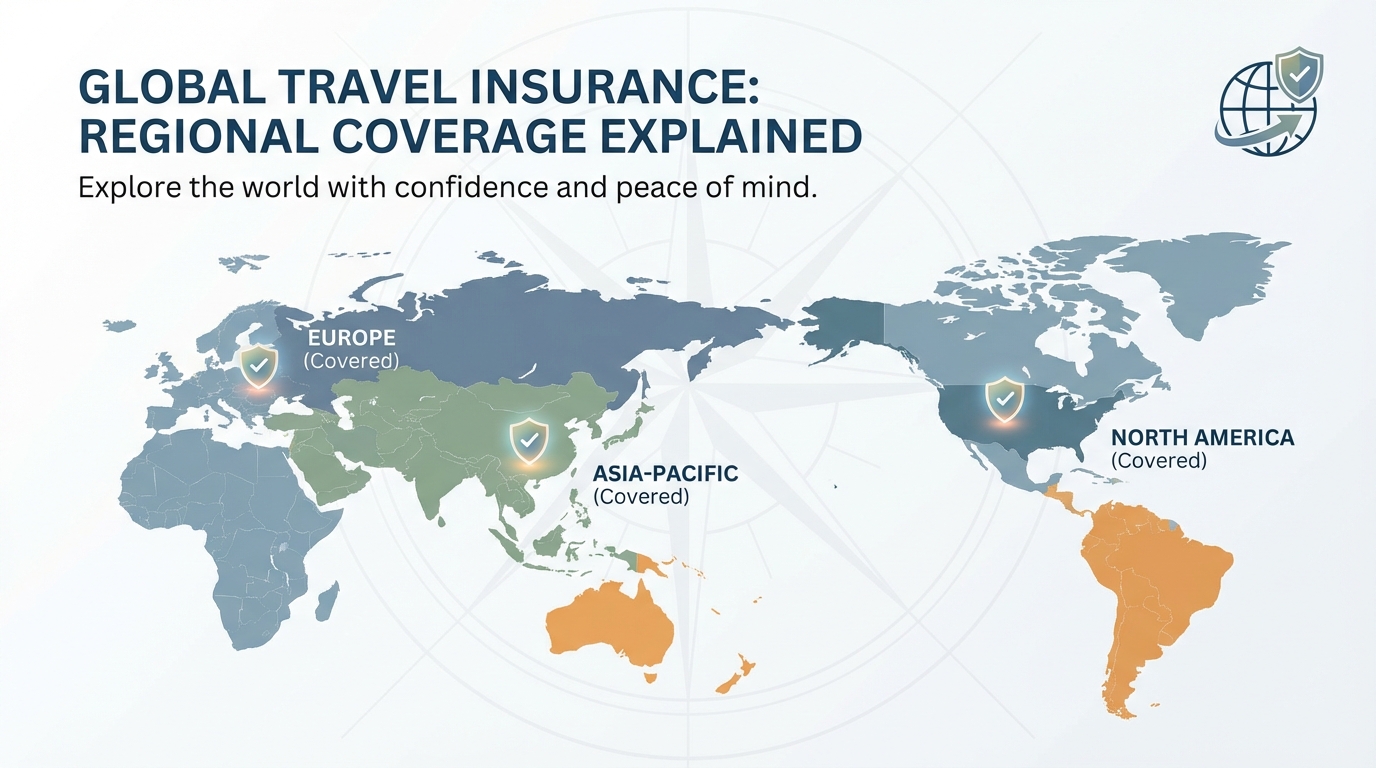

Healthcare costs, common risks, and coverage requirements vary dramatically by region. A medical emergency that costs $5,000 in Thailand might cost $150,000 in the USA. Scooter accidents are common in Bali but rare in Portugal. Some regions require specific coverage minimums for visa approval.
Understanding regional differences helps you choose appropriate coverage—and avoid being under or over-insured for your destinations.
This article is part of our complete digital nomad travel insurance guide.
Southeast Asia
Healthcare Costs and Quality
| Country | Hospital Day | ER Visit | Major Surgery | Healthcare Quality |
|---|---|---|---|---|
| Thailand | $50-150 | $100-300 | $3,000-15,000 | High (Bangkok) |
| Vietnam | $30-100 | $50-200 | $2,000-10,000 | Variable |
| Indonesia | $50-200 | $100-500 | $5,000-20,000 | Variable |
| Philippines | $40-150 | $100-300 | $3,000-12,000 | Good in cities |
| Malaysia | $60-200 | $150-400 | $4,000-15,000 | High |
Key insight: Healthcare is affordable. Your bigger risk is the incident, not the treatment cost.
Common Risks
| Risk | Frequency | Insurance Relevance |
|---|---|---|
| Scooter accidents | Very high | Must have moto coverage (125cc limit usually) |
| Food poisoning | High | Usually covered, low cost |
| Tropical diseases | Moderate | Covered under medical |
| Petty theft | High | Gear coverage limits matter |
| Diving incidents | Moderate | Depth limits matter |
Insurance Recommendations
Minimum: Budget coverage like SafetyWing ($250K medical sufficient for regional costs)
Recommended upgrades:
- Verify scooter coverage (125cc+ common in Bali)
- Diving coverage if applicable
- Moderate gear coverage
Special considerations:
- International evacuation important (regional hospitals may lack specialists)
- Political evacuation not typically needed
- Monsoon season may affect trip coverage
Europe
Healthcare Costs and Quality
| Country | Hospital Day | ER Visit | Major Surgery | Healthcare Quality |
|---|---|---|---|---|
| Western Europe | $300-800 | $300-500 | $15,000-50,000 | Very high |
| Eastern Europe | $100-300 | $100-300 | $5,000-15,000 | Good to high |
| UK | $400-700 | $200-400 | $20,000-60,000 | High |
| Switzerland | $800-1,500 | $500-1,000 | $30,000-100,000 | Very high |
| Nordics | $400-800 | $200-400 | $15,000-40,000 | Very high |
Key insight: Costs are moderate to high. Quality is consistently good.
Visa Insurance Requirements
Schengen Zone:
- Minimum €30,000 (~$33,000) medical coverage required
- Must cover all 27 Schengen countries
- Must include repatriation
- All nomad policies meet this requirement
Non-Schengen (UK, etc.):
- Requirements vary by visa type
- Work visas may have specific insurance requirements
Common Risks
| Risk | Frequency | Insurance Relevance |
|---|---|---|
| Standard tourism | Low-moderate | Basic coverage sufficient |
| Winter sports | Moderate | Skiing coverage needed if applicable |
| Theft in tourist areas | Moderate | Gear coverage useful |
| Flight disruptions | Moderate | Trip delay coverage helpful |
Insurance Recommendations
Minimum: Budget coverage meets Schengen requirements
Recommended upgrades:
- Higher medical limits for Western Europe/Switzerland
- Winter sports coverage if skiing
- Trip delay coverage (helpful for complex itineraries)
Special considerations:
- EU citizens have EHIC for reciprocal coverage
- UK post-Brexit requires full coverage for non-UK citizens
- GHIC replaced EHIC for UK citizens in EU
Latin America
Healthcare Costs and Quality
| Country | Hospital Day | ER Visit | Major Surgery | Healthcare Quality |
|---|---|---|---|---|
| Mexico | $100-400 | $150-400 | $5,000-25,000 | Good in cities |
| Colombia | $80-250 | $100-300 | $4,000-15,000 | Good in major cities |
| Argentina | $100-300 | $100-300 | $5,000-20,000 | Good |
| Brazil | $150-400 | $200-500 | $8,000-30,000 | Good to high in cities |
| Costa Rica | $150-400 | $200-400 | $8,000-25,000 | High |
Key insight: Quality varies significantly between urban and rural areas. Major cities have excellent private hospitals.
Common Risks
| Risk | Frequency | Insurance Relevance |
|---|---|---|
| Altitude sickness | High (Andes) | Covered under medical |
| Food/water illness | Moderate-high | Usually covered |
| Petty theft | High | Gear coverage matters |
| Road accidents | Moderate | Medical coverage essential |
| Adventure activities | Moderate | Check specific coverage |
Altitude Considerations
High-altitude destinations:
- Peru (Cusco, Lake Titicaca): 3,400-3,800m
- Bolivia (La Paz): 3,600m
- Ecuador (Quito): 2,850m
- Colombia (Bogota): 2,640m
Insurance implications:
- Altitude sickness is covered as medical condition
- Evacuation to lower altitude may be needed
- Higher altitudes increase medical risk
Insurance Recommendations
Minimum: Budget coverage adequate for most destinations
Recommended upgrades:
- Higher evacuation limits (variable healthcare quality in remote areas)
- Adventure coverage for common activities (hiking, rafting)
- Higher medical limits if visiting Brazil (more expensive healthcare)
Special considerations:
- Evacuation important for remote areas
- Some countries have mandatory insurance requirements for entry
North America (USA Focus)
Healthcare Costs (USA)
| Service | Typical Cost | Range |
|---|---|---|
| ER visit | $2,000-5,000 | $1,000-10,000 |
| Hospital day | $3,000-8,000 | $2,000-15,000 |
| Ambulance | $1,000-2,500 | $500-5,000 |
| ICU day | $10,000-20,000 | $5,000-30,000 |
| Major surgery | $50,000-150,000 | $30,000-500,000 |
| Heart attack treatment | $75,000-200,000 | $50,000-500,000 |
Key insight: USA healthcare costs are exponentially higher than anywhere else. Budget coverage may be insufficient for serious incidents.
Why USA Coverage Is Different
- Most expensive healthcare system in the world
- No government safety net for visitors
- A single serious incident can reach $500,000
- $100,000 coverage limits can be exceeded quickly
Insurance Recommendations for USA
Minimum: $250,000 medical coverage (SafetyWing's limit)
Strongly recommended: $500,000+ (Insured Nomads or similar)
Ideal: $1,000,000+ for extended USA stays
Canada note: Healthcare costs are high but not USA-level. $250,000 coverage is generally adequate.
Common Coverage Exclusions
Many policies have USA-specific provisions:
- Higher deductibles for USA claims
- Separate USA coverage limits
- USA excluded from some budget policies
Always verify: Your policy covers USA at adequate levels before visiting.
Middle East
Healthcare Costs and Quality
| Country | Hospital Day | ER Visit | Major Surgery | Healthcare Quality |
|---|---|---|---|---|
| UAE | $300-800 | $200-500 | $15,000-50,000 | Very high |
| Israel | $400-800 | $300-600 | $20,000-60,000 | Very high |
| Turkey | $150-400 | $150-400 | $8,000-25,000 | Good to high |
| Jordan | $100-300 | $100-300 | $5,000-15,000 | Good |
Common Risks
| Risk | Frequency | Insurance Relevance |
|---|---|---|
| Heat-related illness | Moderate | Covered under medical |
| Road accidents | Moderate | Medical coverage essential |
| Political instability | Variable | May exclude certain areas |
Insurance Considerations
Coverage exclusions:
- Some areas may be excluded (check policy)
- Conflict zones typically not covered
- War exclusions common
Recommendations:
- Verify specific countries covered
- Higher medical limits for UAE/Israel (expensive)
- Standard budget coverage adequate for Turkey, Jordan
Africa
Healthcare Costs and Quality
| Region | Hospital Day | Major Surgery | Healthcare Quality |
|---|---|---|---|
| South Africa | $200-500 | $10,000-30,000 | Good (private) |
| Morocco | $100-300 | $5,000-15,000 | Good in cities |
| Kenya/Tanzania | $150-400 | $8,000-25,000 | Variable |
| West Africa | $100-300 | $5,000-20,000 | Limited |
Critical Considerations
Evacuation is paramount:
- Medical facilities limited in many areas
- Long distances to adequate care
- Air evacuation often necessary
- Recommend: $500,000+ evacuation coverage
Common Risks
| Risk | Frequency | Insurance Relevance |
|---|---|---|
| Tropical diseases | High | Medical coverage essential |
| Safari accidents | Low-moderate | Check activity coverage |
| Road accidents | High | Medical + evacuation critical |
| Healthcare quality gaps | High | Evacuation coverage critical |
Insurance Recommendations
Minimum: Comprehensive coverage with high evacuation limits
Essential:
- $500,000+ evacuation (non-negotiable)
- Tropical disease coverage
- Repatriation coverage
Consider:
- Standalone evacuation (GEOS, Global Rescue)
- Medical evacuation membership
Asia-Pacific (Australia, NZ, Japan)
Healthcare Costs
| Country | Hospital Day | ER Visit | Major Surgery | Healthcare Quality |
|---|---|---|---|---|
| Australia | $500-1,000 | $300-600 | $20,000-60,000 | Very high |
| New Zealand | $400-800 | $200-500 | $15,000-40,000 | Very high |
| Japan | $400-1,000 | $300-700 | $20,000-70,000 | Very high |
Key insight: High quality but expensive. Coverage needs similar to Western Europe.
Visa Insurance Requirements
Australia:
- Working Holiday visa requires specific insurance
- Must cover emergency hospital treatment and medical evacuation
- Some employers require additional coverage
Japan:
- No mandatory insurance for tourists
- Residents must enroll in National Health Insurance
- Very high healthcare costs make insurance essential
Insurance Recommendations
Minimum: $250,000-500,000 medical coverage
Recommended: Comprehensive coverage given high healthcare costs
Regional Coverage Summary
| Region | Healthcare Cost | Evacuation Importance | Recommended Minimum |
|---|---|---|---|
| Southeast Asia | Low | Moderate | Budget ($100K-250K) |
| Europe | Moderate-High | Low | Budget meets Schengen |
| Latin America | Low-Moderate | Moderate-High | Budget with high evac |
| USA | Very High | Low | $500K+ strongly advised |
| Middle East | Moderate-High | Low-Moderate | $250K+ |
| Africa | Low-Moderate | Very High | Comprehensive + high evac |
| Asia-Pacific | High | Low | $250K-500K |
FAQ
Frequently Asked Questions
Related Guides
- Complete Digital Nomad Travel Insurance Guide
- Emergency Medical Evacuation Insurance
- Travel Insurance for Adventure Activities
- Best Budget Travel Insurance Under $100/Month
- SafetyWing vs World Nomads vs Insured Nomads
Your destination mix should influence your coverage choices. Budget insurance works well for Southeast Asia and Eastern Europe. Higher coverage is worth the premium for USA, Western Europe, and Africa. And evacuation coverage becomes critical for regions with limited healthcare infrastructure.
Match your coverage to your itinerary, and don't assume one policy fits all destinations equally.
About the Author