Carry-On Size Limits by Airline: The 2027 Reference Table

The short answer
Carry-on size limits by airline are set by each carrier, not by any regulator, so there is no universal number. A bag at or under 55 x 40 x 20 cm and 7 kg clears most European carriers. To clear the US majors, the Gulf and Asia as well, come down to about 50 x 35 x 20 cm: width, not length, is what fails first.
Two things decide whether that bag flies. The first is the external maximum, measured with wheels, handles and expansion included. The second is weight, which European, Gulf and Asian carriers check and most US carriers do not publish at all. For everything else that moved in the cabin this year — batteries, liquids, screening lanes — see our guide to airline carry-on rules.
Every figure below was checked against the carrier's own baggage page in November 2026. Cabin allowances change without notice and vary by fare, route and aircraft, so confirm your carrier's page before you fly.
How airlines actually measure your bag
The number that matters is the external maximum with everything attached, and carriers say so in writing.
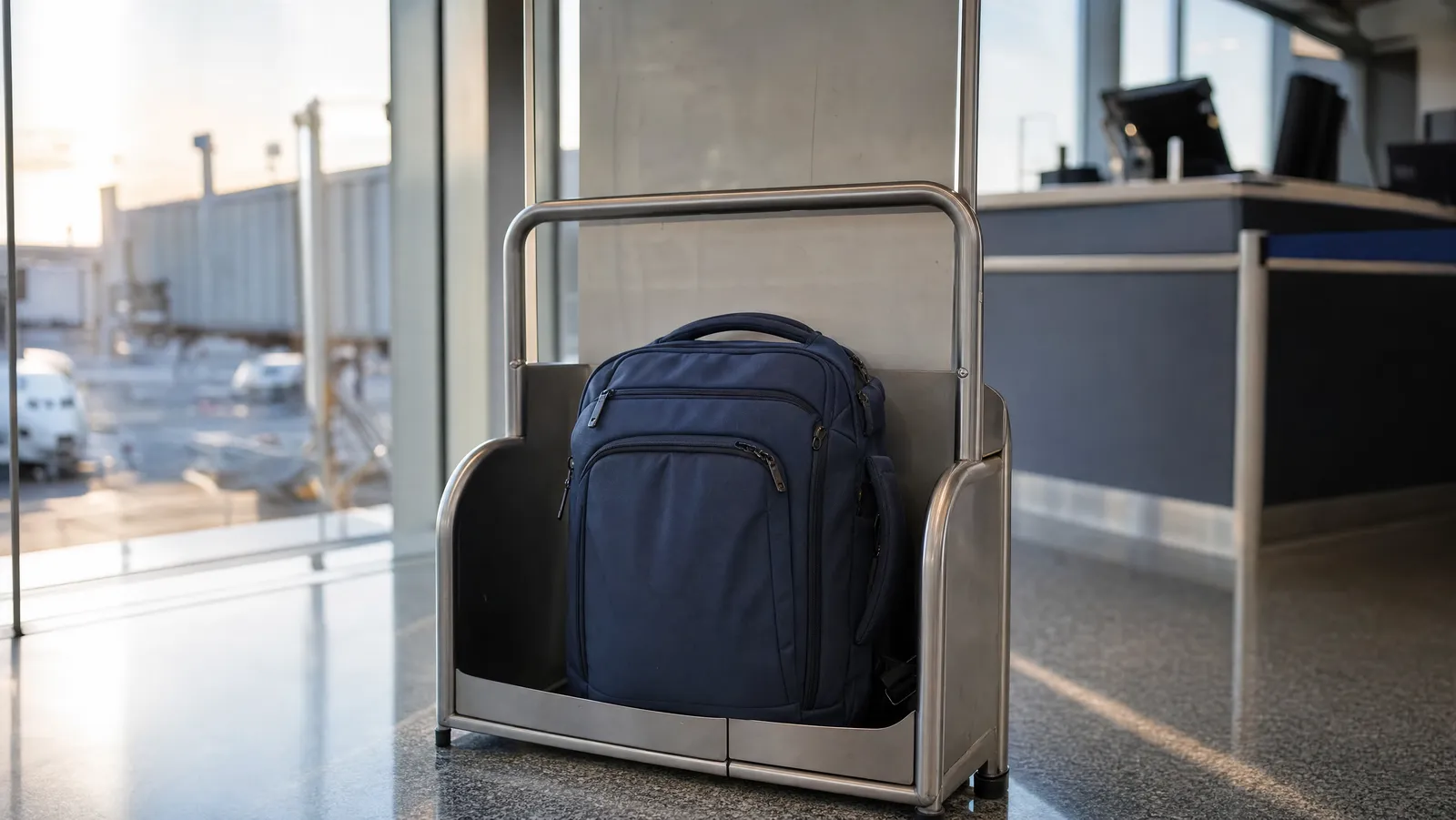
Qantas' carry-on page states that "carry-on size is calculated by measuring a bag's height, width and depth (including any wheels and packed away handles)". American Airlines' page says a bag "cannot exceed 22 x 14 x 9 inches (56 x 36 x 23 cm) including handles and wheels" and adds the condition people forget: it "must fit in the airport sizer". AirAsia counts handles, wheels and side pockets.
Alaska Airlines names the specific failure in its own travel tips: "expandable pockets on the front of a suitcase can increase the dimensions of a carry-on to the point that it no longer fits into an overhead bin". If your bag has an expansion zip, its size is the expanded size.
Three things follow for a one-bag traveller:
- Litres tell you nothing. Capacity is a volume; a sizer is a box. A tall, flat 40-litre pack passes gauges that a deep, round 35-litre pack fails, because depth is what carriers trim hardest.
- Soft beats hard, until it is overpacked. A soft pack compresses into a gauge; a shell does not. Stuff it until it bulges and it fails on that same depth.
- The sizer is the arbiter. Ryanair's help pages give the small-bag gauge as 42 x 20 x 30 cm against a published allowance of 40 x 30 x 20 cm. That is a couple of centimetres of slack, not a policy.
Which makes how you organise the inside of the pack a sizing question rather than a tidiness one, and is where packing cubes earn their place: they flatten a bag into a gauge.
Europe and Turkey: small boxes, enforced scales
| Carrier | Cabin bag | Weight | Free personal item | In base fare? |
|---|---|---|---|---|
| Ryanair | 55 x 40 x 20 cm | 10 kg | 40 x 30 x 20 cm | No, Priority add-on |
| easyJet | 56 x 45 x 25 cm | 15 kg | 45 x 36 x 20 cm, 15 kg | No, paid |
| Wizz Air | 55 x 40 x 23 cm | 10 kg | 40 x 30 x 20 cm, 10 kg | No, WIZZ Priority |
| Lufthansa | 55 x 40 x 23 cm | 8 kg | 40 x 30 x 15 cm | Not Economy Basic |
| British Airways | 56 x 45 x 25 cm | 23 kg | 40 x 30 x 15 cm | Yes |
| Air France | 55 x 35 x 25 cm | 12 kg combined | Small bag | Fare-dependent |
| KLM | 55 x 35 x 25 cm | 12 kg combined | 40 x 30 x 15 cm | Yes, not Basic |
| Iberia | 56 x 40 x 25 cm | 10 kg | 40 x 30 x 15 cm | Yes |
| Vueling | 55 x 40 x 20 cm | 10 kg | 40 x 30 x 20 cm | No on Basic |
| Norwegian | 55 x 40 x 23 cm | 10 kg combined | 30 x 40 x 20 cm | No on LowFare |
| Turkish Airlines | 55 x 40 x 23 cm | 8 kg | Not retrieved | Yes |
Checked November 2026 against each carrier's own baggage pages. Confirm your route and fare on the operator's own page before flying.
The last column is the one that costs money. Ryanair's terms give every fare one small bag of up to 40 x 30 x 20 cm that must fit under the seat, and reserve the 10 kg, 55 x 40 x 20 cm overhead bag for Priority and 2 Cabin Bags. Wizz Air's own booking text reads: "Only WIZZ Priority passengers are entitled to bring an extra trolley bag of maximum size 55x40x23 cm in addition to the free under-seat bag (max. 40x30x20 cm)." easyJet is the most generous on the free item at "maximum size 45 x 36 x 20cm (including any handles and wheels)" and 15 kg.
Legacy carriers publish weight instead. Lufthansa lists one carry-on at 8 kg and 55 x 40 x 23 cm, and has excluded it from Economy Basic on short and medium haul for travel from 19 May 2026. KLM is blunt about the arithmetic: hand baggage "must not exceed the maximum size of 55 x 35 x 25 cm" including handles and wheels, and "your small bag and hand baggage combined may weigh up to 12 kg". Air France publishes the same box and cap. British Airways is the outlier the other way at 56 x 45 x 25 cm and up to 23 kg; Turkish Airlines' page states 23 x 40 x 55 cm and 8 kg.
North America: big boxes, no scales
| Carrier | Cabin bag | Weight | Free personal item | In base fare? |
|---|---|---|---|---|
| Delta | 22 x 14 x 9 in (56 x 35 x 23 cm) | None published | 1 personal item | Yes |
| American | 22 x 14 x 9 in (56 x 36 x 23 cm) | None published | 18 x 14 x 8 in | Yes |
| Alaska | 22 x 14 x 9 in | None published | 1 smaller item | Yes |
| JetBlue | 22 x 14 x 9 in (55.88 x 35.56 x 22.86 cm) | None (stated) | 17 x 13 x 8 in | Yes, all fares |
| Southwest | 24 x 16 x 10 in | None published | 18.5 x 13.5 x 8.5 in | Yes |
Checked November 2026. Confirm your route and fare on the operator's own page before flying.
Delta's page allows one carry-on and one personal item "free of charge", caps the bag at 22 x 14 x 9 inches, notes that "these measurements include any handles or wheels", and publishes no weight figure. JetBlue says it out loud: "JetBlue does not currently have a weight restriction for carry-on bags", asking only that you can lift it. Southwest's 24 x 16 x 10 inch box is the largest in this article, and its optional-charges page lists both bags as free.
One regional catch: Delta's page says that on Delta Connection flights with 50 seats or fewer, passengers "are only permitted to carry personal items on board". Qantas warns that on QantasLink Dash 8 Q400 flights "small wheelie bags don't fit overhead, and will be collected at boarding".
We left United out: we could not retrieve its baggage page to verify a current figure, and 28 checked rows beat 29 with a guess in them.
Asia-Pacific and the Gulf: 7 kg is the real number
| Carrier | Cabin bag | Weight | Free personal item | In base fare? |
|---|---|---|---|---|
| Emirates | 55 x 38 x 22 cm, 115 cm total | 7 kg Economy | In the allowance | Yes |
| Qatar Airways | 50 x 37 x 25 cm | 1 piece, 7 kg Economy | Purse, coat, umbrella | Yes |
| Singapore Airlines | Three sides within 115 cm | 1 piece, 7 kg Economy | Reportedly 40 x 30 x 10 cm | Yes |
| AirAsia | 56 x 36 x 23 cm plus 40 x 30 x 10 cm | 7 kg for both | Inside the 7 kg | Yes |
| Scoot | 54 x 38 x 23 cm, 115 cm total | 2 pieces, 10 kg | 40 x 30 x 10 cm | Yes |
| Thai Airways | 56 x 45 x 25 cm | 7 kg | 37.5 x 25 x 12.5 cm, 1.5 kg | Yes |
| ANA international | 55 x 40 x 25 cm and 115 cm total | 10 kg for both pieces | 40 x 30 x 20 cm | Yes |
| Qantas | 56 x 36 x 23 cm | 7 kg intl, 14 kg domestic | 1 personal item | Yes |
Checked November 2026. Confirm your route and fare on the operator's own page before flying.
Several of those rows use a test most travellers have never met: a cap on the sum of the three dimensions. Emirates says the carry-on "may not exceed 115 centimeters (length + width + height)" alongside a 55 x 38 x 22 cm box that adds to exactly 115. Singapore Airlines publishes only the sum for Economy — one piece, up to 7 kg, "sum of length, width and height of each piece should not exceed 115cm" — and its baggage FAQ lists that single piece for both Economy and Premium Economy. An additional personal item of up to 40 x 30 x 10 cm is widely reported, but we could not confirm it on a current Singapore Airlines page, so plan on one piece. ANA applies both tests internationally, wheels and handles included, and a tighter 45 x 35 x 20 cm limit on aircraft with fewer than 100 seats. From flights boarding on or after 1 July 2026, ANA's personal-item limit became 40 x 30 x 20 cm, with the carry-on limit unchanged.
Latin America: 10 kg, and watch the combined cap
| Carrier | Cabin bag | Weight | Free personal item | In base fare? |
|---|---|---|---|---|
| LATAM | 55 x 35 x 25 cm | 12 kg Economy, 16 kg Premium | 45 x 35 x 20 cm, 10 kg | Yes |
| Avianca | 55 x 35 x 25 cm | 10 kg | 45 x 35 x 25 cm | Yes, not Basic |
| Copa | 56 x 36 x 26 cm | 10 kg | Not retrieved | Yes, incl Basic |
| Volaris | 55 x 40 x 25 cm | 10 kg | 35 x 45 x 20 cm | Yes |
Checked November 2026. Confirm your route and fare on the operator's own page before flying.
LATAM is the generous one: a 55 x 35 x 25 cm bag at "12 kg (26 lb) if you travel in Economy Cabin and 16 kg (35 lb) if you travel in Premium Economy or Premium Business Cabins", plus a separate 45 x 35 x 20 cm bag of up to 10 kg. Avianca measures its 10 kg, 55 x 35 x 25 cm bag "including wheels and handles". Volaris allows a bigger box but adds a trap: "the combined weight of your carry-on baggage and personal item must not exceed 20 kg."
The weight trap, with the arithmetic
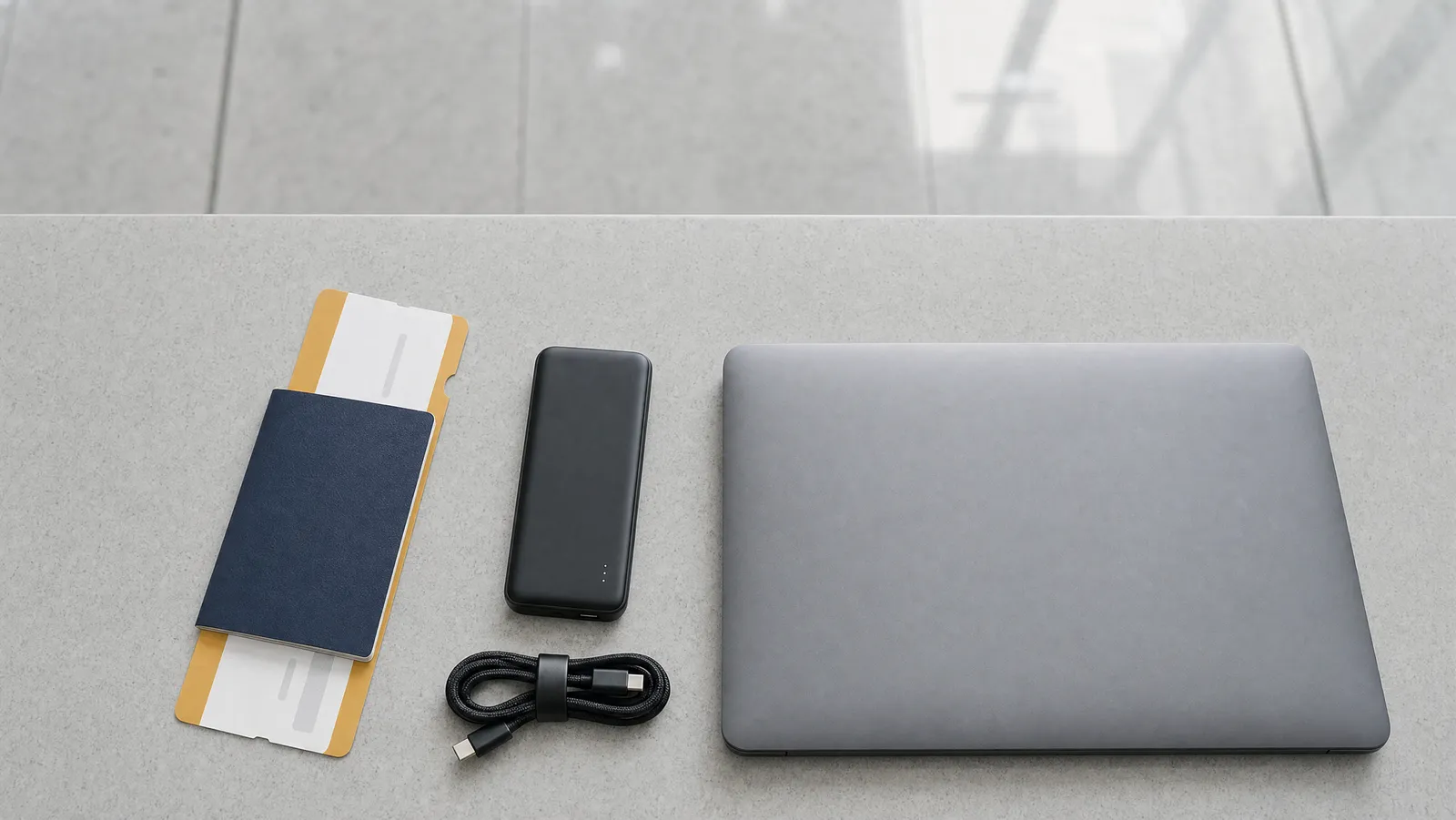
For a nomad carrying a laptop and chargers, weight fails before volume does. Start with the hardest number on this page. Thai Airways carries a handbag or laptop free of charge only if it is no larger than 37.5 x 25 x 12.5 cm and weighs no more than 1.5 kg. Apple's own tech specs put the 14-inch MacBook Pro at 3.4 pounds, or 1.55 kg. The laptop alone misses Thai's free-item weight limit, so it counts inside your 7 kg.
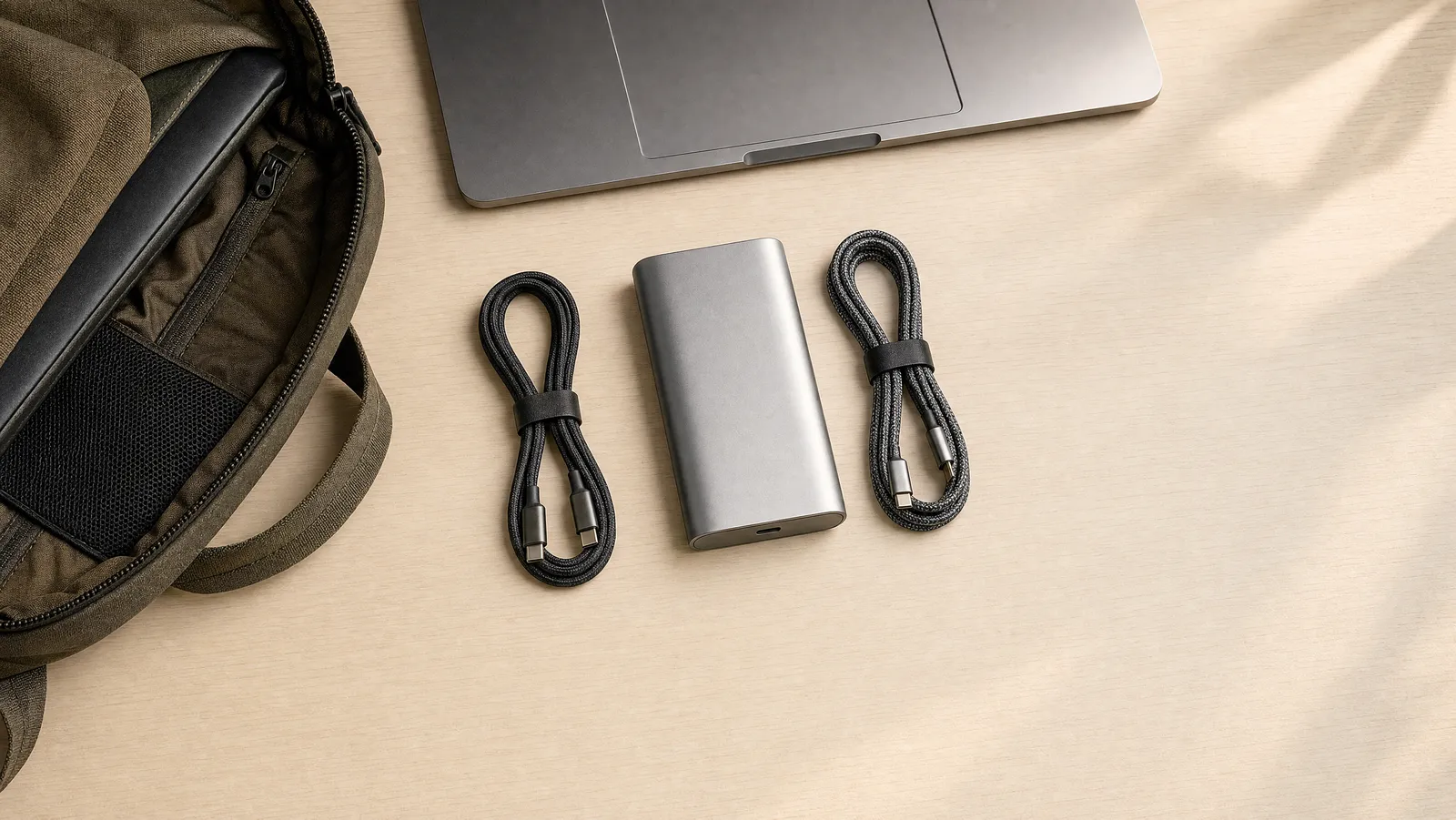
Now run that 7 kg case, which applies at Emirates, Qatar Airways, Singapore Airlines, Thai and Qantas international Economy. Subtract the laptop and 5.45 kg is left for the bag itself, chargers, cables, a power bank, a camera and every piece of clothing you are not wearing. On AirAsia the 7 kg covers both pieces; on ANA it is 10 kg for both; on Air France and KLM, 12 kg combined; Volaris caps the pair at 20 kg.
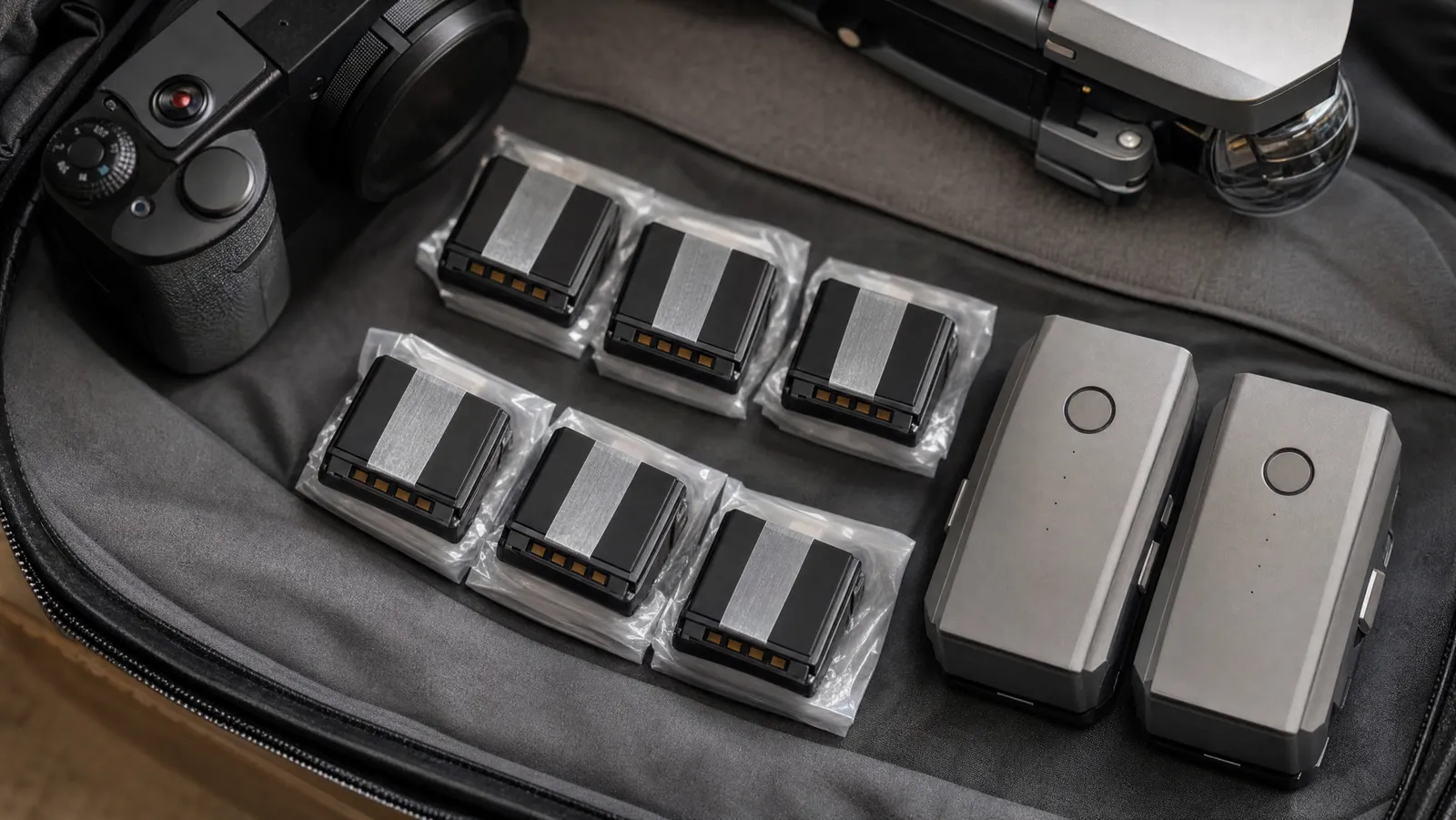
The asymmetry is what catches people: a bag never weighed on a US itinerary goes on a scale at a Gulf or Asian check-in desk, and the carrier's scale is the only one that counts. That is the argument for luggage scales and trackers, and for auditing what is on your packing list in grams rather than items. Batteries are the part most people underestimate — our guide to the power bank rules airlines now enforce covers the 100 Wh line that sits on top of any weight allowance.
Which carriers sell you the cabin bag
Of the 28 carriers above, most include the full-size cabin bag in the base fare. It is sold as an extra, or stripped from the cheapest fare, at Ryanair, easyJet, Wizz Air, Vueling and Norwegian, plus Lufthansa's Economy Basic short and medium-haul fares, KLM's Basic ticket and Avianca's Basic fare.
On a personal-item-only fare your overhead bag becomes a 40 x 30 x 20 cm box, give or take. Norwegian describes the included item as a "small underseat cabin bag (30x40x20cm)" with a 10 kg combined limit and sells the overhead bag separately to LowFare passengers. On these fares the bag to own is not a small suitcase but a laptop-first pack sized to the under-seat box — the class we cover in our picks for a laptop daypack.
What it costs to fail at the gate
Gate pricing is punitive by design, and the carriers publish the numbers.
easyJet is the clearest: it is "always cheaper to add a large cabin bag online than at the boarding gate, where it costs £60". Ryanair's terms state that an oversized small bag or 10 kg cabin bag "will be refused at the boarding gate, or where available, placed in the hold of the aircraft for a fee", which its fee table puts at €/£70.00 to €/£75.00 — against the Priority add-on that carries the second cabin bag, which Ryanair's general terms and conditions price at €6/£6 to €36/£36 per passenger on each one-way flight. Vueling publishes the widest gap: the 10 kg cabin bag runs €10 to €59 online, €20 to €75 at the airport desk, and a bag over 55 x 40 x 20 cm at the gate is checked at €110 to €140.
AirAsia states the principle without a figure: arrive at the gate outside the policy and "we will need to check in your cabin baggage. This will incur a gate baggage fee." Pre-paying for a bag you may not need is cheaper than being wrong at the gate.
The dimensions to buy
Run the intersection of every row above and one shape clears all of it: about 50 x 35 x 20 cm, packed under 7 kg.
Four constraints set it. Qatar Airways' 50 cm length is the shortest in the article. The 22 x 14 x 9 inch US box at Delta, American, Alaska and JetBlue is only about 35 cm across its middle dimension, so the 40 cm width Ryanair, Wizz Air, Lufthansa and Turkish allow will not pass in the United States. Emirates, Singapore Airlines, Scoot and ANA add the 115 cm sum test, which 50 plus 35 plus 20 clears with 10 cm spare. The 7 kg ceiling decides what goes inside.
A 30 to 38-litre pack at those dimensions is the practical sweet spot, which is why we size our carry-on backpack roundup against the tightest published figures rather than the most generous. Put a Gulf carrier and a US domestic hop in one year and you buy for the intersection.
Where these numbers are heading
One change will rewrite part of the European half of this table. As of 3 November 2026 it is law, but it does not apply yet.
The revision of the EU air passenger rights regulation went to conciliation after Parliament's second reading, and Parliament adopted a legislative resolution on the Conciliation Committee's joint text on 7 July 2026. The Council gave its final clearance on 13 July 2026. The result, Regulation (EU) 2026/2202, was adopted on 16 September 2026 and published in the Official Journal on 2 October 2026. Law-firm readings of the published text, including Burges Salmon's, put entry into force at 22 October 2026 and date the application of its substantive provisions to 23 October 2027.
What it does and does not do matters more than the headlines did. The new Article 11a it inserts into Regulation 261/2004 requires carriers to let you carry a personal item free of charge and to display fares inclusive of hand baggage; the European Commission's Q&A is reported to name 40 x 30 x 15 cm as the common minimum standard for that personal item. It sets no guaranteed size, weight or free carriage for a full-size overhead cabin bag, and airlines may still sell cheaper fares to passengers travelling without one.
Until 23 October 2027, the carrier policies above are the rules that apply to your booking. We track the detail and the timeline in Europe's new hand luggage rules. Treat any headline announcing a free overhead cabin bag as a misreading of the text, not a boarding pass.
The bottom line
There is no universal carry-on size, and Regulation (EU) 2026/2202 does not create one when it applies from 23 October 2027: it guarantees a free personal item, not a wheeled cabin bag. What there is, is an intersection: a bag around 50 x 35 x 20 cm, packed under 7 kg and measured with wheels and handles attached, clears every carrier we checked in November 2026.
Three habits do the rest. Measure the expanded, packed bag rather than trusting a maker's "cabin approved" label. Weigh it before you leave, because European, Gulf and Asian carriers will. And check the carrier's own page in the week you fly, because every number here is a commercial policy that can change without a press release.
For how these dimensions sit alongside the battery, liquid and screening rules, read the full 2027 carry-on rules guide. For living inside the limits permanently, the one-bag travel system works through what actually fits.
Frequently Asked Questions
What is the most common carry-on size limit?
Two sizes dominate. In North America it is 22 x 14 x 9 inches, published by Delta, American, Alaska and JetBlue, which American states is "including handles and wheels". In Europe and Asia it is around 55 x 40 x 23 cm, used by Lufthansa, Wizz Air, Turkish Airlines and Norwegian. Neither is a regulation.
Do wheels and handles count towards the limit?
Yes, on every carrier we checked that addresses it. Qantas measures "including any wheels and packed away handles"; American says "including handles and wheels"; easyJet repeats the phrase for both bags. AirAsia adds side pockets, and Alaska warns that expandable front pockets can push a bag out of the overhead bin.
How strictly is the 7 kg cabin weight limit enforced?
It depends on the carrier. Emirates, Qatar Airways, Singapore Airlines, Thai Airways and Qantas international Economy all publish a 7 kg cabin allowance and weigh bags at check-in. JetBlue states that it "does not currently have a weight restriction for carry-on bags", and Delta's carry-on page publishes dimensions with no weight figure at all.
Will the EU guarantee a free cabin bag in 2027?
Not a full-size overhead bag. Regulation (EU) 2026/2202 was published in the Official Journal on 2 October 2026, and law-firm readings of the text date entry into force to 22 October 2026 with the substantive provisions applying from 23 October 2027. It guarantees a free personal item — the European Commission's Q&A is reported to set a 40 x 30 x 15 cm minimum standard — and requires fares to be shown inclusive of hand baggage. It sets no size or free allowance for a wheeled cabin bag.
Is it cheaper to pay for a cabin bag at the gate?
No, by a wide margin. easyJet's page says adding a large cabin bag is always cheaper online than at the gate, where it costs £60. Ryanair's fee table puts an oversized cabin bag refused at the gate at €/£70.00 to €/£75.00. Vueling checks an oversized bag at the gate for €110 to €140, against €10 to €59 online.
About the Author