Best Digital Nomad Destinations in Europe 2026: Complete Guide
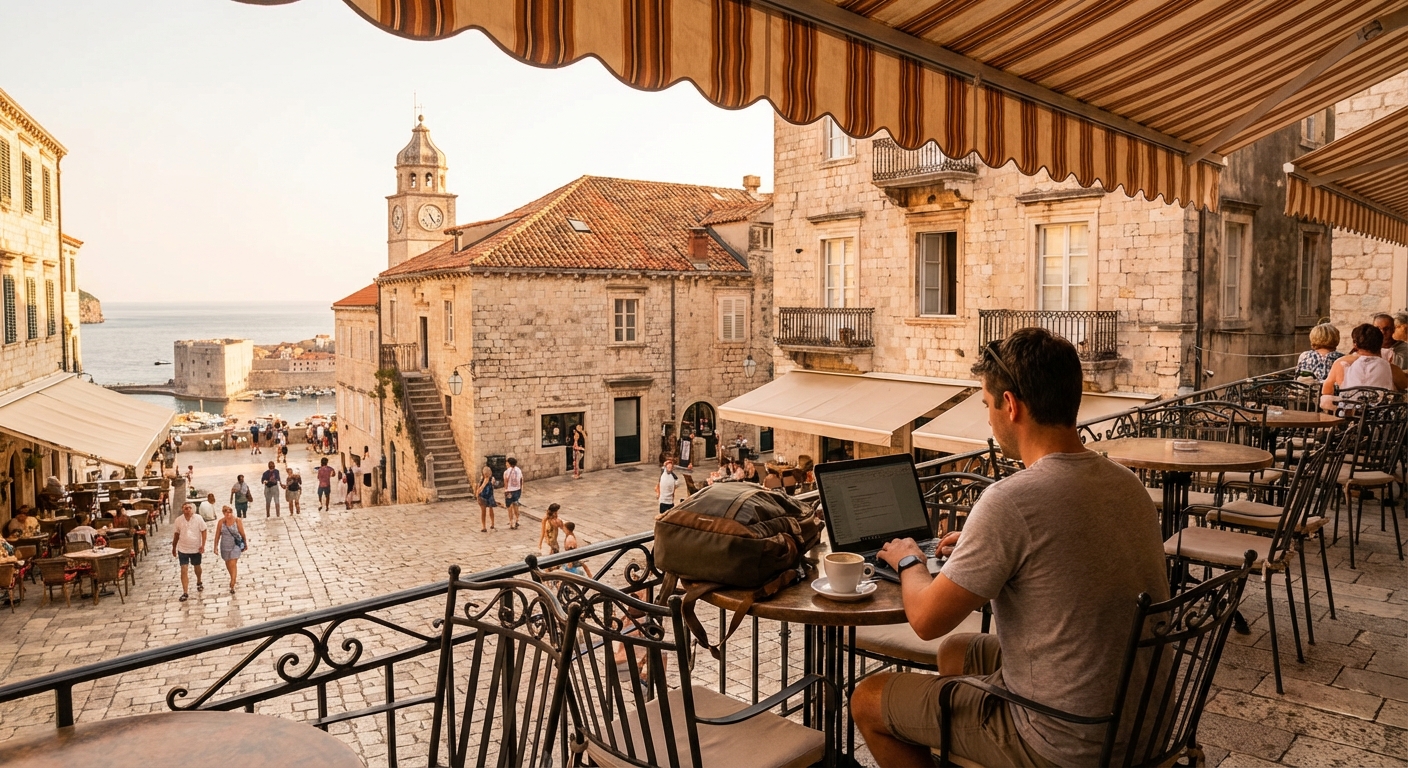

Europe offers digital nomads something Asia and Latin America can't match: proximity to dozens of distinct cultures, languages, and experiences within a few hours' travel. The Schengen zone enables seamless movement across 27 countries. Fast trains connect major cities. Infrastructure is reliable. And increasingly, countries are actively competing for remote workers with dedicated visa programs.
The trade-off is cost. Western European capitals—Paris, Amsterdam, London—will stretch budgets that feel comfortable in Bangkok or Medellín. But the range is wider than headlines suggest: Eastern and Southern Europe offer genuine value, and even premium destinations become accessible with strategic timing and local knowledge.
This guide covers Europe's strongest options for digital nomads in 2026, from established hubs to emerging alternatives, organized by region and budget level.
Europe for Digital Nomads
In this guide:
- Why Europe for Digital Nomads
- Schengen Rules and Visa Options
- Best Western European Destinations
- Best Eastern European Destinations
- Best Southern European Destinations
- Budget Comparison Table
- Choosing Your European Base
For the complete global comparison, see our best digital nomad destinations 2026 guide.
Why Europe for Digital Nomads
Europe's appeal extends beyond the obvious tourism draws. For remote workers, several factors make the continent particularly compelling.
Infrastructure Quality
European infrastructure just works. High-speed trains, reliable public transport, consistent power grids, fast internet. The stress of "will things function" that shadows some destinations simply doesn't apply. You can focus on work rather than logistics.
Cultural Density
Within a 2-3 hour flight radius from any European hub, you can access a dozen distinct countries, languages, cuisines, and cultural traditions. Weekend trips can span from Nordic fjords to Mediterranean beaches. The variety available without long-haul travel is unmatched.
Timezone Advantages
For workers with UK or European clients, Europe is obviously ideal. But even for US clients, Western European timezones (UTC to UTC+2) create reasonable overlap—morning calls in New York align with afternoon in Lisbon or Barcelona.
Legal Pathways
Unlike regions where digital nomads exist in visa gray areas, Europe increasingly offers explicit legal frameworks. Portugal, Spain, Germany, Croatia, Estonia, and others now provide dedicated digital nomad or freelancer visas. Working remotely in Europe can be entirely above-board.
Healthcare Access
European healthcare systems range from excellent to world-class. As a visitor with travel insurance, you can access quality care in most countries. For longer-term residents (via nomad visas), national healthcare systems become accessible.
Schengen Rules and Visa Options
Understanding Schengen is essential for planning European stays.
The 90/180 Rule
The Schengen Area includes 27 European countries with unified border control. Non-EU citizens from visa-exempt countries (US, Canada, UK, Australia, and others) can stay 90 days within any 180-day rolling period across the entire zone.
Key point: The 90 days applies to the whole Schengen area, not per country. Spending 60 days in Portugal and 30 days in Spain exhausts your 90-day allowance. You'd then need to leave Schengen for 90 days before re-entering.
Non-Schengen Options
Several European countries sit outside Schengen, offering separate visa allowances:
- UK/Ireland: Separate immigration system, typically 90-180 days
- Croatia: Now in Schengen (as of 2023)
- Bulgaria/Romania: Now full Schengen members (as of January 2025)—land borders lifted
- Albania, Montenegro, Serbia, North Macedonia: Non-EU, separate rules
- Georgia, Turkey: Not EU, generous visa policies (Georgia: 1 year visa-free)
Strategic combinations allow extended European stays by alternating Schengen and non-Schengen time.
Digital Nomad Visas
For stays beyond tourist limits, several countries offer specific programs:
| Country | Visa Name | Duration | Income Requirement | Processing |
|---|---|---|---|---|
| Portugal | D7/D8 | 1-2 years | €3,480/month (€3,680 from 2026) | 2-4 months |
| Spain | Digital Nomad Visa | 1-3 years | €2,763/month | 1-3 months |
| Germany | Freelance Visa | 1-3 years | Variable | 2-6 months |
| Croatia | Digital Nomad Visa | 18 months | €3,295/month | 2-4 weeks |
| Estonia | Digital Nomad Visa | 1 year | €3,504/month | 1-2 months |
| Greece | Digital Nomad Visa | 1-2 years | €3,500/month | 1-3 months |
Requirements and processing times vary. Apply from your home country for most programs.
For detailed comparisons, see our upcoming digital nomad visa comparison guide.
Best Western European Destinations
Higher costs, premium infrastructure, and established international communities.
Lisbon, Portugal
Lisbon has emerged as Europe's premier digital nomad hub—and for good reason. The combination of climate, culture, English proficiency, startup ecosystem, and relatively reasonable costs (by Western European standards) creates an ideal environment.
Monthly Budget: $2,100-2,800
Why Lisbon:
- Exceptional weather (300+ sunny days annually)
- Strong English proficiency
- Active startup and tech scene
- Excellent food and wine culture
- Well-established nomad community
- D7/D8 visa provides legal pathway
Considerations:
- Popularity has increased costs significantly
- Housing can be challenging in central areas
- Some neighborhoods are heavily touristy
Best for: First-time European nomads, tech workers, those wanting legal residency options
For the complete breakdown, see our Lisbon digital nomad guide.
Barcelona, Spain
Barcelona delivers the full Mediterranean package: beach access, architectural beauty, vibrant nightlife, and genuine cultural depth. The city attracts creative professionals and has strong coworking infrastructure.
Monthly Budget: $2,500-3,200
Why Barcelona:
- Beach + city combination
- Rich cultural and architectural heritage
- Strong creative and design community
- Excellent food scene
- Spain's digital nomad visa now available
- Good flight connections to all of Europe
Considerations:
- Tourist crowds in central areas
- Higher costs than other Spanish cities
- Catalan-Spanish language dynamics
- Some local tension around tourism/gentrification
Best for: Creatives, designers, those prioritizing lifestyle and culture
Berlin, Germany
Berlin remains Europe's most affordable major Western city, with a creative culture, strong tech scene, and infrastructure that supports productive work. The vibe is distinctly different from Mediterranean destinations—grittier, more artistic, intensely creative.
Monthly Budget: $2,000-2,800
Why Berlin:
- Lower costs than Paris, London, or Amsterdam
- Exceptional creative and startup ecosystem
- Strong English proficiency in relevant circles
- Excellent public transport and infrastructure
- Four distinct seasons
- Germany's freelance visa offers legal pathway
Considerations:
- Weather is gray much of the year
- Bureaucracy can be challenging
- Housing market is competitive
- Less tourist-friendly than Southern European cities
Best for: Tech workers, creatives, those who prefer urban intensity over beach lifestyle
Amsterdam, Netherlands
Compact, bike-friendly, and highly international, Amsterdam packs tremendous cultural density into a small footprint. High English proficiency and strong tech presence make it welcoming for remote workers.
Monthly Budget: $2,800-3,500
Why Amsterdam:
- Nearly universal English proficiency
- Excellent infrastructure and connectivity
- Strong tech and startup ecosystem
- Distinctive urban environment (canals, bikes)
- Gateway to rest of Europe (Schiphol hub)
Considerations:
- Among the highest costs in Europe
- Weather is frequently gray and rainy
- Housing is expensive and competitive
- Very tourist-heavy in central areas
Best for: Tech workers with higher budgets, those prioritizing infrastructure and connectivity
Best Eastern European Destinations
Lower costs, emerging scenes, and genuine value without sacrificing infrastructure.
Bansko, Bulgaria
Bansko represents the ultimate European budget hack: EU membership, full Schengen access (since January 2025), fiber internet, and established nomad community—all at Southeast Asian prices. The ski resort setting provides unique seasonal appeal.
Monthly Budget: $800-1,200
Why Bansko:
- Lowest costs in the EU for quality nomad infrastructure
- EU member state with Schengen access
- Dedicated coworking community (Coworking Bansko)
- Fiber internet standard
- Skiing in winter, hiking in summer
- Tight-knit international community
Considerations:
- Small town with limited urban amenities
- Remote location (3 hours from Sofia)
- Very seasonal—winter is primary season
- Limited dining and nightlife options
Best for: Budget-focused nomads, EU access seekers, outdoor enthusiasts
For the complete breakdown, see our Bansko digital nomad guide.
Tbilisi, Georgia
Technically not EU but geographically Europe-adjacent, Tbilisi offers exceptional value with a one-year visa-free policy for most nationalities. The wine culture, distinctive cuisine, and emerging tech scene create growing appeal.
Monthly Budget: $1,000-1,500
Why Tbilisi:
- 365 days visa-free for 95+ nationalities
- Exceptional food and wine culture
- Very low cost of living
- Growing nomad community
- Distinctive architecture and history
- Modern apartments with good internet
Considerations:
- Infrastructure less developed than Western Europe
- Language barrier (Georgian script, limited English outside tourism)
- Geographic isolation from Western Europe
- Banking can be complicated for foreigners
Best for: Long-term stays (full year), budget-conscious nomads, wine and food enthusiasts
For the complete breakdown, see our Tbilisi digital nomad guide.
Prague, Czech Republic
Prague combines stunning architecture with solid infrastructure and costs below Western European levels. The city has a long history of attracting international residents and maintains strong coworking options.
Monthly Budget: $1,500-2,200
Why Prague:
- Beautiful historic center
- Strong coffee and beer culture
- Good coworking infrastructure
- Central location for European travel
- English widely spoken in relevant areas
- Lower costs than Western capitals
Considerations:
- Tourism makes central areas crowded
- Winters are cold and gray
- Visa options less developed than Portugal/Spain
- Some expat fatigue in the city
Best for: Architecture lovers, beer enthusiasts, those wanting Central European base
Budapest, Hungary
Budapest offers genuine value in a spectacular setting—the Danube-spanning city combines thermal baths, ruin bars, and grand architecture at prices well below most of Western Europe.
Monthly Budget: $1,400-2,000
Why Budapest:
- Stunning architecture and city setting
- Thermal bath culture
- Active nightlife and social scene
- Good value for quality of experience
- Strong cafe culture
- Improving coworking options
Considerations:
- Language barrier (Hungarian is challenging)
- Political situation creates uncertainty
- Winters are cold
- Some infrastructure is aging
Best for: Those seeking value in a major city, nightlife enthusiasts, architecture lovers
Best Southern European Destinations
Mediterranean climate, lifestyle focus, and increasingly competitive costs.
Valencia, Spain
Often overlooked for Barcelona, Valencia delivers similar Mediterranean appeal at significantly lower costs. The city combines beach access, excellent food (birthplace of paella), and growing tech scene.
Monthly Budget: $1,800-2,400
Why Valencia:
- Beach + city combination at lower cost than Barcelona
- Excellent climate year-round
- Growing startup and tech scene
- Spain's digital nomad visa applies
- Less tourist-overrun than Barcelona
- Excellent food culture
Considerations:
- Smaller international community than Barcelona or Lisbon
- Spanish language more necessary than in Lisbon
- Less cultural infrastructure than major capitals
- Fewer direct international flights
Best for: Those wanting Mediterranean lifestyle without Barcelona prices
Split/Dubrovnik, Croatia
Croatia's Adriatic coast offers stunning beauty, good infrastructure, and an established digital nomad visa program. Split provides year-round viability; Dubrovnik is more seasonal.
Monthly Budget: $1,600-2,400
Why Croatia:
- Exceptional coastal beauty
- Dedicated digital nomad visa (1 year)
- EU member with Schengen access
- Strong summer appeal
- English widely spoken
- Improving coworking options
Considerations:
- Very seasonal—summers are crowded and expensive
- Winters see reduced services
- Smaller cities with limited amenities
- Tourism-focused economy
Best for: Summer base, visa seekers, Adriatic coast lovers
Athens, Greece
Athens has emerged as an underrated nomad destination—Mediterranean climate, rich history, improving infrastructure, and costs below Western European levels. The new Greek digital nomad visa adds legal appeal.
Monthly Budget: $1,700-2,400
Why Athens:
- Mediterranean climate
- Rich historical and cultural depth
- Lower costs than Western Europe
- Digital nomad visa available
- Excellent food culture
- Island hopping easily accessible
Considerations:
- Summer heat can be intense
- Infrastructure varies in quality
- Bureaucracy can be challenging
- Air quality issues in summer
Best for: History enthusiasts, island hoppers, Mediterranean lifestyle seekers
Budget Comparison Table
| Destination | Monthly Budget | Internet | Visa Access | Best For |
|---|---|---|---|---|
| Bansko | $800-1,200 | 100+ Mbps | EU/Schengen | Budget + EU access |
| Tbilisi | $1,000-1,500 | 40-60 Mbps | 365 days free | Long-term stays |
| Budapest | $1,400-2,000 | 50-100 Mbps | 90/180 Schengen | Value in major city |
| Prague | $1,500-2,200 | 50-100 Mbps | 90/180 Schengen | Central location |
| Split | $1,600-2,400 | 50-80 Mbps | DN visa available | Coastal lifestyle |
| Athens | $1,700-2,400 | 40-80 Mbps | DN visa available | History + islands |
| Valencia | $1,800-2,400 | 100+ Mbps | DN visa available | Med at lower cost |
| Berlin | $2,000-2,800 | 100+ Mbps | Freelance visa | Creative/tech hub |
| Lisbon | $2,100-2,800 | 80-100 Mbps | D7/D8 visa | Overall best option |
| Barcelona | $2,500-3,200 | 100+ Mbps | DN visa available | Lifestyle + culture |
| Amsterdam | $2,800-3,500 | 100+ Mbps | Limited options | Tech + infrastructure |
Choosing Your European Base
Your ideal European destination depends on priorities:
If Budget is Primary
Choose Bansko or Tbilisi. Bansko offers EU access at the lowest cost; Tbilisi offers year-long stays without visa stress.
If Lifestyle is Primary
Choose Lisbon, Barcelona, or Valencia. Mediterranean climate, strong food culture, beach access, and established communities.
If Legal Status Matters
Choose Portugal or Spain. Both offer well-established digital nomad visa programs with pathways to longer-term residency.
If You Want Urban Intensity
Choose Berlin. Creative energy, tech scene, and major city amenities at more accessible costs than other Western capitals.
If You're New to Europe
Choose Lisbon. The most approachable combination of weather, English proficiency, nomad infrastructure, and reasonable costs.
If You Want to Explore Widely
Choose a central hub. Berlin, Prague, or Budapest offer easy access to multiple regions. Budget flights connect efficiently from these locations.
Your Next Steps
Europe rewards planning. The 90/180 Schengen rule means strategic timing matters for extended stays. Consider:
-
Start with one base - Don't try to see everything. Pick one city for 4-6 weeks minimum to actually settle and work productively.
-
Understand your visa timeline - Map out Schengen days, identify non-Schengen options, and consider whether a digital nomad visa makes sense for your situation.
-
Time your arrival - Mediterranean destinations are best in shoulder seasons (April-June, September-October). Northern destinations peak in summer.
-
Prepare for connectivity - European internet is generally excellent, but verify your specific accommodation. See our WiFi connectivity guide and best eSIM for Europe.
For gear preparation, check our capsule wardrobe guide for Europe's varied climates, and our ultimate packing list for complete preparation.
For the global comparison, return to our best digital nomad destinations 2026 guide.
About the Author