Medellín Digital Nomad Guide: Colombia's City of Eternal Spring
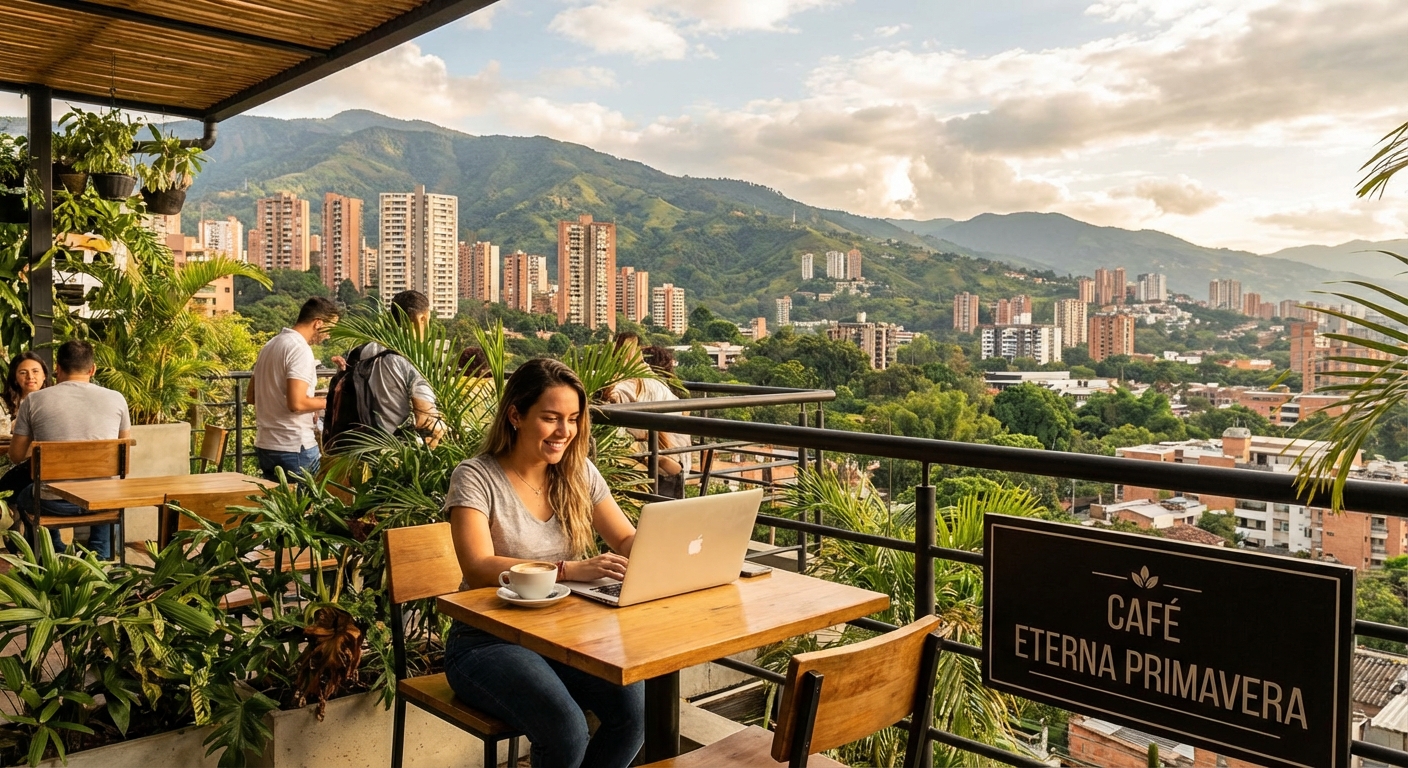

Medellín earned its "City of Eternal Spring" nickname honestly—year-round temperatures hover between 70-80°F (21-27°C), eliminating the weather variability that complicates life in most destinations. But the climate is just the beginning. Colombia's second city has transformed from its troubled past into one of Latin America's most compelling digital nomad destinations, combining affordable costs, strong infrastructure, and a social scene that rivals anywhere in the Americas.
The numbers work: a comfortable lifestyle in Medellín runs $1,500-2,000 monthly, including a modern apartment in a desirable neighborhood, regular restaurant meals, coworking access, and plenty of margin for enjoying the city's nightlife and cultural offerings. For US-based remote workers, the timezone alignment (Eastern Time or one hour behind, depending on season) means normal working hours remain possible.
What sets Medellín apart is the energy. The city feels ambitious, optimistic, and forward-looking—a sharp contrast to destinations that feel frozen in time. Innovation districts, startup culture, and a young population create momentum that's palpable walking through neighborhoods like Laureles or El Poblado.
Medellín at a Glance
In this guide:
- Why Medellín for Digital Nomads
- Cost of Living Breakdown
- Best Neighborhoods
- Coworking Spaces
- Internet and Connectivity
- Visa and Legal Considerations
- Safety Reality Check
- Social Scene and Lifestyle
- When to Visit
For the complete global overview, see our best digital nomad destinations 2026 guide.
Why Medellín for Digital Nomads
Medellín's appeal stems from a combination of factors that few other destinations match.
Perfect Climate
The "eternal spring" description is accurate. Sitting at 1,500 meters (4,900 feet) elevation in a valley surrounded by mountains, Medellín maintains remarkably consistent temperatures year-round. Expect highs of 75-82°F (24-28°C) and lows of 60-65°F (16-18°C). No need for heavy winter clothes or dealing with oppressive tropical heat.
The consistency is genuinely life-improving. You can plan outdoor activities without checking weather forecasts. Apartments don't need heating or air conditioning. The mental load of weather simply disappears.
Timezone Advantage
Medellín operates on Colombia Time (UTC-5), which aligns with US Eastern Time for most of the year (Colombia doesn't observe daylight saving time, so there's a one-hour difference when EST shifts to EDT). For remote workers with US clients, this means normal 9-5 hours without schedule gymnastics.
Compare this to Asian destinations where US-aligned work requires nocturnal schedules. The timezone factor alone makes Medellín compelling for North American remote workers.
Transformation Story
Medellín's transformation from the world's most dangerous city in the early 1990s to a thriving innovation hub is one of the great urban comeback stories. The city has invested heavily in public infrastructure, transportation, education, and economic development. The result is a place that feels optimistic and forward-looking rather than stuck in the past.
This matters for daily life. Infrastructure works. Public spaces are well-maintained. The metro system is excellent. The city actively wants to attract international talent and has built accordingly.
Value Proposition
Your money goes far in Medellín without sacrificing quality. Modern apartments, excellent restaurants, and functioning infrastructure—all at prices that would seem impossible in comparable US or European cities. The value isn't about settling for less; it's about getting more for the same money.
Cost of Living Breakdown
Here's what a comfortable digital nomad lifestyle actually costs in Medellín:
| Category | Budget | Average | Comfortable |
|---|---|---|---|
| Accommodation | $500-700 | $800-1,100 | $1,200-1,800 |
| Food | $250-350 | $400-500 | $600-800 |
| Coworking | $100-150 | $150-200 | $200-300 |
| Transport | $50-80 | $80-120 | $150-200 |
| Entertainment | $100-150 | $200-300 | $400-500 |
| Utilities/Phone | $50-80 | $80-100 | $100-150 |
| Monthly Total | $1,050-1,510 | $1,710-2,320 | $2,650-3,750 |
Accommodation Notes
The range is wide because options vary significantly. Budget gets you a decent studio in a less central location or shared housing in prime areas. Average secures a modern one-bedroom in El Poblado or Laureles. Comfortable means a larger apartment with premium finishes, building amenities (pool, gym), and prime location.
Furnished apartments are standard for nomad rentals. Monthly rates through local platforms (Airbnb, local real estate sites, Facebook groups) run 20-30% less than short-term tourist pricing. Negotiate for stays beyond one month.
For comprehensive strategies on finding, negotiating, and securing accommodation, see our Complete Digital Nomad Accommodation Guide.
Food Notes
Colombian food is hearty, affordable, and good—though not as celebrated as Mexican or Peruvian cuisines. Menu del día (set lunch menus) at local restaurants run $3-5 for a full meal. Casual restaurants typically cost $8-15 per person. Upscale dining exists and remains reasonable by international standards ($30-50 for a nice dinner).
International food has improved dramatically. Japanese, Italian, Middle Eastern, and other cuisines are well-represented, particularly in El Poblado and Laureles.
Best Neighborhoods
Medellín's neighborhoods have distinct personalities. Here's where most digital nomads land:
El Poblado
El Poblado is the default choice for most international arrivals—and for good reason. The neighborhood offers the highest concentration of restaurants, cafes, coworking spaces, and international-friendly infrastructure. Safety is excellent by Colombian standards, and English is more common here than elsewhere.
Pros
- Highest concentration of nomad infrastructure
- Excellent restaurant and cafe scene
- Very safe, heavily policed
- Walkable central areas (Provenza, Parque Lleras)
- Modern apartments with amenities
- English more widely spoken
Cons
- Highest prices in the city
- Can feel like an expat bubble
- Parque Lleras area gets loud at night
- Less authentic Colombian experience
- Some local resentment toward gentrification
Budget: $700-1,200/month for a furnished studio or one-bedroom
Laureles
Laureles offers the best balance of value, livability, and authenticity. The neighborhood feels more genuinely Colombian than El Poblado while still offering solid infrastructure for remote workers. Tree-lined streets, good cafes, excellent local restaurants, and a more residential vibe.
Pros:
- Better value than El Poblado
- More authentic Colombian atmosphere
- Excellent local food scene
- Tree-lined streets, walkable
- Growing coworking options
- Strong local community feel
Cons:
- Less English spoken
- Fewer high-end restaurants
- Smaller international community
- Some areas less walkable
- Nightlife more local-focused
Budget: $500-900/month for furnished housing
Envigado
South of El Poblado, Envigado is technically a separate municipality but functions as a Medellín neighborhood. The area offers a more local feel with lower prices while remaining accessible to El Poblado amenities via metro.
Pros:
- Lower prices than El Poblado or Laureles
- More residential, authentic atmosphere
- Good local food options
- Metro access to central Medellín
- Growing nomad presence
Cons:
- Fewer coworking options
- Less walkable to central areas
- Smaller international community
- Limited nightlife
Budget: $400-750/month for furnished housing
Estadio / La 70
Near Laureles, the Estadio area offers good value and a distinctly local atmosphere. The La 70 corridor has excellent restaurants and nightlife that skew Colombian rather than international.
Pros:
- Excellent value
- Strong local restaurant scene
- Active nightlife corridor
- Near Laureles amenities
- Stadium area has good parks
Cons:
- Limited coworking
- Less English spoken
- Fewer international options
- Some areas less polished
Budget: $400-700/month for furnished housing
Coworking Spaces
Medellín's coworking scene has matured significantly. Options range from international chains to local spaces with distinct communities.
Selina
Multiple locations (Lleras, Laureles). The chain offers reliable coworking with social atmosphere. Day passes available. Monthly hot desk around $150-200. Good for meeting other travelers but less professional than dedicated coworking.
Best for: Social connection, meeting other nomads
Tinkko
Local coworking brand with multiple locations. Professional environment, good internet, reasonable pricing. Monthly memberships from $50 for flex desk to $170 for fixed desk access.
Best for: Professional atmosphere, local entrepreneurial community
WeWork
Standard WeWork experience in El Poblado. Higher prices ($200-300/month) but predictable quality, good internet, and professional meeting spaces.
Best for: Client calls, professional image, reliable infrastructure
Atomhouse
Co-living and coworking combination in El Poblado. Strong community focus with events and social programming. Good option for those wanting built-in social structure.
Best for: New arrivals wanting community, longer stays
Cafe Working
Medellín's cafe culture supports laptop work reasonably well. Popular spots include:
- Pergamino (Multiple locations) - Excellent coffee, work-friendly
- Al Alma Cafe (Laureles) - Good space, reliable WiFi
- Hija Mia (El Poblado) - Specialty coffee, decent workspace
- Urbania (El Poblado) - Large space, power outlets
Cafes tolerate laptop work during off-peak hours. Order regularly and be mindful of peak lunch/dinner times.
Internet and Connectivity
Medellín's internet infrastructure has improved dramatically. Fiber is widely available in central neighborhoods, and mobile data provides reliable backup.
Home Internet
Fiber connections delivering 100-300 Mbps are standard in El Poblado, Laureles, and adjacent neighborhoods. Claro, Movistar, and Tigo are the main providers. When apartment hunting, verify the specific unit's connection.
Typical speeds: 50-150 Mbps down, 20-50 Mbps up in quality apartments
Mobile Data
Claro has the best coverage. Prepaid plans offering 10-20GB monthly run $15-25. Data is affordable enough to serve as primary connection for lighter use or reliable backup.
For connectivity preparation, see our WiFi and connectivity guide and best eSIM for digital nomads.
Coworking Reliability
Professional spaces maintain business-grade connections with backup. Speeds typically run 100-200 Mbps. Video calls and heavy data work are reliable at established coworking spaces.
Visa and Legal Considerations
Colombia offers straightforward visa access for most nationalities.
Tourist Entry
Citizens of the US, Canada, EU, UK, Australia, and many other countries receive 90 days on arrival—no visa required. Extensions of an additional 90 days are possible through Migración Colombia (apply before expiration).
Total tourist stay: Up to 180 days per calendar year
Digital Nomad Visa
Colombia introduced a digital nomad visa in 2022, allowing stays up to 2 years. Requirements include proof of remote work for a foreign company and minimum income of approximately $1,400/month (3x Colombian minimum wage, which increases annually).
The visa provides legal clarity but isn't strictly necessary for stays under 180 days. Many nomads operate on tourist status for shorter stays.
Official source: Migración Colombia
Legal Gray Area
As with most countries, working remotely for foreign clients on a tourist visa exists in legal gray area. Colombia doesn't actively enforce against digital nomads working remotely for overseas employers. The practical guidance: don't work for Colombian clients, don't mention "work" at immigration, and consider the digital nomad visa for longer stays.
Safety Reality Check
Medellín's safety situation requires honest assessment. The city has transformed dramatically but isn't risk-free.
The Reality
Tourist and expat-frequented areas (El Poblado, Laureles, Envigado) are genuinely safe for normal activities. Violent crime affecting foreigners in these areas is rare. Street crime (phone theft, pickpocketing) exists but at rates comparable to many major cities.
That said, Medellín is still a major Latin American city with inequality, drug trade presence, and areas that require caution. The transformation is real but not complete.
Practical Guidelines
Do:
- Stay aware of surroundings
- Use Uber/taxi apps rather than street hailing at night
- Keep valuables concealed
- Learn which neighborhoods require extra caution
- Follow local advice on areas to avoid
- Have contingency cash and copies of documents
Don't:
- Flash expensive items (phones, watches, jewelry)
- Walk alone late at night in unfamiliar areas
- Accept drinks from strangers
- Engage with drug offers (common in nightlife areas)
- Venture into areas without local knowledge
- Be complacent because tourist areas feel safe
Scopolamine Awareness
Important Safety Warning
Scopolamine ("devil's breath") drugging occurs in Medellín, typically in nightlife contexts. Victims are drugged (often via drink spiking) and robbed while incapacitated. This isn't common but happens. Never accept drinks from strangers, watch your drink, and be cautious with new acquaintances in party settings.
Social Scene and Lifestyle
Medellín's social scene is among the most active in the nomad world.
Nightlife
The city takes nightlife seriously. El Poblado's Parque Lleras area is the epicenter—multiple bars, clubs, and restaurants packed into a few blocks. Laureles offers more local-focused options along La 70 corridor. Reggaeton, electronic, and crossover venues cater to different tastes.
The scene runs late. Clubs don't fill up until midnight; closing times extend to 3-5am. Weekends are particularly active, but Tuesday and Thursday also have energy.
Dating and Social Dynamics
Medellín has a reputation in dating contexts that attracts certain demographics. Be aware of dynamics: some locals view foreign men skeptically due to behavior of some visitors. Respect, genuine interest in people and culture, and avoiding transactional approaches will serve you better than the "gringo hunting" mentality some arrive with.
Community and Networking
The nomad community is substantial without being insular. Coworking events, meetup groups, and informal gatherings provide social entry. The blend of nomads, expats, entrepreneurs, and locals creates more diverse networking than pure nomad hubs.
Spanish significantly improves social access. Basic conversational Spanish opens doors that remain closed to English-only speakers.
Outdoor Activities
The surrounding mountains offer paragliding, hiking, and day trips. Coffee region tours access world-class coffee farms. Guatapé (the famous rock formation) is a popular day trip. The eternal spring weather makes outdoor activities viable year-round.
When to Visit
Medellín's consistent climate makes it viable year-round with some seasonal considerations.
Dry Seasons
December-February and June-August see less rainfall. These periods are ideal for outdoor activities and guarantee more consistent sunshine.
Rainy Seasons
March-May and September-November bring afternoon thunderstorms—typically intense but brief. Mornings tend clear. The rain doesn't prevent activities but requires flexibility.
Events and Timing
- Feria de las Flores (August): Major flower festival, city at its most vibrant, book accommodations early
- Christmas season (December): Elaborate light displays throughout the city
- Carnival (varies): Less significant than in other Latin American cities but celebrated
Considerations for Nomads
Medellín doesn't have dramatic seasonal price swings like beach destinations. The consistent weather means no "bad season" to avoid. Most nomads choose arrival timing based on their own schedules rather than local seasonality.
Your Next Steps
Medellín delivers a rare combination: first-world aspirations, developing-world costs, perfect weather, and timezone compatibility with North American clients. For US remote workers seeking Latin American experience, it's among the strongest options.
If you're considering Medellín:
-
Start with Laureles or El Poblado - Both neighborhoods offer the infrastructure you need. Laureles provides better value and more authentic atmosphere; El Poblado offers maximum convenience and international community.
-
Book 2-4 weeks initially - Long enough to find better housing and assess fit, short enough to leave if it's not right.
-
Learn basic Spanish - More important here than in some destinations. Daily life improves dramatically with conversational Spanish.
-
Understand the safety context - Neither paranoid nor naive. The city is generally safe but requires awareness.
-
Embrace the social scene - Medellín rewards those who engage. The community is welcoming to newcomers who show genuine interest.
For related destinations, see our Mexico City digital nomad guide for another Latin American timezone-friendly option, or our best digital nomad destinations 2026 for the complete global overview.
For gear preparation, our ultimate digital nomad packing list covers everything you'll need.
About the Author