Best Satellite Messengers for Remote Travel & Off-Grid Safety
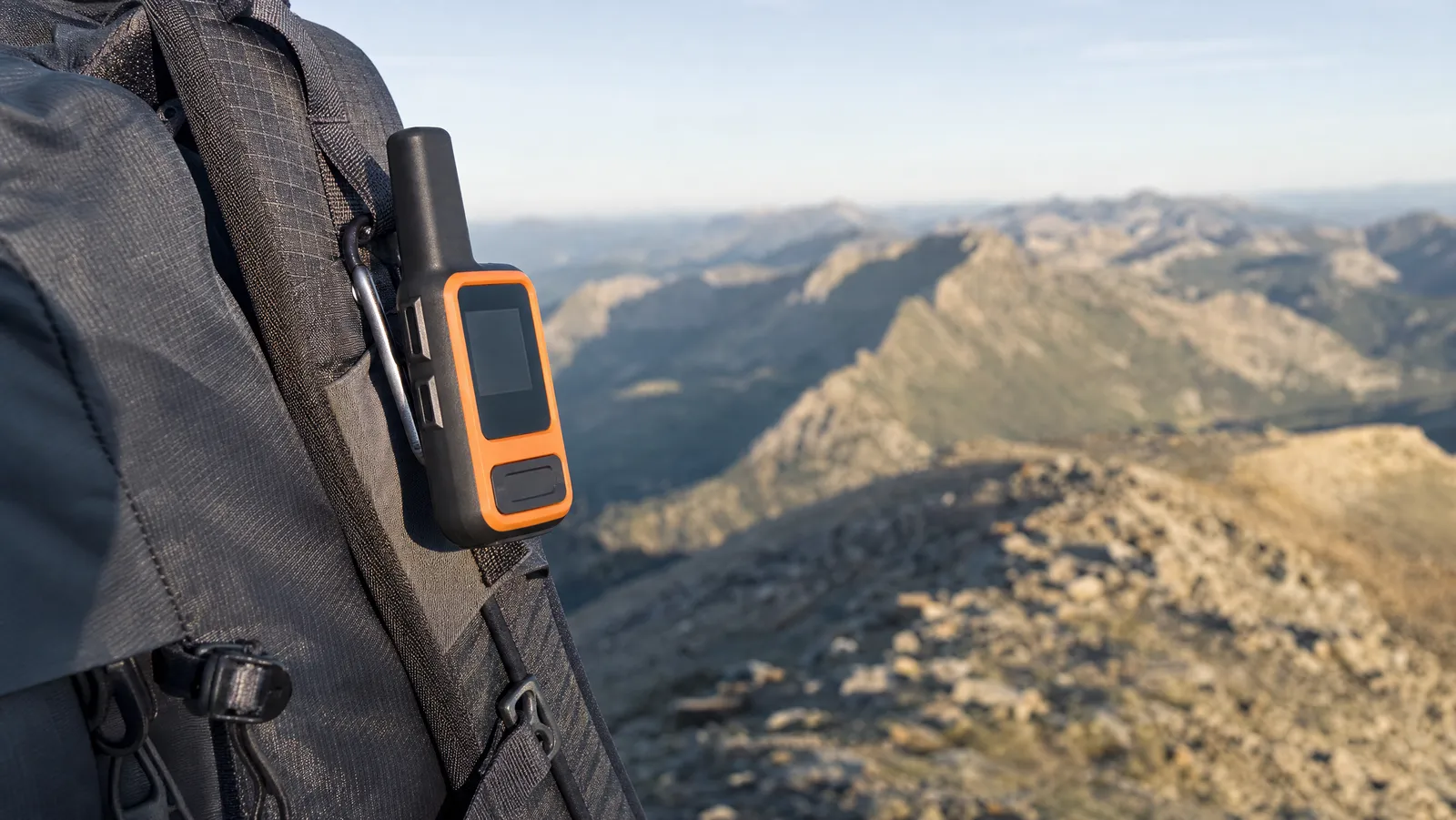

- Garmin inReach Messenger - Best Satellite Messenger for Remote Workers
- ZOLEO Satellite Communicator - Best Value Satellite Messenger
- Garmin inReach Mini 2 - Best Satellite Messenger for Navigation
- Spot Gen 4 Satellite GPS Messenger - Budget Satellite Beacon
- Garmin inReach Messenger Plus - Best for Photo and Voice Messaging
For most remote workers, the best satellite messenger is the Garmin inReach Messenger: two-way texting from anywhere with a view of the sky, an SOS button wired to a staffed coordination centre, and a battery Garmin rates at up to 28 days in 10-minute tracking mode — $199.99 as of August 2026. Choose ZOLEO if the cost of getting started matters more.
Nomad Outfit is reader-supported: we may earn a commission from links on this page, at no extra cost to you.
Every other roundup of these devices is written for people summiting things. This one is written for people working. For a remote worker a satellite messenger is professional infrastructure as much as safety kit: the layer that lets you tell a client "connection is down, deliverable lands 09:00 tomorrow" from a valley that has never seen a cell tower, and the layer that summons help when a trip goes wrong. It sits inside our off-grid remote work series, which covers the rest of the stack: power, bandwidth, and the plan for when both die.
What a Satellite Messenger Is Not
It is not internet. This is the single most common misconception, and it costs people money. A satellite communicator for travel moves three things: short text messages, your GPS location, and an SOS alert. That is the entire feature set.
You cannot take a video call on it, open a document, push a commit, load a dashboard or connect a VPN. Satellite texts are famously cramped — the reference point is the 160-character SMS, which is why longer limits (900 characters on ZOLEO, 1,600 on the Messenger Plus) are treated as headline features rather than footnotes.
If you need real bandwidth off-grid, that is a different purchase, and we compare every route to it in our guide to off-grid internet options. The messenger is the floor beneath that stack: the thing that still works after the dish, the hotspot and the phone have all failed.
Who Actually Needs an Off-Grid Communication Device
Buy one if any of these describe your work:
- You take working trips past the coverage map — forest service roads, high desert, fjords, backcountry cabins, remote job sites.
- Off-grid is your office. Van life, overlanding, sailing, or any base where the nearest tower is a mountain range away.
- You travel solo. Professional risk and personal risk are the same risk when nobody knows your route.
- Someone depends on hearing from you. A client, a co-founder, a partner — the check-in message matters as much as the SOS.
Skip it if your "remote" is a rural cafe with two bars of LTE. There is a middle path, too: phones now do emergency satellite messaging themselves, and according to PhoneArena, Google's satellite SOS feature came out of a partnership with Garmin and Skylo. That is a real floor for casual trips, not a substitute for a dedicated device with multi-day battery and two-way conversation.
Iridium vs Globalstar: The Network Decides Where You Are Covered
Before comparing devices, compare constellations. There are two in this market and they are not equivalent.
Iridium is the global one. Per Orbital Radar's operator profile, Iridium runs 66 low-Earth-orbit satellites in a cross-linked mesh delivering pole-to-pole coverage, and satellite retailer BlueCosmo describes the practical result as 100% global coverage with no gaps — poles, open ocean and deep desert included. The Garmin inReach line and ZOLEO both ride Iridium.
Globalstar is the regional one. Satmodo's network guide and network comparisons from GTC and SpaceNexus put Globalstar's coverage at roughly plus or minus 70 degrees of latitude, strongest across North America and Europe, with real gaps elsewhere. That is the network behind Spot Gen4.
The practical rule: if your work stays in North America or Europe, Globalstar coverage is likely fine and you can buy on price. If your itinerary includes Patagonia, Central Asia, most of Africa, high latitudes or ocean passages, buy Iridium and stop thinking about it.
One-Way Beacon or Two-Way Messenger: The Real Buying Decision
Price makes this look like a spectrum. It is actually a binary.
A one-way beacon only transmits: preset check-ins ("camp made, all fine") and an SOS with your coordinates. It cannot receive. You press SOS and then sit in silence — no confirmation anyone heard you, no way to add "broken ankle, not heart attack." Spot Gen4 is this class of device.
A two-way messenger holds a conversation. You get a reply from the coordination centre, you can describe the situation, responders can ask questions, and — the part that matters for work — a client can text you back. Every other device here is two-way.
For a remote worker, two-way is close to mandatory, because half the value of the device is professional communication, not rescue. A beacon can tell your family you are alive. Only a messenger can renegotiate a deadline.
The Subscription Is the Real Cost
Hardware is a one-off. Airtime is forever, and it is where most buyers underestimate the total.
Garmin's current inReach plans are month-to-month with no annual contract, and Garmin's own subscription overview states that every plan includes SOS and that you can move between plans or suspend service at no cost. According to Treeline Review's breakdown of the current plan structure, there is a one-time $39.99 activation fee on every device, and the 2026 repricing was in customers' favour: the mid tier fell from $35 to $30 per month while its included texts rose from 40 to 150, and the unlimited tier fell from $65 to $50. The same Treeline Review breakdown puts the entry Essential tier at $14.99 per month and adds a roughly $8-per-month Enabled tier that keeps your device active between trips so you avoid paying activation again.
ZOLEO's structure is simpler, and its activation fee is half Garmin's. ZOLEO advertises "plans from $20/month" on its Amazon listing, and ZOLEO's own plans page now sets out just two tiers: Prepare at $19.99 per month with 50 satellite messages, and Protect at $34.99 per month with unlimited satellite messages. Both include a ZOLEO SMS number and email address, satellite SOS with 24/7 monitoring, ZOLEO Track, and unlimited cellular and Wi-Fi messages. ZOLEO lists a one-time $19.99 activation fee, a three-month minimum term, and the option to pause service for $4.50 per month after that term. If you see the older $20 / $35 / $50 Basic, In Touch and Unlimited tiers quoted elsewhere, they are legacy plans — ZOLEO states they are no longer available for purchase or activation.
Run the first-year arithmetic before you fall in love with a device, using prices as of August 2026:
- Garmin inReach Messenger, mid tier: $199.99 hardware, plus $39.99 activation, plus 12 months at $30 equals roughly $600 in year one.
- ZOLEO, Prepare tier: $149.00 hardware, plus $19.99 activation, plus 12 months at $19.99 equals roughly $409 in year one.
- Spot Gen 4: $99.95 hardware, plus a required subscription (Spot lists two service plans), so the sticker price is never the whole cost.
Read those two lines carefully, because they compare different tiers. On airtime alone Garmin's $14.99 Essential plan actually undercuts ZOLEO's $19.99 Prepare plan; ZOLEO's saving is in the hardware and the activation fee, which is where it wins year one and loses by year three.
Both companies offer a cheap dormant mode — Garmin's roughly $8 Enabled tier, ZOLEO's $4.50-per-month pause after the three-month minimum — so a seasonal user can drop to a holding fee between trips instead of paying full airtime all year.
The Best Satellite Messengers for Remote Travel
Five devices, five different reasons to buy. Prices are as of August 2026.
Garmin inReach Messenger — the default for working nomads
Garmin stripped the navigation hardware out of the Mini line and spent the savings on battery and price. The result is the device we recommend to most remote workers: global two-way texting, interactive SOS to Garmin's 24/7-staffed monitoring and coordination centre, and a battery Garmin rates at up to 28 days in 10-minute tracking mode. Two details earn their keep on a work trip. It routes messages over cellular or Wi-Fi when those exist and falls back to satellite when they do not, so you are not burning satellite credits in town, and it can safety-charge a depleted phone.
Buy this if you want the best satellite messenger for the money and you already navigate with your phone.
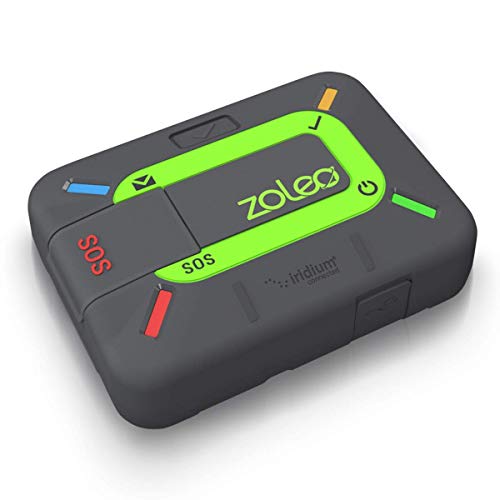
ZOLEO Satellite Communicator — the value pick with a real phone number
ZOLEO is the cheapest hardware here that is still a true two-way Iridium device, and its trick is administrative rather than technical: it gives you a dedicated SMS number and email address. Your client texts that number like any other number. No app to install, no invitation to accept, no explaining. For anyone who has tried to onboard a client onto a proprietary app before a trip, that alone is worth the switch. ZOLEO rates it IP68 for dust and water and quotes over 200 hours of battery life, and it supports 900-character messages, weather forecasts, unlimited check-ins and a Medical Assist option for situations that are not full emergencies.
Buy this if you want the cheapest way into a two-way Iridium device and the least friction for the people contacting you.
Garmin inReach Mini 2 — when you need to navigate, not just message
The Mini 2 is the Messenger's navigation-capable sibling: a small screen and standalone functions that work without a paired phone, plus TracBack routing to retrace your path and a digital compass that holds an accurate heading while you stand still. Garmin rates it at up to 14 days in 10-minute tracking mode — half the Messenger's figure, the price of running a display. The argument for it is failure tolerance: it still works when your phone is dead, soaked or lost, which is exactly the scenario in which you need it.
Buy this if you go genuinely off-trail and want a device that does not depend on your phone.
Spot Gen 4 Satellite GPS Messenger — the budget beacon, with an asterisk
At $99.95 this is the cheapest way to put an SOS button and a tracking breadcrumb in a pack, and it has one advantage the others cannot match: replaceable batteries rather than an internal rechargeable cell, which matters on long stretches away from any charger. Be clear about the trade. It runs on Globalstar rather than Iridium, and it is one-way — preset messages out, SOS out, nothing back in.
Buy this if your trips stay inside Globalstar's footprint, your budget is tight, and you want a safety beacon rather than a work tool.
Garmin inReach Messenger Plus — photos, voice, and 1,600 characters
The Messenger Plus is the only device here that sends photos and 30-second voice messages over satellite, and it raises the text limit to 1,600 characters. Sending a picture of a broken part, or talking through a problem instead of thumbing it out one clause at a time, is a professional capability rather than a novelty. Interactive SOS goes to Garmin Response, a 24/7-staffed international coordination centre; Garmin rates the battery at up to 25 days in 10-minute tracking mode and it adds TracBack navigation on the device.
Buy this if your off-grid work involves showing people things, or you file from places where a text is not enough.
Satellite Messenger Comparison
| Device | Network | Two-way? | Rated battery | Price (Aug 2026) |
|---|---|---|---|---|
| Garmin inReach Messenger | Iridium | Yes | Up to 28 days, 10-min tracking | $199.99 |
| ZOLEO Satellite Communicator | Iridium | Yes | 200+ hours (ZOLEO's figure) | $149.00 |
| Garmin inReach Mini 2 | Iridium | Yes | Up to 14 days, 10-min tracking | $249.99 |
| Spot Gen 4 | Globalstar | No — one-way only | Replaceable batteries | $99.95 |
| Garmin inReach Messenger Plus | Iridium | Yes, plus photo and voice | Up to 25 days, 10-min tracking | $389.99 |
Battery, IP and character-limit figures above are the manufacturers' own listing claims. Network coverage claims are sourced in the section above.
What About the inReach Mini 3 Plus?
Worth naming, because it is the current generation. The Garmin inReach Mini 3 Plus supersedes the Mini 2 and adds a scratch-resistant colour touchscreen and IP67-rated durability, sends texts, voice messages and group messages from the device itself (photos go through the Garmin Messenger app when paired to a phone), and Garmin rates its battery at up to 350 hours in 10-minute tracking mode or up to 95 hours in performance messaging mode.
So why is the Mini 2 still in our picks? Price. As of August 2026 the Mini 3 Plus sells on Amazon at $509.99 — and that listing is a bundle padded with a microfibre cloth, a generic 10ft USB-A-to-USB-C cable and a wall charger. The Mini 2 does the two jobs that matter, two-way messaging and standalone navigation, at $249.99. If you want the newest hardware, the Mini 3 Plus is the better device; if you want the capability, the Mini 2 is roughly half the money.
How SOS Actually Works — and What It Does Not Pay For
Press and hold the SOS button and the device sends your position and a distress alert to a staffed coordination centre. For Garmin that is Garmin Response; as the5krunner's inReach SOS guide describes it, the centre runs 24/7 from Montgomery, Texas (formerly GEOS) and works from a database of emergency providers in more than 200 countries to reach local services or search-and-rescue teams. On a two-way device you exchange messages with the operator while that happens.
Now the part the marketing skips. Triggering the SOS is free; the rescue is not. Garmin's guidance is that rescue costs are set by the laws where the rescue happens, vary with the resources used, and are charged to the person the SOS was triggered for. Hiking Guy's explainer puts it plainly: most rescues cost nothing, but the moment a private helicopter or air ambulance is involved the bill can run into thousands. Your subscription buys coordination, not evacuation.
That gap is exactly what emergency medical evacuation insurance exists to close, and it is the honest complement to a device whose entire purpose is summoning help. ZOLEO also offers an optional Field Rescue Membership from Global Rescue as an add-on. Whichever route you take, buy the coverage before the trip, not after the ankle.
One more piece of honesty: none of these devices guarantees an outcome. They alert a coordination centre and give it your location; weather, terrain, daylight and local resources decide the rest.
Where Satellite Devices Are Restricted
If you cross borders for work, read this paragraph twice. Satellite communication devices are regulated, licensed or outright prohibited in some jurisdictions. Garmin says so on its own product listings and maintains a support page listing the countries where inReach-compatible devices may be regulated, prohibited or embargoed, with the obligation on the buyer to check the law where they are travelling. Enforcement ranges from indifferent to confiscation at customs. Before you fly, check the current rules for every country on the itinerary, transit stops included, and be prepared to leave the device at home for that trip. It is the one part of owning a satellite messenger that can go wrong before you leave the airport.
How We Would Choose
Three questions, in order:
- Where do you actually go? Outside North America and Europe, buy Iridium. That narrows the field to four of the five devices immediately.
- Do you need replies? If the device is part of how you do your job — status updates, deadline changes, client contact — you need two-way, which rules out the one-way beacon.
- What is your annual airtime budget? The cheapest hardware here is not the cheapest device to own. Run the first-year sum from the subscription section before you decide.
For most working nomads that lands on the inReach Messenger, with ZOLEO the pick when the cost of getting started leads and the Messenger Plus the pick when you need to send more than words. Whatever you choose, the messenger is one item in a kit — our digital nomad connectivity packing list covers where it sits alongside the hotspot, the cables and the backup power, and the off-grid remote work checklist is what we run before any trip that leaves coverage.
The Bottom Line
Buy a satellite messenger for the same reason you carry a backup drive: not because you expect the failure, but because being unreachable during one costs far more than $150-$400 and a monthly plan. Get the network right, insist on two-way if the device is part of your work, budget the airtime honestly, and pair it with evacuation cover so the rescue it summons does not become the story.
Then put it in the bag and forget about it — that is what a 28-day battery is for. The rest of the stack that keeps you working past the last tower lives in our complete off-grid internet and safety setup guide.
Garmin inReach Messenger - Best Satellite Messenger for Remote Workers

Garmin inReach Messenger
Best Satellite Messenger for Remote Workers
A pocket-sized two-way satellite communicator built around messaging rather than navigation.
A pocket-sized two-way satellite communicator built around messaging rather than navigation. It sends and receives texts globally over satellite with an active subscription, pairs with the Garmin Messenger app for group chats, and supports preset check-in messages that do not count against the monthly text allotment. Interactive SOS routes to Garmin's 24/7-staffed monitoring and coordination center. Garmin rates the internal rechargeable lithium battery at up to 28 days in 10-minute tracking mode, and it can safety-charge a depleted phone. Messages route over cellular or Wi-Fi when available and switch to satellite when you leave coverage.
What We Like
❝The feature owners single out most is the one that matters for work trips: Garmin's rated 28 days of battery in 10-minute tracking mode means you charge it at the start of a trip and forget it. The ability to safety-charge a dead phone and the automatic hand-off between cellular, Wi-Fi and satellite are the other two details that come up repeatedly.❞
ZOLEO Satellite Communicator - Best Value Satellite Messenger
ZOLEO Satellite Communicator
Best Value Satellite Messenger
A smartphone-paired communicator that moves messages over the Iridium satellite network, cellular or Wi-Fi, automatically choosing the lowest-cost network available.
A smartphone-paired communicator that moves messages over the Iridium satellite network, cellular or Wi-Fi, automatically choosing the lowest-cost network available. Its distinguishing feature is a dedicated SMS number and email address, so contacts can reach you directly without an app on their end. It supports unlimited check-ins, GPS location sharing, weather forecasts and long 900-character messages, plus SOS alerting to a 24/7 emergency monitoring center with a Medical Assist option for non-emergencies. ZOLEO rates it IP68 for dust and water and quotes over 200 hours of battery life. A Field Rescue Membership from Global Rescue is available as an optional add-on.
What We Like
❝The dedicated SMS number is the detail that wins people over — family and colleagues text you like a normal phone number instead of installing anything. The 900-character message limit also draws praise from anyone who has tried to explain a schedule change inside a 160-character satellite text.❞
Garmin inReach Mini 2 - Best Satellite Messenger for Navigation

Garmin inReach Mini 2
Best Satellite Messenger for Navigation
The navigation-capable sibling to the Messenger, with a small screen and standalone functions that do not require a paired phone.
The navigation-capable sibling to the Messenger, with a small screen and standalone functions that do not require a paired phone. It handles two-way satellite messaging and interactive SOS globally with an active subscription, adds TracBack routing to retrace your path to the start, and includes a digital compass that gives accurate heading even when stationary. It syncs with the Garmin Explore app and website for trip planning and topographical mapping, and pairs with Garmin wearables and handhelds so you can message or trigger SOS from those. Garmin rates battery life at up to 14 days in 10-minute tracking mode.
What We Like
❝TracBack routing is the feature people mention after their first genuinely disorienting trail, and the standalone screen means the Mini 2 still works when your phone is dead or soaked — the recurring argument for spending more than the Messenger costs.❞
Spot Gen 4 Satellite GPS Messenger - Budget Satellite Beacon

Spot Gen 4 Satellite GPS Messenger
Budget Satellite Beacon
The budget entry point, and a different class of device: Spot Gen4 transmits over the Globalstar network and is built around one-way alerting rather than two-way conversation.
The budget entry point, and a different class of device: Spot Gen4 transmits over the Globalstar network and is built around one-way alerting rather than two-way conversation. It sends preset check-in messages, tracks your location while moving and when stopped, and pushes your GPS coordinates to emergency responders when you hold the SOS button. It runs on replaceable batteries rather than an internal rechargeable cell, and ships with a strap, carabiner and USB cable. A subscription is required, with two service plans available.
What We Like
❝At well under half the price of the two-way devices it is the cheapest way to put an SOS button and a tracking breadcrumb in a pack, and running on replaceable batteries rather than an internal cell is a genuine advantage on long trips away from any charger.❞
Garmin inReach Messenger Plus - Best for Photo and Voice Messaging

Garmin inReach Messenger Plus
Best for Photo and Voice Messaging
The Messenger upgraded with media: alongside two-way satellite text it sends photos and 30-second voice messages, and raises the text limit to 1,600 characters.
The Messenger upgraded with media: alongside two-way satellite text it sends photos and 30-second voice messages, and raises the text limit to 1,600 characters. Paired with the Garmin Messenger app it shares to multiple contacts at once; interactive SOS goes to Garmin Response, a 24/7-staffed international coordination center. It uses Wi-Fi or your phone's cellular connection when available and switches to satellite beyond coverage, adds TracBack navigation on the device, and pairs with compatible Garmin watches and handhelds. Garmin rates the internal rechargeable battery at up to 25 days in 10-minute tracking mode, with phone safety charging.
What We Like
❝Photo and 30-second voice messaging over satellite is the reason to pay the premium — being able to send a picture of a broken part or talk your way through a problem beats spelling it out in a short text. The 1,600-character limit removes most of the friction of satellite messaging.❞
Review of Our Favorite 3
Best Satellite Messenger for Remote Workers
A pocket-sized two-way satellite communicator built around messaging rather than navigation.
Best Value Satellite Messenger
A smartphone-paired communicator that moves messages over the Iridium satellite network, cellular or Wi-Fi, automatically choosing the lowest-cost network available.
Best Satellite Messenger for Navigation
The navigation-capable sibling to the Messenger, with a small screen and standalone functions that do not require a paired phone.
About the Author