Bali Digital Nomad Guide: Indonesia's Paradise for Remote Workers
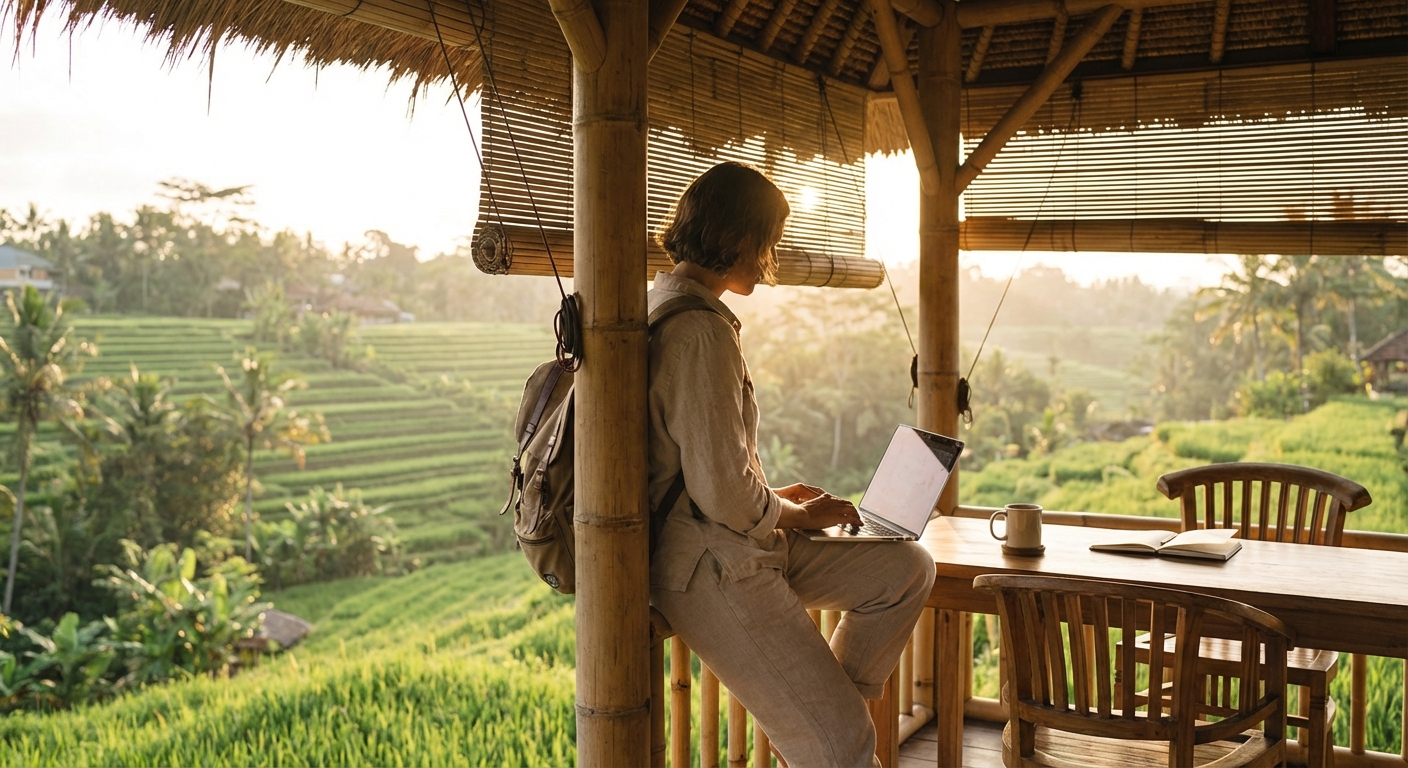

Bali occupies a unique space in the digital nomad imagination. It's simultaneously the most Instagrammed destination and one of the most genuinely functional remote work bases in Southeast Asia. The rice terraces and beach sunsets are real, but so are the fiber internet connections, world-class coworking spaces, and a wellness infrastructure that makes long-term productivity sustainable.
For most digital nomads, living well in Bali costs $1,200-1,500 per month if you're mindful of spending, while those who prefer premium coworking memberships, regular travel, or high-end dining can expect monthly expenses closer to $1,800-2,200. That's more than Chiang Mai but less than Lisbon, positioning Bali as a mid-range destination with lifestyle benefits that justify the premium.
This guide covers the practical reality of working from Bali: which neighborhoods actually deliver on the nomad promise, how to navigate the evolving visa situation, where to find reliable internet, and how to avoid the pitfalls that turn paradise into frustration.
Bali at a Glance
In this guide:
- Cost of Living Breakdown
- Canggu vs. Ubud: Choosing Your Base
- Other Neighborhoods Worth Considering
- Coworking Spaces
- Internet and Connectivity
- Visa Options
- Getting Around
- Seasonal Considerations
- FAQ
For how Bali compares to other options, see our best digital nomad destinations 2026 guide.
Cost of Living Breakdown
Bali's costs have risen significantly as digital nomads flooded the island, but it remains excellent value for what you get—especially compared to equivalent lifestyle destinations elsewhere.
Accommodation
Housing represents your biggest variable expense. Prices vary dramatically based on location, amenities, and lease length.
| Type | Budget | Mid-Range | Premium |
|---|---|---|---|
| Shared co-living | $300-400 | — | — |
| Studio/1BR apartment | $400-600 | $700-1,000 | $1,200-1,500 |
| Villa with pool | $600-900 | $1,000-1,400 | $1,500-2,000+ |
| Location | Ubud outskirts | Canggu/Ubud central | Canggu beachside |
Canggu 2026 rates: One-bedroom villas with pool now run 12-18 million rupiah ($750-1,125) monthly, up from 10-15 million a year ago. The area's popularity keeps pushing prices higher.
Ubud rates: Similar quality runs 8-14 million rupiah ($500-875), trading beach access for jungle views and quieter atmosphere.
Lease terms: Most landlords demand two months upfront (deposit plus first month). Six or twelve-month leases are standard; month-to-month flexibility adds roughly 20% to the rate.
For comprehensive strategies on finding, negotiating, and securing accommodation, see our Complete Digital Nomad Accommodation Guide.
Food
Bali's food scene spans from $2 local warungs to $50 beachfront dinners.
Local warungs: Authentic Indonesian food at $2-4 per meal. Nasi goreng, mie goreng, and local dishes at prices that make daily eating out affordable.
Cafe culture: The smoothie bowl and avocado toast scene runs $8-15 per meal. Canggu particularly caters to the health-conscious nomad crowd with abundant vegan, raw, and organic options.
Mid-range restaurants: International cuisine at $10-20 per person. Quality has improved dramatically as competition increased.
Monthly food budget: $300-400 eating mostly local with occasional cafe splurges. $500-700 for regular cafe meals and Western food. $800+ for premium dining habits.
Coworking
Bali's coworking scene is among Asia's best developed, with options ranging from basic hot desks to premium creative studios.
| Space | Day Pass | Monthly | Vibe |
|---|---|---|---|
| Dojo Bali (Canggu) | ~$12 | ~$115 | Social, established |
| Outpost (Ubud/Canggu) | $16 | ~$125 | Community, yoga |
| B Work (Canggu) | — | ~$230 | Professional, amenities |
| Tropical Nomad | $10 | ~$100 | Budget, functional |
Cafe alternatives: Many Bali cafes actively welcome laptop workers with dedicated work areas, reliable WiFi, and understanding of nomad needs. Mixing coworking membership with cafe days optimizes costs.
Other Costs
Transportation: Scooter rental runs 750,000-1,000,000 rupiah ($47-63) monthly for a reliable automatic with helmet and basic insurance. Fuel adds roughly 200,000 rupiah ($12) monthly for moderate island exploration. Grab rides within Canggu or Ubud cost 20,000-40,000 rupiah ($1.25-2.50).
Health and wellness: Yoga classes $8-15, with unlimited monthly packages at major studios around $100-150. Gym memberships $30-60. Spa treatments and massage significantly cheaper than Western equivalents.
Entertainment: Beach clubs, live music, cultural events. Budget $100-300 depending on lifestyle.
Monthly Budget Summary
| Category | Budget | Comfortable | Premium |
|---|---|---|---|
| Accommodation | $500 | $900 | $1,400 |
| Food | $350 | $550 | $800 |
| Coworking | $50 | $120 | $230 |
| Transport | $60 | $80 | $150 |
| Wellness | $50 | $100 | $200 |
| Entertainment | $50 | $150 | $300 |
| Total | $1,060 | $1,900 | $3,080 |
Canggu vs. Ubud: Choosing Your Base
The Canggu versus Ubud decision shapes your entire Bali experience. Both have robust nomad infrastructure, but the lifestyles differ significantly.
Canggu
The vibe: Happening, hip, and cosmopolitan. Canggu is the undisputed digital nomad hub of Bali—a coastal village transformed into a modern mecca of coworking spaces, beach clubs, and international restaurants.
Best for: Social nomads who want beach access, active nightlife, and a dense concentration of other remote workers. Surfers. Those in their 20s-30s who thrive on community energy.
The scene: Coworking spaces and cafes at every turn. Beach sunsets. Surf breaks. Regular networking events, parties, and social activities. You'll never lack for social opportunities—the challenge is finding quiet focus time.
Pros
- Highest concentration of coworking and cafes
- Active social scene and networking events
- Beach access and surf breaks
- Excellent restaurant diversity
- Strong nomad community
Cons
- Traffic has become genuinely problematic
- Highest prices on the island
- Can feel like a nomad bubble
- Construction noise is constant
- Tourist density can feel overwhelming
Neighborhoods within Canggu: Berawa and Pererenan offer slightly quieter alternatives to central Canggu while maintaining access to the scene.
Ubud
The vibe: Peaceful, green, and spiritual. Ubud sits inland surrounded by rice paddies, jungle, and temples. It's where nomads go to actually get work done and reconnect with nature.
Best for: Nomads over 35 who are past the party scene. Wellness-focused workers. Writers, artists, and creatives who need quiet focus. Those seeking authentic Balinese culture alongside modern amenities.
The scene: World-class yoga studios (Yoga Barn, Radiantly Alive), art galleries, organic restaurants, and a quieter coworking community. Regular ceremonies and cultural events provide genuine immersion opportunities.
Downsides:
- No beach (1+ hour drive to coast)
- Smaller social scene—can feel isolating if you crave community
- Afternoon heat and humidity without ocean breezes
- Fewer dining and nightlife options
- Some areas lack reliable internet infrastructure
Our recommendation: Try both. Many nomads spend a month in Canggu for social connection and beach time, then retreat to Ubud when they need to focus on deep work. The two complement each other well.
Other Neighborhoods Worth Considering
Beyond the big two, several areas offer distinct advantages:
Uluwatu / Bingin
The vibe: Dramatic clifftop living above world-class surf breaks. More remote, more rugged, more authentically beautiful.
Costs: 10-16 million rupiah ($625-1,000) for villas, slightly less than Canggu for comparable quality.
Best for: Surfers, cliff-view seekers, those who don't need daily coworking access.
Downsides: Fewer coworking options. More isolated. Requires scooter for everything.
Sanur
The vibe: The original expat area, now quieter and more family-oriented. Beachfront but calmer than Canggu.
Costs: 6-10 million rupiah ($375-625) for spacious apartments, significantly cheaper than Canggu.
Best for: Families, older nomads seeking quiet, those who want beach access without party scene.
Downsides: Smaller nomad community. Less developed coworking scene. Can feel sleepy.
Seminyak
The vibe: Bali's original tourist hotspot, more upscale and polished than Canggu.
Costs: Similar to Canggu's higher end.
Best for: Those who want beach clubs, shopping, and nightlife without Canggu's surfer aesthetic.
Downsides: More tourist-oriented than nomad-oriented. Traffic even worse than Canggu.
Coworking Spaces
Bali's coworking infrastructure rivals anywhere in the world. Here are the standout options:
Canggu
Dojo Bali: The original Canggu coworking space and still one of the best. Strong community, regular events, reliable internet. Monthly unlimited access around 1.8 million rupiah (~$115). The social hub of Canggu's nomad scene.
Outpost Canggu: Part of the Outpost network with locations worldwide. Bright, professional space with pool access. Strong on community programming including yoga and social events. Day passes around $16, monthly from $125.
B Work Bali: More professional/corporate feel with extensive amenities including meeting rooms, printing, and high-speed internet. Around $230 monthly for unlimited access. Good for those needing more formal work environment.
Tropical Nomad: Budget-friendly option with functional basics. Around $100 monthly. Less community focus but solid for heads-down work.
Ubud
Outpost Ubud: Two locations in Ubud, both excellent. The original space integrates beautifully with jungle surroundings. Community dinners and wellness programming included. Similar pricing to Canggu location.
Hubud: Pioneer of Ubud coworking (the name means "hub in Ubud"). Bamboo architecture, strong sustainability focus, tight-knit community. More intimate than Canggu options.
Beluna - House of Creatives: Smaller, creative-focused space. Good for designers, writers, and artists who want quieter environment.
For optimizing your workspace setup, see our portable laptop stands guide and portable monitors guide.
Internet and Connectivity
Bali's internet has improved dramatically but remains less reliable than Thailand or Europe. Planning for connectivity issues is essential.
Current State
Coworking speeds: 50-100 Mbps in established spaces. Generally reliable during work hours.
Villa/apartment WiFi: Highly variable. Central Canggu, Berawa, Pererenan, and central Ubud typically have access to fiber with speeds of 30-50+ Mbps. Outlying areas can be much slower.
Mobile data: 4G coverage is good in populated areas. Local SIMs with generous data (20-50GB) cost $10-20 monthly. Essential as backup.
Reliability Concerns
Power outages: More common than you'd expect, especially during rainy season. Laptop battery becomes your backup.
Construction disruption: The constant development means cables get cut, equipment gets damaged. An area with good internet today might have issues tomorrow.
Testing before committing: Always test villa WiFi during a viewing, ideally at different times of day. Ask neighbors about outage history before signing leases.
Backup Strategy
Always Have Backup Connectivity
Given Bali's reliability issues, always have backup connectivity in place before important calls or deadlines. Your apartment WiFi will fail at some point—it's not a question of if, but when.
- Mobile hotspot: Local SIM with data plan
- Know your coworking options: Even if you prefer home work, know where you can go if home internet fails
- Cafe fallback: Identify cafes near your accommodation with reliable WiFi
- Portable battery: For power outages during work hours
For complete connectivity planning, see our WiFi and connectivity guide and best eSIM for Asia.
Visa Options
Bali's visa situation has evolved significantly, with new options for longer stays now available.
Visa Overview
Indonesia offers multiple visa pathways for digital nomads, from 30-day arrivals to the E33G Remote Worker Visa (1 year, renewable). The right choice depends on your planned stay length, income level, and flexibility needs. Start with the Visa on Arrival for initial visits, then consider longer-term options.
Official source: Indonesian Immigration
Visa on Arrival (30 Days)
Most nationalities receive 30 days on arrival for a $35 fee. This can be extended once for another 30 days (60 days total) at immigration offices in Bali.
Process: Pay fee on arrival, receive 30-day stamp. Before expiration, visit immigration office (Ngurah Rai or Denpasar), pay extension fee (~500,000 rupiah), receive additional 30 days.
Limitations: Maximum 60 days per entry. Must leave Indonesia to reset.
B211A Visa (60 Days)
For stays beyond 60 days without leaving, the B211A social/cultural visa provides 60 days initially, extendable up to 180 days total.
Requirements: Sponsor (can be arranged through visa agents), proof of funds, itinerary.
Process: Apply through visa agent before arrival or at Indonesian embassy/consulate. Costs vary by agent but typically $150-300 including extensions.
E33G Remote Worker Visa (Digital Nomad Visa)
Indonesia launched the E33G Remote Worker Visa in April 2024, providing a legitimate option for digital nomads.
Duration: 1 year, single entry validity. The E33G is non-extendable and cannot be renewed—you must apply for a new visa if you wish to stay longer. You can leave and re-enter Indonesia multiple times during the visa's validity period.
Cost: IDR 7,000,000 (~$430) official fee, plus KITAS processing. With agency services, expect $600-1,000 total.
Income Requirements:
- Annual income proof of at least $60,000/year
- Bank statements from last 3 months showing minimum $2,000 balance
- Proof of remote employment or freelance contracts with foreign clients
- Passport valid for at least 18 months with 3+ blank pages
Other Requirements: Must be at least 18 years old, clean criminal record, proof of accommodation in Indonesia (lease or hotel reservation).
Tax Benefits: Foreign-sourced income is exempt from Indonesian income tax—a significant advantage over many destinations.
Important limitations: The E33G does not lead to permanent residency. It's strictly for remote workers employed by non-Indonesian companies—you cannot work for Indonesian clients or companies under this visa.
Consideration: Best for established earners committed to Bali for a year. The $60,000/year income requirement puts this out of reach for budget nomads. For shorter stays or lower earners, B211A remains more practical.
Visa Runs
For those on tourist visas, the traditional approach is leaving Indonesia periodically. Popular options:
- Singapore: Easy flight, quick turnaround
- Kuala Lumpur: Cheap flights, good city break
- Bangkok: Combine with Thailand time
For complete visa comparisons, see our digital nomad visa comparison guide.
Getting Around
Bali requires wheels. Public transportation is essentially non-existent for practical purposes.
Scooter
The default choice for most nomads. Scooter rental provides freedom to explore while keeping transportation costs minimal.
Costs: 750,000-1,000,000 rupiah ($47-63) monthly for a reliable automatic. Fuel around 200,000 rupiah ($12) monthly for moderate use.
Requirements: International Driving Permit with motorcycle endorsement technically required. Enforcement is inconsistent but having proper documentation protects you in accidents and police stops.
Learning curve: Bali traffic is chaotic. If you're new to riding, practice in quiet areas first. Consider a brief lesson before joining main roads.
Rainy season: Roads become slippery. Potholes fill with water and become invisible. Ride more cautiously and budget extra time.
Grab / Gojek
Ride-hailing apps work throughout Bali. Useful for nights out, airport runs, or days you don't want to ride.
Costs: 20,000-40,000 rupiah ($1.25-2.50) for trips within neighborhoods. 150,000+ rupiah to airport depending on location.
Availability: Generally good in populated areas but can be scarce during peak times or in remote areas.
Car Rental / Driver
For those uncomfortable on scooters or needing to transport more than fits on two wheels.
Self-drive: 400,000-600,000 rupiah ($25-38) daily for basic cars. Requires International Driving Permit.
With driver: 600,000-800,000 rupiah ($38-50) for full day with driver. More expensive but eliminates parking hassles and driving stress.
Seasonal Considerations
Bali's seasons significantly impact your experience and budget.
Dry Season (April - October)
Weather: Sunny days, lower humidity, minimal rain. The best time for beach activities and outdoor exploration.
Crowds: Peak tourist season, especially July-September. Coworking spaces get busy. Accommodation prices highest.
Strategy: Book accommodation well in advance. Secure coworking spots early in the day.
Rainy Season (November - March)
Weather: Afternoon downpours most days, higher humidity. Mornings are often clear.
Impacts:
- Power outages more common
- Roads flood periodically
- Scooter riding becomes more challenging
- Some beach activities limited
Benefits: Lower prices, fewer tourists, greener landscape. Many nomads find productivity actually improves with fewer social distractions.
Strategy: Invest in portable battery for laptop. Plan important calls for mornings. Embrace the rhythm of tropical weather.
High Season Pricing
July-September and December-January see prices spike 20-30% for short-term accommodation. Long-term leases (6+ months) provide price stability regardless of season.
FAQ
Is Bali good for first-time digital nomads?
Bali works well for first-timers who want lifestyle alongside work, but it's not the easiest entry point. The visa situation is more complex than Thailand, internet is less reliable, and costs are higher than budget destinations. For pure ease-of-transition, Chiang Mai is simpler. For those prioritizing wellness, nature, and lifestyle, Bali justifies the extra complexity.
Canggu or Ubud for productivity?
Ubud generally wins for focused work. Canggu's social scene and beach proximity create more distractions. Many productive nomads use Canggu for social recharge and Ubud for deadline sprints.
How bad is the traffic really?
In Canggu, genuinely bad during peak hours (8-10am, 4-7pm). A trip that takes 10 minutes at 6am can take 45 minutes at 5pm. Ubud traffic is more manageable. Factor this into daily planning.
Is Bali safe?
Generally yes for personal safety. Petty theft exists (don't leave valuables in scooter baskets), but violent crime against foreigners is rare. The bigger "safety" concerns are traffic accidents (wear helmets, ride defensively) and water/food illness (stick to filtered water, be selective about street food initially).
What's the social scene like?
Canggu has one of the most active nomad social scenes in the world. Daily events, networking opportunities, and easy conversation with other remote workers. Ubud is quieter but still has community. If social connection matters to you, Bali delivers.
What should I pack for Bali?
Light, breathable clothing for tropical heat. Rain jacket or compact umbrella for rainy season. Reef-safe sunscreen. Modest clothing for temple visits. Good quality sunglasses. See our Southeast Asia packing list for complete recommendations.
Your Next Steps
Bali rewards those who understand its rhythms. The island delivers genuine lifestyle benefits—wellness, nature, community, adventure—but requires more planning and adaptation than simpler destinations.
For first visits: Start in Canggu for a month to tap into the community and understand the landscape. Book accommodation for 2-4 weeks initially, then extend or relocate based on what you discover.
Building a base: If Bali works for you, consider the digital nomad visa for long-term stability. Lock in a 6+ month lease during shoulder season for best rates. Build relationships with landlords and local service providers.
The rotation strategy: Many successful Bali-based nomads spend 3-4 months on the island, then travel elsewhere during either peak season (to avoid crowds) or burning season in Chiang Mai (to escape the smoke). Bali's central location makes regional exploration easy.
For how Bali compares to alternatives, see our best digital nomad destinations 2026 guide. For other Asia options, check our best digital nomad destinations in Asia guide.
For healthcare in Bali, including hospital recommendations and when to evacuate to Bangkok or Singapore, see our complete healthcare guide and regional healthcare costs.
About the Author