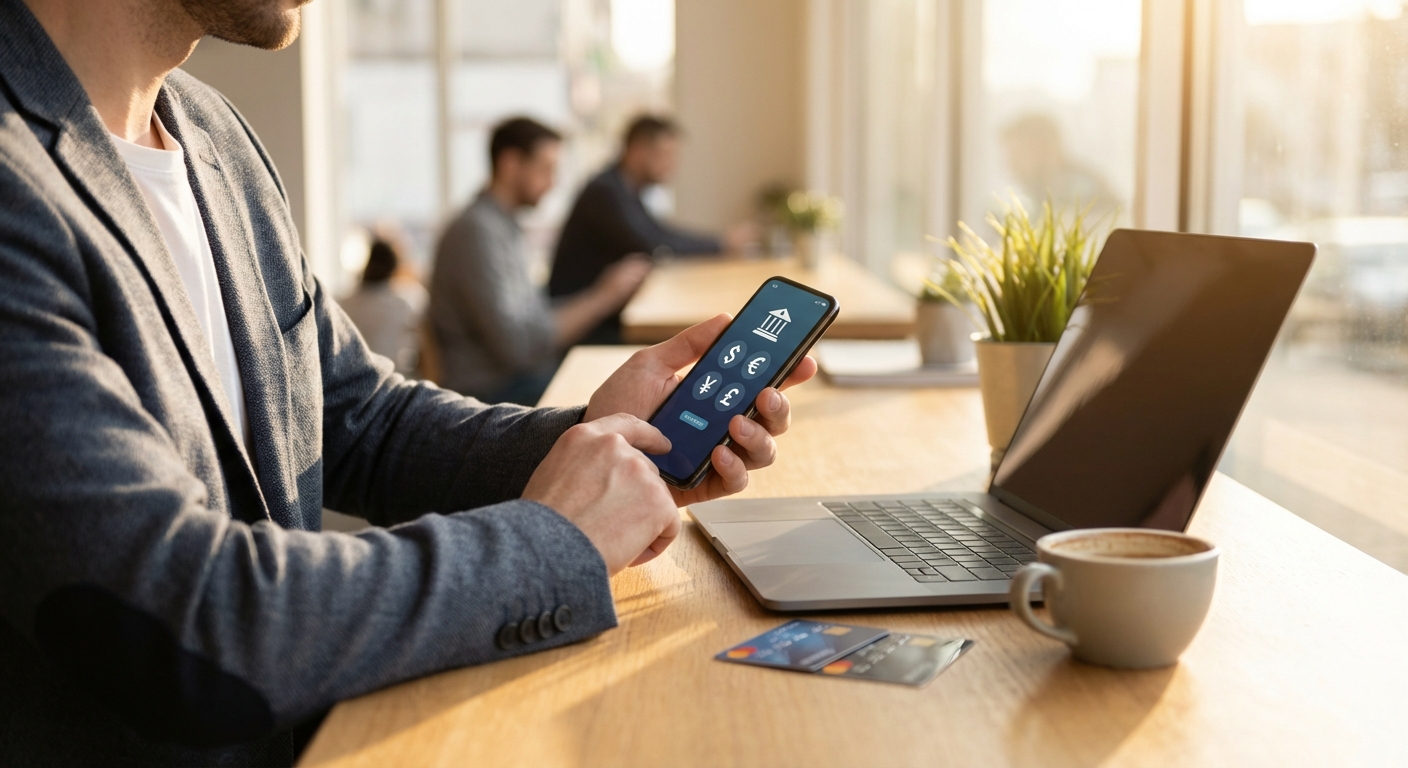
Managing money across borders is one of the most practical challenges digital nomads face. Traditional banks punish international use with fees, poor exchange rates, and account closures. The right banking setup saves thousands annually while providing flexibility location-independent life requires.
This guide covers the complete nomad banking toolkit—from multi-currency accounts to getting paid internationally to maintaining home country banking relationships.
For tax implications of international banking, see our digital nomad tax guide. For earning internationally, see getting paid as a freelancer.
Quick Overview: Best Banking Setup for Nomads
Recommended Banking Stack
The Digital Nomad Banking Problem
Traditional banks are designed for people who stay in one country:
Problems with Traditional Banks Abroad
| Issue | Impact |
|---|---|
| Foreign transaction fees | 1-3% on every purchase |
| Poor exchange rates | 2-5% markup over mid-market |
| International ATM fees | $3-5 per withdrawal + % fee |
| Account suspensions | Suspicious activity from travel |
| Limited card replacement | Hard to get new card abroad |
| Phone verification | May not work internationally |
Annual Cost Example
A nomad spending $3,000/month with a traditional US bank:
| Fee Type | Monthly Cost | Annual Cost |
|---|---|---|
| Foreign transaction (3%) | $90 | $1,080 |
| ATM fees (4x $5) | $20 | $240 |
| Exchange rate markup (3%) | $90 | $1,080 |
| Total hidden costs | $200 | $2,400 |
The right banking setup reduces this to nearly zero.
Essential Account Types
1. Multi-Currency Account (Required)
A multi-currency account lets you hold, convert, and spend multiple currencies without conversion fees on every transaction.
Best options:
Wise (formerly TransferWise)
- Hold 50+ currencies
- Mid-market exchange rate (0.35-1% fee on conversion)
- Global debit card with low fees
- Local bank details in US, UK, EU, Australia, and more
- Best for: Most nomads, especially US-based
Revolut
- Hold 30+ currencies
- Free plan with limited free currency exchange
- Premium plans with better limits
- Good crypto integration
- Best for: European nomads, frequent currency swappers
Payoneer
- Strong for receiving business payments
- Multi-currency receiving accounts
- Less ideal for daily spending
- Best for: Freelancers receiving payments from platforms
2. Home Country Bank (Recommended)
Maintain a bank account in your home country for:
- Receiving government payments/tax refunds
- Paying home country bills/subscriptions
- Credit history maintenance
- Emergency backup
US options:
- Charles Schwab: No foreign transaction fees, unlimited ATM rebates globally
- Fidelity: Similar benefits, good for investment linking
- Capital One 360: No foreign transaction fees on debit
UK options:
- Starling Bank: Excellent app, no fees abroad
- Monzo: Similar to Starling, good for budgeting
- HSBC: Traditional option with global presence
3. Investment/Brokerage Account (Optional but Recommended)
For longer-term savings and emergency funds:
- Charles Schwab: Combines checking + brokerage
- Interactive Brokers: Low fees for international stocks
- Fidelity: Good all-around option
4. Crypto/Stablecoin Access (Situational)
For countries with banking restrictions or as emergency backup:
- Kraken: Good global access
- Coinbase: US-friendly
- Binance: Widest global access (check your country)
Multi-Currency Deep Dive: Wise vs Revolut
Side-by-Side Comparison
| Feature | Wise | Revolut |
|---|---|---|
| Currencies held | 50+ | 30+ |
| Conversion fee | 0.35-1% | Free up to limit, then 0.5-1% |
| ATM withdrawals | $100-200/month free | $200/month free (Premium: more) |
| Physical card | $9 one-time | Free (Standard) |
| Local bank details | US, UK, EU, AU, NZ | UK, EU |
| Business account | Yes | Yes |
| Crypto support | No | Yes |
| Monthly fee | None | None (Standard), $8-14 (Premium) |
When to Choose Wise
- Primary spending account: Best exchange rates
- US-based nomads: US bank details for ACH
- Receiving USD payments: Excellent for freelancers
- Simplicity: Straightforward, no tiers
When to Choose Revolut
- European nomads: Strong EU presence
- Frequent swapping: Free exchanges up to limits
- Crypto interest: Integrated buying/selling
- Premium features: Want budgeting tools, lounges
Recommended Setup
Most nomads benefit from having both:
- Wise: Primary multi-currency account
- Revolut: Backup, crypto access, Premium perks if valuable
For detailed comparison, see our Wise vs Revolut comparison.
The Charles Schwab Advantage (US Citizens)
Charles Schwab's Investor Checking account is nearly essential for US-based nomads.
Key Benefits
| Feature | Benefit |
|---|---|
| Foreign transaction fees | None |
| ATM fees worldwide | Unlimited rebates (any ATM, any fee) |
| International transfers | Free via Schwab |
| Account minimum | $0 |
| Linked brokerage | Easy investment access |
| Debit card replacement | Ships internationally |
How ATM Rebates Work
- Use any ATM anywhere in the world
- Pay whatever fee the ATM charges
- Schwab automatically rebates the fee at month-end
- Fee appears as credit on statement
This means: Withdraw from expensive hotel ATMs, airport ATMs, any ATM—all free.
Schwab Downsides
- Mobile deposit limits may be lower
- Customer service hours (US time zones)
- Need to open brokerage account (no minimum, but required)
- Address verification may need US address
Address Strategy
Maintain a US address for banking via family, mail forwarding service (US Global Mail, Traveling Mailbox), or registered agent service. This is essential for Schwab and most US banking.
Getting Paid Internationally
Payment Methods by Use Case
| Situation | Best Method |
|---|---|
| US employer, direct deposit | US bank (Schwab) |
| International clients | Wise (local bank details) |
| Freelance platforms | Platform → Wise/Payoneer |
| Large invoices | Wire transfer to Wise |
| Crypto payments | Direct wallet or exchange |
Using Wise for Payments
Wise provides local bank details in multiple currencies:
What you get:
- US: ACH routing number + account number
- UK: UK sort code + account number
- EU: Belgian IBAN for SEPA
- Australia: BSB + account number
How to use:
- Give clients your local bank details
- They pay as domestic transfer (no international fees for them)
- Money arrives in your Wise balance
- Convert to any currency at mid-market rate
Platform-Specific Advice
Upwork:
- Direct to Wise US account (as domestic transfer)
- Or Payoneer integration
Toptal:
- Wire transfer to Wise
- Payoneer
Remote.com / Deel / Oyster:
- Usually handle payments directly
- May offer multi-currency options
For comprehensive payment strategies, see our getting paid internationally guide.
ATM Strategies by Region
Best Practices
- Decline conversion: Always choose local currency, not your home currency
- Withdraw larger amounts: Minimize per-transaction fees
- Use bank ATMs: Avoid independent ATMs with higher fees
- Check limits: Know your daily withdrawal limits
Regional Tips
Europe:
- ATMs widely available
- Look for bank-owned ATMs (avoid Euronet—terrible rates)
- Most accept Visa/Mastercard
Southeast Asia:
- Higher ATM fees common ($4-6 per transaction)
- 10,000-20,000 THB limits typical in Thailand
- Schwab rebates make any ATM free
Latin America:
- ATM fees vary widely
- Security: Use ATMs inside banks when possible
- Limits may be low (withdraw multiple times)
Africa:
- ATM availability varies significantly
- Some countries are largely cash-based
- Carry backup cash in USD
Maintaining Banking While Nomadic
Address Requirements
Most banks require a valid address. Options:
Family address:
- Free
- Reliable
- Need someone to forward important mail
Virtual mailbox service:
- US Global Mail, Traveling Mailbox, Anytime Mailbox
- $10-30/month
- Mail scanning, forwarding, permanent address
Registered agent:
- More formal, good for business
- State-specific
- Higher cost
Avoiding Account Closures
Banks may close accounts showing "suspicious" activity (living abroad). Mitigate by:
- Don't tell them you're traveling indefinitely
- Maintain regular US activity: Small purchases, occasional domestic ATM use
- Keep reasonable balances: Very low balances may trigger closure
- Use direct deposit: Looks like normal domestic activity
- Log in from US IPs occasionally: VPN for banking access
Don't Lie to Banks
While you don't need to volunteer that you're a digital nomad, never lie directly on forms. Misrepresenting your tax residency or physical address can have legal consequences.
Phone Number Requirements
Many banks require SMS verification. Solutions:
Google Voice (US):
- Free US number
- Works abroad via data
- Can receive SMS
VoIP services:
- Skype, etc. may work
- Some banks block VoIP numbers
Local SIM:
- Keep home country SIM active
- May need periodic top-ups
Currency Strategy
When to Convert
| Scenario | Strategy |
|---|---|
| Earning USD, spending EUR | Convert weekly/monthly batches |
| Volatile currency | Convert immediately |
| Stable currencies | Wait for favorable rates |
| Large expenses (rent) | Convert when you know amount |
Avoiding Conversion Losses
- Never use dynamic currency conversion (always pay in local currency)
- Batch conversions to minimize fees
- Keep funds in stable currencies (USD, EUR, GBP)
- Use mid-market rate services (Wise, not banks)
Example Strategy
A US-based nomad living in Portugal:
- Receive USD payments to Wise US account
- Convert monthly to EUR in Wise
- Keep 2-3 months EUR for local expenses
- Keep emergency fund in USD (stable, home currency)
- Use Wise card for daily spending (auto-converts if needed)
Credit Cards for Nomads
While this guide focuses on banking, the right credit cards complement your setup.
Best Cards (US)
| Card | Best For |
|---|---|
| Chase Sapphire Preferred/Reserve | Travel rewards, no FTF |
| Capital One Venture X | Travel perks, no FTF |
| Amex Platinum | Lounges, premium travel |
| Bilt Mastercard | Rent payments |
Card Strategy
- Primary: High-reward travel card with no foreign transaction fees
- Backup: Different network (Visa + Mastercard coverage)
- Debit: Multi-currency (Wise/Revolut) for ATM access
Credit Score Maintenance
Maintain US credit while abroad:
- Keep cards active with small recurring charges
- Pay balances in full
- Don't close old accounts
- Monitor via Credit Karma or similar
Security Best Practices
Account Security
| Practice | Why |
|---|---|
| Two-factor authentication | Protects against password theft |
| Unique passwords | One breach doesn't compromise all |
| Password manager | 1Password, Bitwarden |
| VPN for banking | Secure connections, avoid blocks |
| Transaction alerts | Catch fraud immediately |
Physical Security
- Don't carry all cards: Leave backup secured
- Use RFID-blocking wallet: Prevents electronic skimming
- Photograph cards: Store securely for replacement details
- Know emergency numbers: Card cancellation lines
If Cards Are Lost/Stolen
- Immediately: Cancel via app or phone
- Request replacement: Wise ships internationally, Schwab ships internationally
- Use backup: This is why you have multiple accounts
- Monitor accounts: Watch for unauthorized charges
Tax Considerations
Banking choices have tax implications. Brief overview (not tax advice):
Which country's rules apply to you depends on where you are tax resident, and banks increasingly ask you to declare it on a self-certification form. Our guide to digital nomad tax residency explains how that status is determined and why "nowhere" is not an answer a bank will accept.
Reporting Requirements (US)
FBAR (FinCEN 114):
- Required if foreign accounts exceed $10,000 total at any point
- Wise, Revolut, foreign banks all count
- Report annually by April 15 (extension to October available)
FATCA (Form 8938):
- Required for higher thresholds ($50K-200K depending on filing status)
- Report with tax return
Interest/Dividends:
- Foreign account interest is taxable US income
- Report on Schedule B
For comprehensive tax guidance, see our digital nomad tax guide.
FAQ
Frequently Asked Questions
Recommended Setup Summary
Minimum Viable Stack
| Account | Purpose | Cost |
|---|---|---|
| Wise | Multi-currency, daily spending, receiving payments | Free |
| Charles Schwab | US banking, unlimited ATM rebates | Free |
| One travel credit card | Backup, rewards | Varies |
Monthly cost: $0
Optimal Stack
| Account | Purpose | Cost |
|---|---|---|
| Wise | Primary multi-currency | Free |
| Revolut Premium | Backup, crypto, perks | $8/month |
| Charles Schwab | US banking, ATM | Free |
| Chase Sapphire Reserve | Travel rewards, insurance | $550/year |
| Virtual mailbox | US address | $15/month |
Monthly cost: ~$65
Action Checklist
Pros
- Open Wise account (free, 10 minutes)
- Open Charles Schwab Investor Checking (US citizens)
- Get no-FTF credit card if you don't have one
- Set up virtual mailbox for permanent US address
- Enable 2FA on all financial accounts
- Store backup card details securely (encrypted)
Cons
- Don't close existing accounts impulsively
- Don't tell banks you're 'moving abroad permanently'
- Don't carry all cards together while traveling
- Don't use dynamic currency conversion (always local currency)
- Don't ignore FBAR requirements if applicable
- Don't keep large balances in unstable currencies
Conclusion
The right banking setup transforms nomad finances from a constant friction point to a seamless background system. The combination of Wise (multi-currency) + Charles Schwab (US banking, ATM rebates) + a good travel credit card covers virtually all nomad needs at minimal cost.
Key principles:
- Multi-currency accounts eliminate most conversion fees
- No foreign transaction fee cards are essential
- ATM fee rebates (Schwab) save money everywhere
- Multiple accounts provide redundancy and backup
- Maintain home country presence for banking stability
Set up your banking stack before you leave, test everything while you still have easy access to home country services, and you'll be well-prepared for location-independent financial life.