What to Pack for Your First Month as a Digital Nomad

I spent three weeks researching the "perfect" packing list before my first nomad trip. I bought $400 worth of gear. Within a month, I'd given away half of it and desperately needed things I hadn't packed.
Your first month as a digital nomad is about discovery, not optimization. You'll pack things you never use and forget things you desperately need. That's not failure—it's the learning process every nomad goes through.
This guide helps you start smart: solid essentials without the over-engineering that wastes money and pack space.
Quick Navigation:
- The First Month Mindset
- The Starter Packing List
- What You Think You Need (But Don't)
- What You'll Actually Use Daily
- Building Your System
- First Week Adjustments
- FAQ
The First Month Mindset
The biggest mistake new nomads make: packing for every scenario instead of packing for adaptation.
Pack to Learn, Not to Optimize
Your first month teaches you:
- What you actually wear vs. what you thought you'd wear
- Which tech setup actually works for your workflow
- How much you value certain comforts
- What your personal packing style looks like
Don't buy everything before leaving. Start with essentials, note what you're missing, and buy it locally or order it to your next destination.
The 80/20 Rule of Nomad Packing
You'll wear 20% of your clothes 80% of the time. You'll use 20% of your gear 80% of the time. Your first month reveals which 20% that is for you.
This is why experienced nomads travel so light—they've identified their personal essentials through trial and error.
Carry-On Only: Yes, You Can
Commit to carry-on only from day one. Benefits:
- No lost luggage anxiety
- Faster airport transitions
- Easier spontaneous travel
- Forces intentional packing
If you can't fit it in a 40L bag, you probably don't need it for month one. See our one-bag travel guide for the complete philosophy.
The Starter Packing List
This list prioritizes flexibility and learning over optimization.
Bag Selection
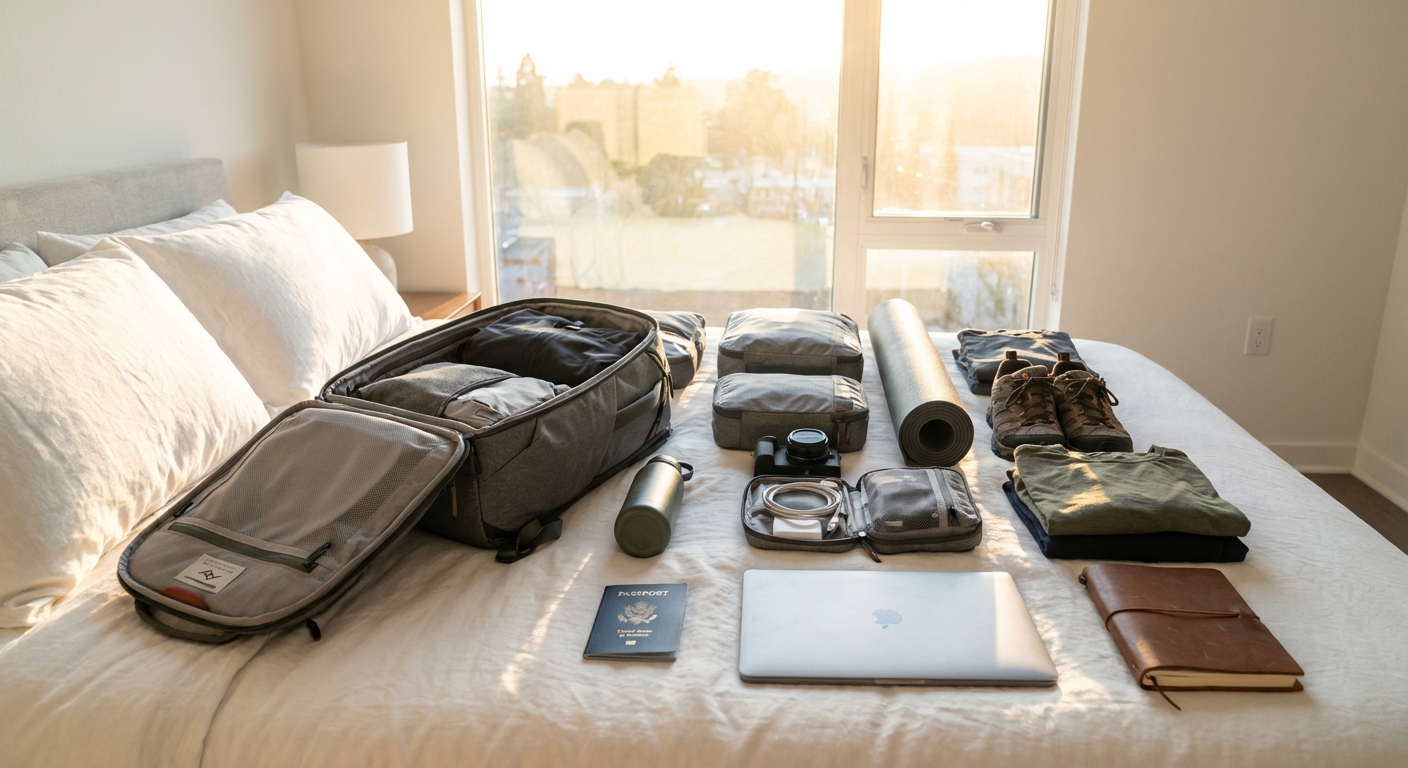
Primary bag: 40L travel backpack
- Osprey Farpoint/Fairview 40 (safest choice)
- Tortuga Outbreaker 35L (better organization)
- Peak Design Travel Backpack (tech-focused)
Day pack: Packable or small daypack (15-20L)
- For daily café/coworking trips
- Holds laptop + daily essentials
See our travel backpack recommendations for detailed comparisons.
Tech Essentials
Your work setup is non-negotiable. Pack these carefully:
| Item | Notes |
|---|---|
| Laptop + charger | Your income source—don't skimp |
| Phone + charger | Communication, backup hotspot |
| Power bank (laptop-capable) | 20,000mAh+ with USB-C PD |
| Universal adapter | One that handles all regions |
| Headphones | Noise-cancelling for focus |
| Tech pouch | Organization is sanity |
| Cables (USB-C x2) | Always pack backups |
First month tip: Start with just your laptop charger and phone charger. Consolidate to a GaN charger only after you understand your actual power needs.
For complete tech recommendations, see our ultimate packing list.
Clothing (Start Conservative)
Pack more than ultralight travelers recommend—you're still learning what works:
| Item | Quantity | Notes |
|---|---|---|
| T-shirts | 4-5 | Mix of casual and nice |
| Long-sleeve shirt | 1 | Layering, sun protection |
| Button-down | 1 | Dressier occasions |
| Pants | 2 | One casual, one nicer |
| Shorts | 2 | If going somewhere warm |
| Underwear | 5-6 | Quick-dry preferred |
| Socks | 4-5 | Mix of lengths |
| Light jacket | 1 | Weather protection |
| Sleepwear | 1 | Optional but nice |
First month note: You'll quickly learn which items you reach for daily. After month one, donate or ship home what you never wore.
Toiletries (Minimal)
Everything is available everywhere. Pack only:
- Toothbrush + small toothpaste
- Deodorant (travel size)
- Any prescription items
- Contact lenses/solution if needed
- Small first aid kit basics
Buy shampoo, body wash, sunscreen, etc. locally. Saves weight and lets you try local products. See our toiletry bag essentials guide for organization tips.
Organization
| Item | Purpose |
|---|---|
| Packing cubes (3-4) | Clothing organization |
| Tech pouch | Cable/accessory management |
| Toiletry bag | Bathroom essentials |
| Document holder | Passport, cards, papers |
Organization systems pay dividends immediately. Don't skip these.
Documents and Money
| Item | Notes |
|---|---|
| Passport | Check 6+ months validity |
| Credit cards (2-3) | Different networks (Visa, Mastercard) |
| Debit card | ATM access, preferably no-fee |
| Driver's license | International version if driving |
| Travel insurance docs | Digital copies accessible |
| Emergency contacts | Written and digital |
What You Think You Need (But Don't)
New nomads consistently overpack these categories:
Too Many "Just in Case" Items
- Formal outfit for "potential meetings" you won't have
- Extensive first aid kit beyond basics
- Multiple adapters for different regions
- Books (use Kindle or library apps)
- Specialty clothing for activities you might do once
Too Much Tech
- Second laptop/tablet "just in case"
- Multiple power banks
- Extensive camera gear
- Too many cables
- Gadgets that "might be useful"
Too Many Clothes
- More than 2 weeks' worth (laundry exists)
- Heavy cotton items (slow to dry)
- Shoes you'll wear once
- Accessories "to match outfits"
- Climate-specific items for every possible weather
The cure: For anything you're unsure about, leave it. You can buy almost anything, anywhere, within 24 hours.
What You'll Actually Use Daily
Focus your investment and attention here:
The Daily Carry Setup
These items come out of your bag every single day:
- Laptop — Your income, protect it
- Charger — Can't work without power
- Headphones — Essential for focus in public spaces
- Water bottle — Hydration affects everything
- 1-2 cables — Keep devices charged
- Wallet — Money, cards, ID
This kit should be grab-and-go. Consider a dedicated pouch or the front pocket of your daypack.
The Daily Wear Rotation
After a month, most nomads settle into:
- 2-3 favorite shirts they wear constantly
- 1 pair of pants that work everywhere
- 1-2 pairs of shorts (warm climates)
- 2-3 underwear on rotation
- 1 pair of comfortable walking shoes
- Sandals for casual/beach/showers
Everything else sits unused most days.
The Comfort Items Worth Their Weight
- Quality sleep mask — Inconsistent accommodations
- Earplugs — Hostels, street noise, thin walls
- Small microfiber towel — Not all places provide
- Packable rain jacket — Weather changes
Building Your System
Your first month is about developing systems, not just packing items.
The Laundry Rhythm
Establish this early:
- Weekly wash: Most destinations have cheap laundry ($1-3/kg)
- Sink wash: Quick-dry items between washes
- Rotation awareness: Know which items need washing when
With this rhythm, 1 week of clothes is plenty.
The Daily Setup Routine
Develop a consistent routine for setting up to work:
- Unpack tech pouch
- Set up laptop (stand if using one)
- Arrange chargers
- Put on headphones
- Work
Same routine everywhere creates mental consistency.
The Repack System
Know exactly where everything goes:
- Clothes in specific cubes
- Tech in specific pouch
- Documents in specific pocket
- Toiletries in specific bag
When everything has a home, you can pack in 10 minutes and never lose anything.
First Week Adjustments
Your first week reveals immediate needs. Be ready to adapt:
Day 1-3: Note What's Missing
Keep a list of:
- Items you wish you had
- Items you haven't touched
- Systems that aren't working
- Comfort gaps
Don't buy anything yet—give yourself time to distinguish wants from needs.
Day 4-7: Make Small Purchases
After a week, you know what's genuinely missing:
- Buy essential items locally
- Test before committing (try a café's power setup before buying a portable charger)
- Prioritize problems over optimization
Week 2-4: Refine
By week two, you'll have data on:
- Actual clothing rotation
- Real tech needs
- Comfort priorities
- What to ship home or donate
Use this data to inform future packing, not to immediately change everything.
Common First Month Mistakes
Learn from others' errors:
Mistake 1: Buying Everything New
Don't buy all new gear before leaving. Your existing items work fine initially. Replace with travel-specific gear only after identifying actual needs.
Mistake 2: Packing for Perfection
Your first setup won't be perfect. That's fine. Iteration beats optimization when you lack data.
Mistake 3: Ignoring Weight
Every gram matters when you carry everything. Weigh your packed bag. If it's uncomfortable, you've packed too much.
Mistake 4: Forgetting Digital Backup
Before leaving:
- Scan all important documents
- Store in secure cloud location
- Have offline copies on phone
- Know how to access remotely
Mistake 5: Over-Optimizing Too Soon
Resist the urge to buy "upgrades" in week one. The goal is learning what works, not buying more stuff.
The First Month Budget Allocation
Where to spend and where to save:
Spend More On
- Bag: You'll carry it daily
- Laptop: Your income depends on it
- Chargers: Reliable power is essential
- Organization: Saves time and frustration
Save On
- Clothing: Basic items work fine
- Toiletries: Buy locally
- Accessories: Test needs before buying
- Nice-to-haves: Earn them through experience
FAQ
How much should my bag weigh?
Target: 15-20 lbs total for carry-on travel. Under 15 lbs is ideal. Over 25 lbs means you've packed too much.
Should I buy travel-specific clothing?
Not necessarily. For month one, pack your lightest, most comfortable existing clothes. Upgrade to merino and technical fabrics only after you identify what you actually wear.
What if I forget something important?
You can buy almost anything within 24-48 hours almost anywhere in the world. Amazon delivers to many countries. Local shops fill gaps. True emergencies are rare.
How many pairs of shoes do I need?
Two: one comfortable walking shoe (worn during travel) and one sandal/flip-flop (packed). That's it for most destinations.
Should I bring a backup laptop?
No. Too heavy, too redundant. Instead:
- Backup data to cloud
- Know where to rent/buy locally in emergency
- Have a phone capable of basic tasks if needed
What's the single most important item?
Your laptop and charger. Everything else is replaceable—your ability to work is not.
How do I know if I've packed too much?
If you can't comfortably carry your bag for 30 minutes, you've packed too much. If items stay at the bottom of your bag untouched, you've packed too much.
The First Month Checklist
Use this checklist before you leave:
Essentials (Non-Negotiable)
- Passport (valid 6+ months)
- Laptop + charger
- Phone + charger
- Credit/debit cards (multiple)
- Travel insurance active
- Accommodation for first few nights
Tech
- Power bank
- Universal adapter
- Headphones
- Essential cables
- Tech organization pouch
Clothing (7-10 days worth)
- Tops (mix of styles)
- Bottoms (versatile)
- Underwear/socks
- Light outerwear
- Comfortable shoes
Organization
- Packing cubes
- Toiletry bag with basics
- Document holder
Backup
- Digital copies of documents
- Emergency contact info
- Backup payment method
The Verdict
Your first month as a digital nomad is about gathering data, not achieving perfection.
Pack conservatively—it's easier to donate excess than to acquire missing essentials. Focus on what enables work (tech, comfort basics) over what optimizes travel (ultralight gear, perfect organization).
The nomads with the best setups didn't buy them on day one. They developed them over months of learning what actually matters to their specific lifestyle.
Start simple. Take notes. Iterate. By month three, you'll have a personalized system that no packing guide could have given you.
Related guides:
- The Ultimate Digital Nomad Packing List
- One-Bag Travel Guide
- Digital Nomad Capsule Wardrobe
- Best Travel Backpacks
Osprey Farpoint 40 - Best First Nomad Bag

Osprey Farpoint 40
Best First Nomad Bag
The Farpoint 40 has become the default recommendation for new digital nomads, and rightfully so.
The Farpoint 40 has become the default recommendation for new digital nomads, and rightfully so. At exactly 40L, it maximizes carry-on capacity without exceeding limits. The zip-around panel opens like a suitcase—no more digging from the top. Stowable hip belt and shoulder straps let you check it when needed. The suspended mesh back panel keeps you cool. Osprey's legendary warranty covers manufacturing defects for life. This is the bag to start with.
What We Like
❝Perfect starter bag. I was nervous about one bag, but this fit everything. Now on month 8 and still using it daily.❞
Peak Design Tech Pouch - Best Cable Organization

Peak Design Tech Pouch
Best Cable Organization
Cable chaos is real, especially when you're new to living out of a bag.
Cable chaos is real, especially when you're new to living out of a bag. The Peak Design Tech Pouch's origami interior keeps every cable, adapter, and charger in its place. The weatherproof shell protects against spills and rain. At 2L, it fits everything without becoming unwieldy. Yes, it's $55 for a pouch—but you'll use it every single day and never lose another cable. Worth the investment from day one.
What We Like
❝Bought this before my first trip. Best purchase I made. Everything has a place, setup time at cafés is instant.❞
Anker 747 - Best All-in-One Charger

Anker 747 GaNPrime Charger
Anker 747 Best All in One Charger
New nomads often pack too many chargers.
New nomads often pack too many chargers. The Anker 747 solves this: 150W total output charges laptop, phone, tablet, and power bank simultaneously from one compact brick. GaN technology keeps it smaller than traditional chargers. Four ports (3 USB-C, 1 USB-A) cover every device you own. Replace your laptop charger, phone charger, and tablet charger with this single unit. One charger, all devices, less weight.
What We Like
❝Replaced 3 chargers with this one. My pack is noticeably lighter and I have fewer cables to manage.❞
Eagle Creek Specter Cubes - Best Packing System

Eagle Creek Pack-It Specter Cube Set
Eagle Creek Specter Cubes Best Packing System
Packing cubes transform chaotic bag contents into an organized system.
Packing cubes transform chaotic bag contents into an organized system. The Eagle Creek Specter series uses ultra-lightweight silnylon—the whole set weighs just 3 oz. The medium cube holds tops, small holds underwear and socks, slim holds accessories. Pull cubes directly into accommodation drawers; repack in minutes. Color-coding helps identify contents at a glance. Essential for anyone new to living out of a bag.
What We Like
❝Didn't think I needed these. Now I can't imagine packing without them. Game changer for staying organized.❞
Review of Our Favorite 3
Best First Nomad Bag
The Farpoint 40 has become the default recommendation for new digital nomads, and rightfully so.
Best Cable Organization
Cable chaos is real, especially when you're new to living out of a bag.
Anker 747 Best All in One Charger
New nomads often pack too many chargers.
About the Author