How to Avoid Rental Scams as a Digital Nomad: Protection Guide
Rental scams cost digital nomads thousands of dollars annually. The scammer's advantage is simple: you're booking from another country, can't verify in person, and often under time pressure. This guide teaches you to recognize scam patterns, verify legitimate listings, and protect yourself when something goes wrong.
This article is part of our Complete Digital Nomad Accommodation Guide.
Rental Scam Statistics
Common Scam Types
Understanding how scams work makes them easier to spot. These are the patterns you'll encounter.
Phantom Listing Fraud
How it works: Scammer creates listing for property they don't own or control. They use photos from real estate sites, old listings, or stock images. Once you pay deposit, they disappear.
Red flags:
- Price significantly below market rate
- Photos don't match listing description
- Can't do video call showing the property
- Urgency to pay quickly
- Only accepts wire transfer, crypto, or cash
Protection:
- Reverse image search all listing photos
- Insist on live video call showing the property
- Use platform payments only
- If price seems too good, it usually is
Bait-and-Switch
How it works: You book a nice apartment. Upon arrival, it doesn't exist, is already rented, or is dramatically different from listing. Scammer offers "alternative" requiring direct payment.
Red flags:
- Host suggests booking directly instead of through platform
- Upon arrival, property "had a problem" and alternative offered
- Alternative requires payment outside original platform
Protection:
- Always book through platform with payment protection
- If property differs from listing, contact platform immediately (Airbnb has 24-hour reporting window)
- Never accept alternative accommodation requiring direct payment
Deposit Theft
How it works: Real or fake landlord collects deposit, then becomes unreachable or invents reasons not to return it (fabricated damage claims, "cleaning fees," lease violations).
Red flags:
- Requests deposit before viewing property
- Unusually large deposit (3+ months)
- Vague or no documentation of deposit terms
- No receipt or written confirmation
- Payment method with no recourse (wire transfer, crypto)
Protection:
- Use protected payment methods (PayPal Goods & Services, platform payments)
- Get deposit terms in writing before paying
- Document property condition thoroughly at move-in with photos/video
- Understand local deposit laws (many regions have limits and return timelines)
Identity Fraud
How it works: Scammer impersonates legitimate landlord, property manager, or even Airbnb support. They direct you to fake websites or request sensitive information.
Red flags:
- Email address doesn't match official domain
- Requests payment to different account than usual
- Urgent message about account problems
- Links to sites that look like platforms but have slightly different URLs
Protection:
- Always access platforms directly, never through email links
- Verify email sender domains carefully
- Contact platform support directly if you receive suspicious messages
- Never share passwords or send money based on unexpected messages
Platform-Specific Scam Patterns
Airbnb Scams
Off-platform redirect: Host suggests communicating via WhatsApp or email "because it's easier." This removes Airbnb's message monitoring and payment protection.
Always keep communication on platform. If host insists on off-platform contact before booking, report and move on.
Fake cancellation: After booking, host claims they need to cancel due to "emergency." They offer to rebook you directly at same price (or discount), bypassing Airbnb.
If host cancels, book through Airbnb's rebooking assistance. Never accept direct rebooking offers.
Last-minute switch: Host contacts you days before arrival claiming apartment has issue, offers alternative requiring separate payment.
Contact Airbnb support immediately. They'll help find replacement or provide refund.
Facebook Group Scams
Fake profiles: Scammers create profiles that look legitimate with stolen photos and fake history. They post attractive listings and collect deposits from multiple victims.
Check profile creation date, posting history, mutual friends. New profiles with few connections are high risk.
Copied listings: Real listings are copied and reposted by scammers with their own contact information. You think you're talking to the real landlord.
Reverse image search photos. If listing appears on multiple platforms with different contact info, investigate.
Payment pressure: Scammer creates urgency—"multiple people interested," "need deposit today to hold"—to prevent you from doing due diligence.
Legitimate landlords understand tenants need time to verify. Urgency is always a red flag.
Local Platform Scams
Phantom properties: Same as global platforms—listings for properties scammer doesn't control.
Harder to verify without local knowledge. Use video calls, ask specific questions about building, neighborhood.
Translation tricks: Scammers exploit language barriers to include unfavorable terms in contracts or misrepresent listings.
Use translation apps on all documents. If something seems unclear, get clarification before signing.
Verification Checklist
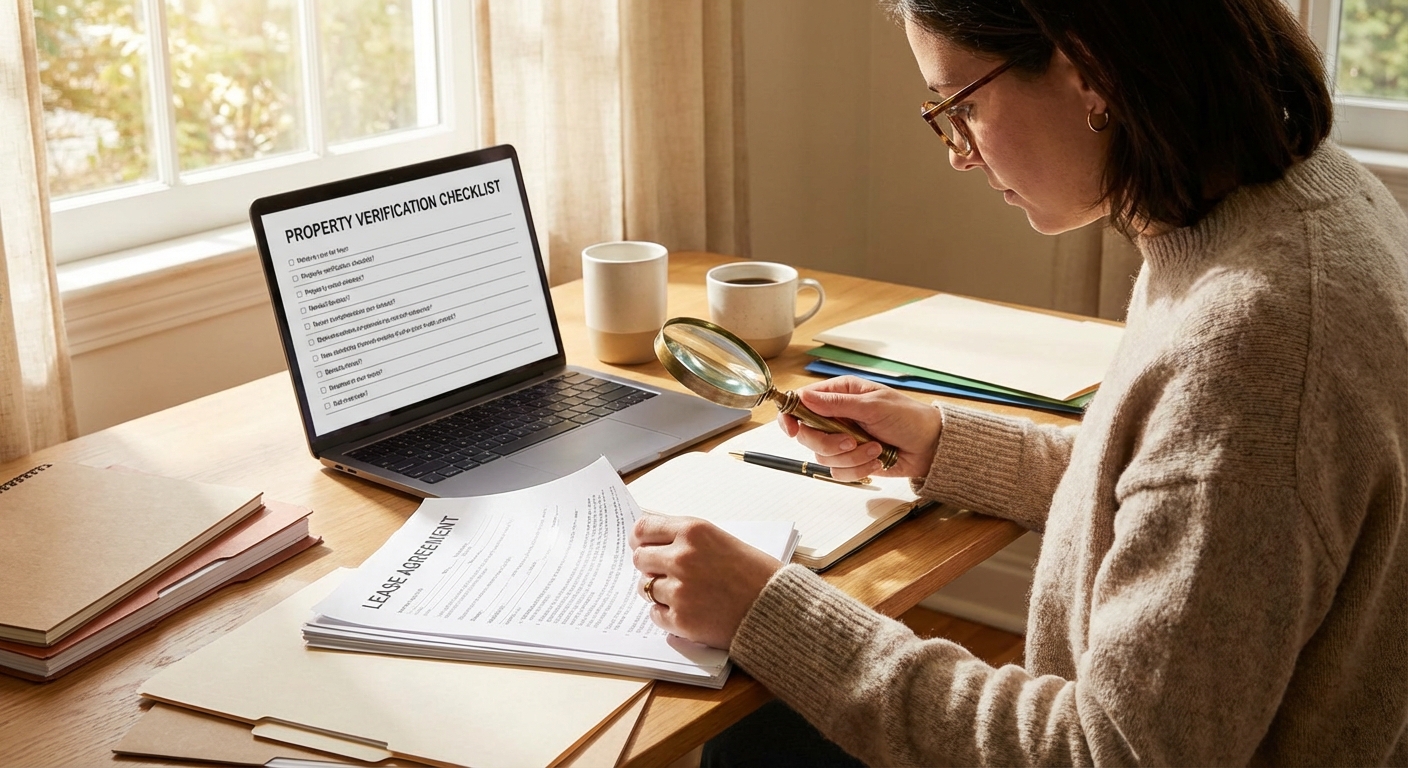
Use this checklist before paying any deposit or committing to any rental.
Before Contacting
- Reverse image search listing photos (images.google.com or TinEye)
- Check price against similar listings in same area
- Look for same listing on other platforms (might reveal true owner)
- Research typical scam patterns for that city/country
During Communication
- Verify host identity (check platform profile, ask for ID if direct)
- Request live video call showing the property
- Ask specific questions: nearest metro station, building entry system, neighbor names
- Confirm payment method matches platform requirements
Before Paying
- Payment goes through platform (Airbnb, Booking) or protected method (PayPal G&S)
- Written confirmation of deposit amount, terms, and return timeline
- Cancellation policy clearly stated
- Contact information verified (phone number works, email domain legitimate)
At Move-In
- Property matches listing photos
- All amenities present and working (test wifi, water, appliances)
- Document existing damage with timestamped photos/video
- Get keys and all necessary access information
- Emergency contact for landlord/manager confirmed
Safe Payment Methods
| Method | Protection Level | When to Use |
|---|---|---|
| Airbnb/Booking.com | Excellent | Always for short-term, first stays |
| PayPal Goods & Services | Good | Facebook/direct deals, can dispute |
| Credit card | Good | Direct payments, chargeback possible |
| Wise/bank transfer | Low | Only with established, verified landlords (Wise offers some dispute options) |
| Cash | None | Only at move-in with signed receipt |
| Crypto | None | Never for rentals |
| Western Union | None | Never—primary scammer tool |
PayPal Goods & Services Protocol
For Facebook Group or direct rentals where you can't use platform payments, PayPal Goods & Services provides buyer protection similar to credit cards:
- Request landlord's PayPal email
- Send payment as "Goods and Services" (not Friends & Family)
- Include description: "Deposit for [address], [dates], refundable per agreement"
- Save confirmation and any written agreements
- If scammed, file dispute within 180 days
Note: Goods & Services charges sender ~3% fee. This fee is your scam insurance—never skip it to save money.
Regional Scam Hotspots
High-Risk Markets
Barcelona: Heavy Airbnb restrictions create desperation, driving people to unverified sources. Facebook groups have higher scam rates than average.
Vietnam: Language barriers exploited, fake listings common on local platforms. Verify everything with video calls.
Berlin: Extreme rental shortage creates pressure. Scammers exploit desperation with fake listings for non-existent apartments.
Buenos Aires: Parallel currency markets create confusion. Scams involving USD/peso conversion common.
Lower-Risk Markets
Thailand: Well-established expat infrastructure, scams less common than elsewhere. Agent system provides some verification.
Portugal: Regulated market, platforms well-established. Still verify, but lower baseline risk.
Georgia: Cash market but relatively transparent. Small expat community shares information about problem landlords quickly.
What To Do If Scammed
Immediate Steps (First 24-48 Hours)
- Document everything: Save all messages, emails, payment confirmations, listing screenshots
- Report to platform: If booked through Airbnb/Booking, contact support immediately
- Contact payment provider: Initiate dispute with PayPal, credit card company
- File police report: Required for some insurance claims and disputes
- Warn community: Post in relevant Facebook groups (with documentation) to prevent others being scammed
Platform-Specific Recovery
Airbnb:
- Contact support within 24 hours of check-in for "listing not as described"
- AirCover provides rebooking assistance or refunds for qualifying issues
- Document discrepancies between listing and reality with photos
Booking.com:
- Contact support through app/website
- Free cancellation policies may allow refund
- Disputes possible for significant property misrepresentation
PayPal:
- Open dispute within 180 days
- Provide all documentation: listing, agreement, payment confirmation
- Escalate to claim if seller unresponsive
Credit Card:
- Call issuer to initiate chargeback
- Timeframe varies (usually 60-120 days)
- Provide documentation of fraud/misrepresentation
Recovery Odds
| Situation | Recovery Likelihood |
|---|---|
| Platform booking (Airbnb/Booking) | High (70-90%) |
| PayPal Goods & Services | Medium-High (60-80%) |
| Credit card chargeback | Medium (40-70%) |
| Bank transfer (recent) | Low (10-30%) |
| Wire transfer (Western Union) | Very Low (under 5%) |
| Cash | None (0%) |
| Crypto | None (0%) |
Scam-Resistant Booking Strategy
Follow this approach to minimize scam risk while still finding good value.
For New Destinations
- First 2-4 weeks: Book only through Airbnb or Booking.com
- Use that time: Learn the market, verify neighborhoods in person
- Then explore: Local platforms and Facebook Groups with knowledge of fair prices and red flags
For Familiar Destinations
- Reach out to previous landlords for direct rebooking
- Ask expat community for verified recommendations
- Use local platforms with video verification for new properties
Universal Rules
- Never pay deposit before video call showing the specific property
- Never use payment methods without protection for first-time bookings
- Never succumb to urgency—legitimate landlords understand verification takes time
- Trust your instincts—if something feels wrong, it probably is
Conclusion
Rental scams are a real risk, but they're largely preventable. Use protected platforms for initial bookings, verify everything before paying, and never prioritize price over safety. The $100 you save booking through an unverified source isn't worth the $2,000 you could lose to a scammer.
For the complete accommodation strategy, see our Digital Nomad Accommodation Guide.
About the Author